Featured in this article
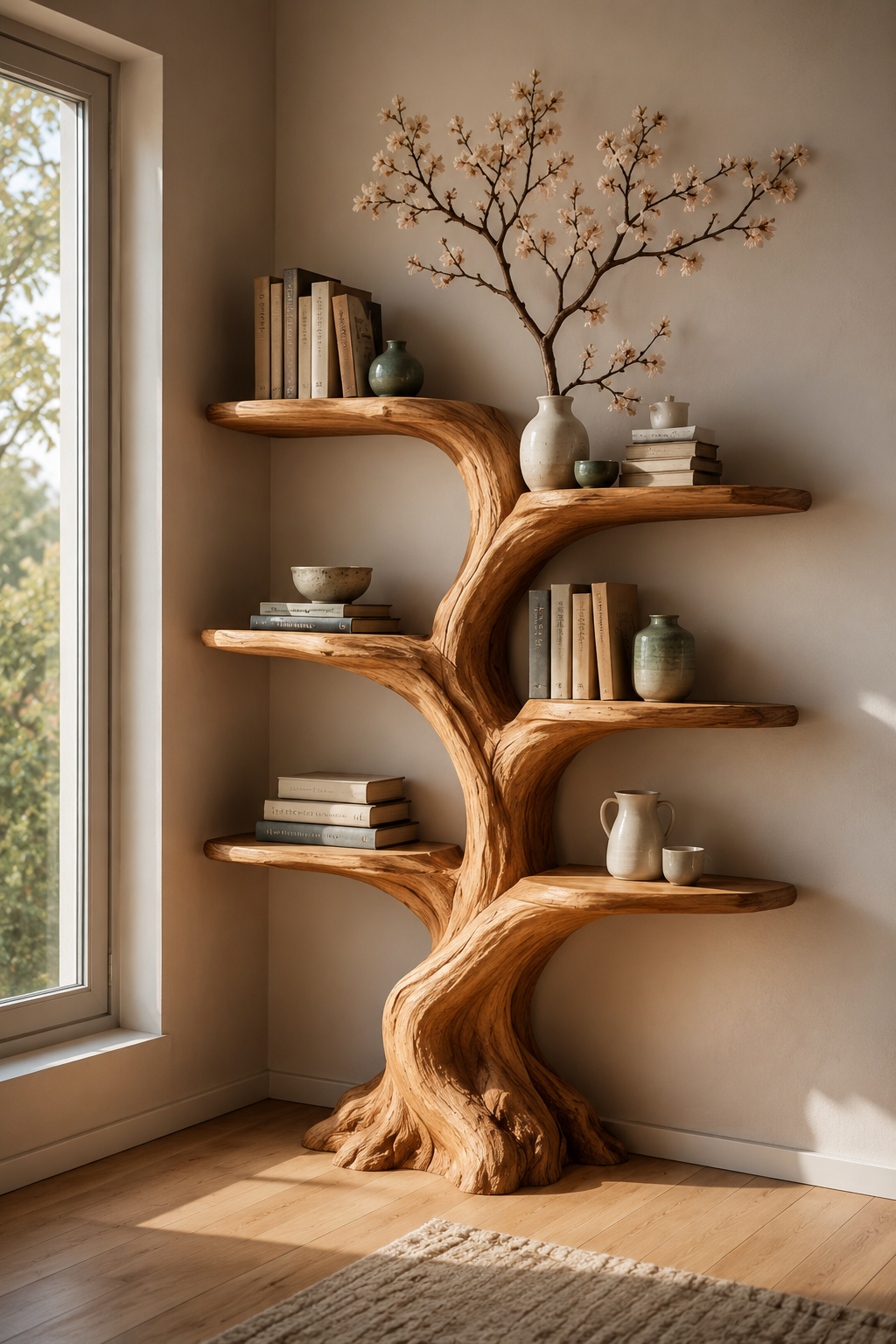
Evermagin 4 Tier Corner Shelf with Light
Evermagin 4 Tier Corner Shelf with Light, 64'' Tall Corner Bookshelf with Unique Wavy Shape, Storage Organizer for Small Space, Rustic Brown
Home Decor · Interior Inspiration · Style Guides
Walnut live edge corner shelf works best when scale, placement, material, and maintenance are planned together before the room fills with new decor.
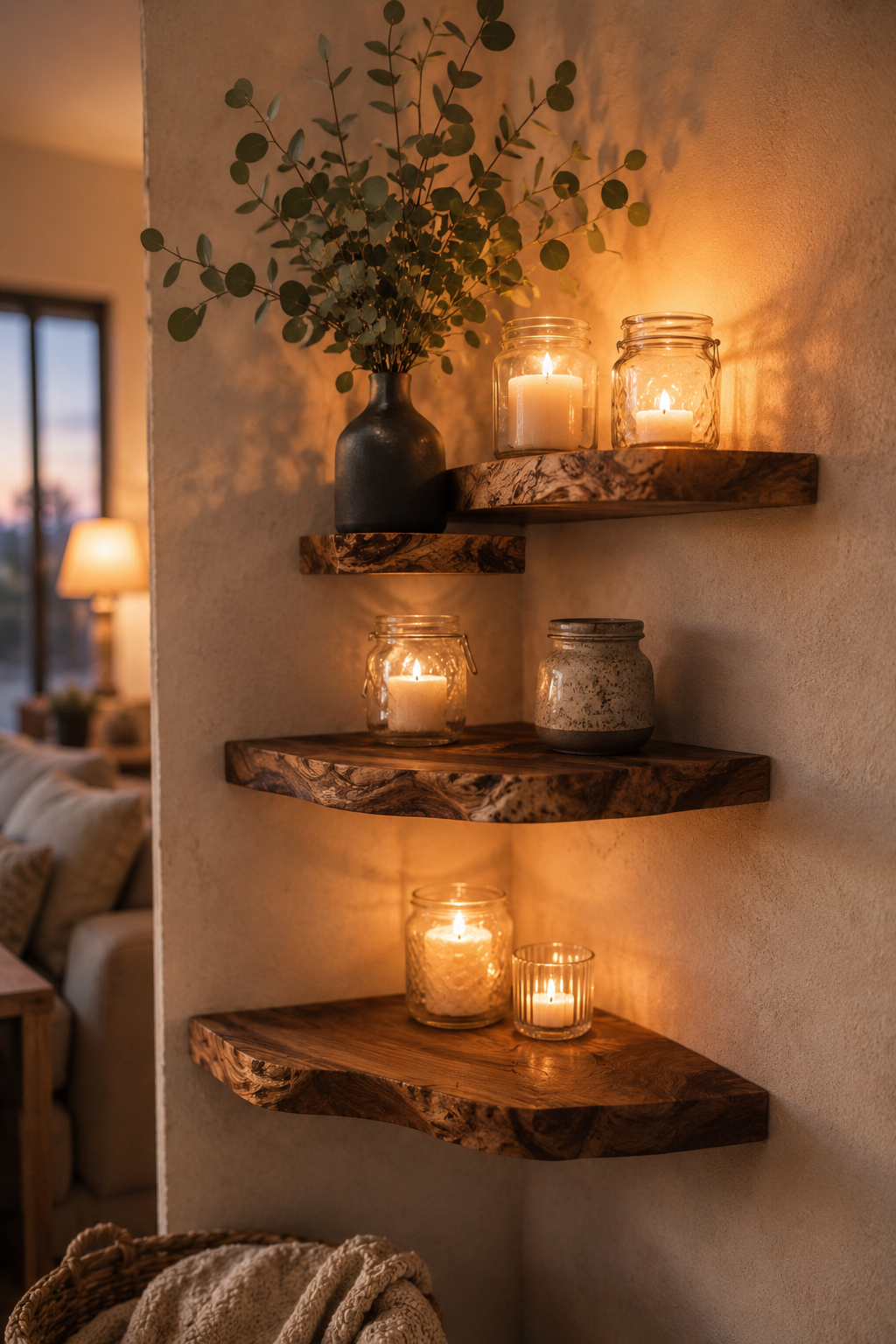
Evermagin 4 Tier Corner Shelf with Light, 64'' Tall Corner Bookshelf with Unique Wavy Shape, Storage Organizer for Small Space, Rustic Brown
Corner shelves are usually treated as a place to put leftovers: the spare candle, the extra plant, the tiny frame with nowhere else to go. Live edge walnut deserves a better brief. The irregular edge is already decorative, so the styling can stay simple. This walnut live edge corner shelf guide keeps the focus on proportion, maintenance, and how the room feels in daily use.
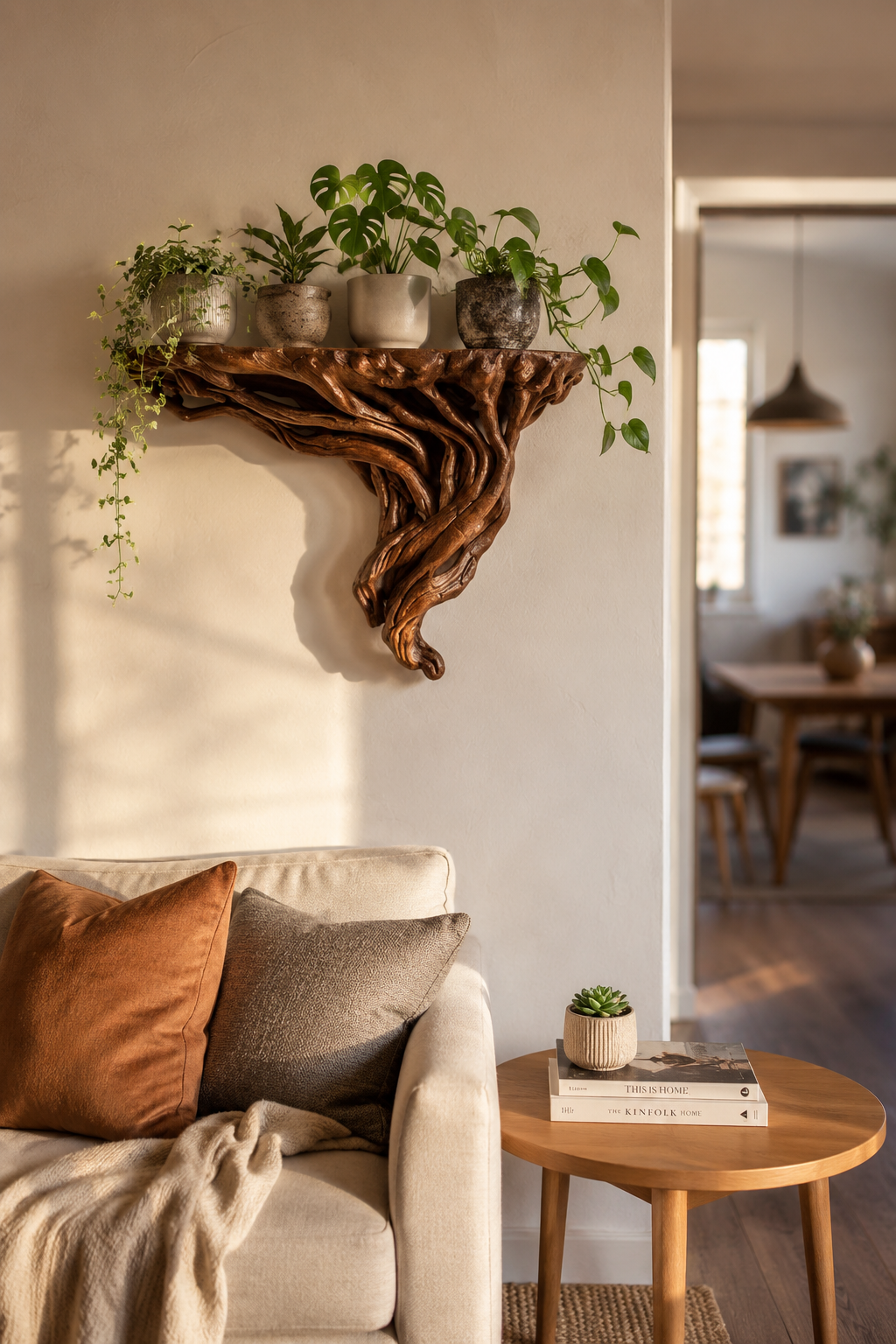
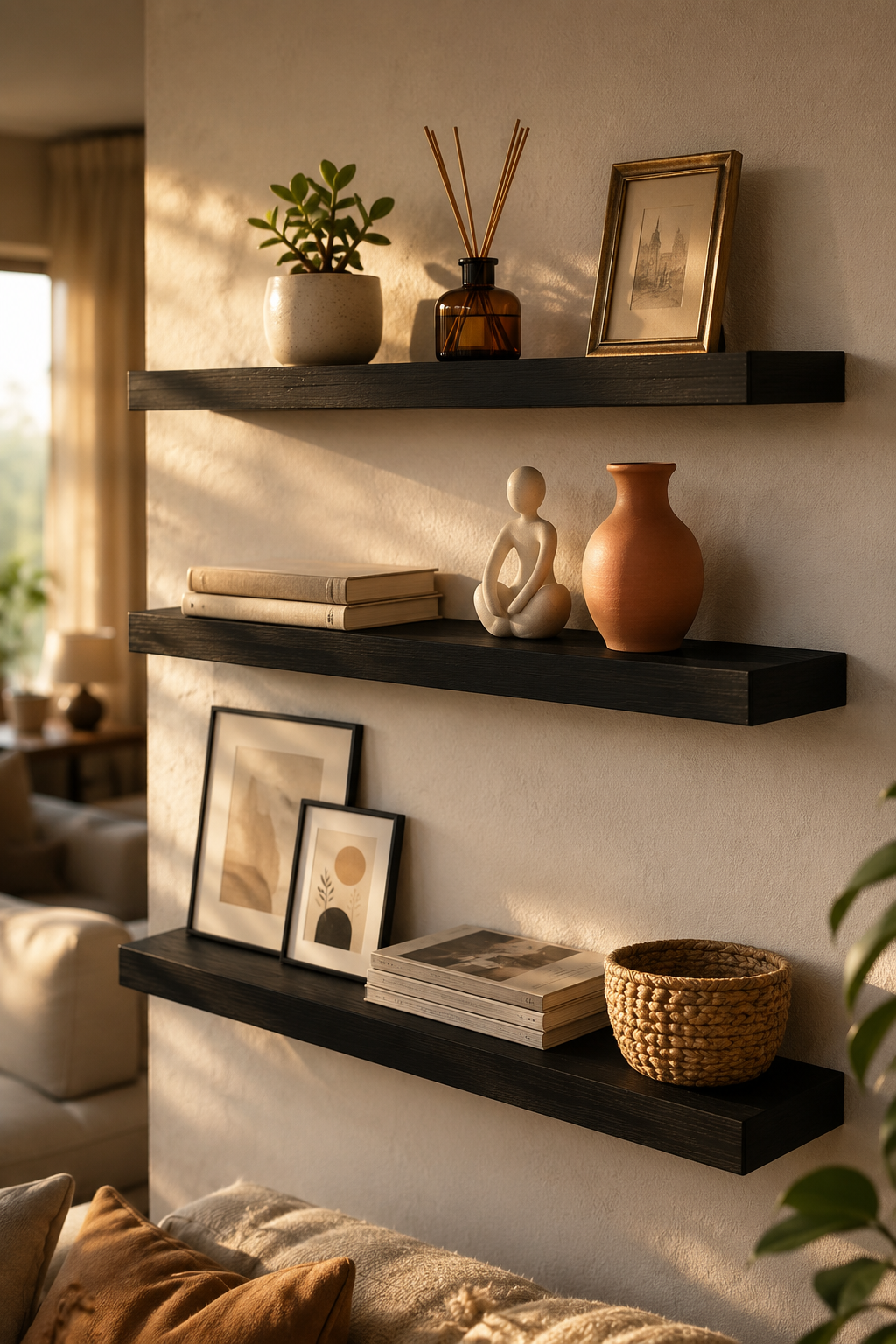
In our room edits, the change works only when it solves a visible problem instead of adding another layer to manage. Use the same restraint behind black floating wall shelves and rustic tree root wall shelf: measure first, repeat materials deliberately, and leave enough blank space for the change to read.
These shelves work best when they turn an unused corner into a small warm moment without becoming the busiest part of the room.
A live edge shelf brings one natural line into a room full of straight walls, square frames, and rectangular sofas. Walnut adds depth, while the uneven edge keeps the piece from feeling too polished.
That contrast is useful in minimalist rooms, rental apartments, and neutral spaces where everything risks becoming flat.
For this choice, this section matters most when it is checked from the doorway and from the seat or counter where the decision will be seen every day. Give the idea at least 24 hours in normal morning and evening light, then remove one nearby object before deciding whether the room needs anything else.
Use three categories: glow, shape, and green. One candle or small lamp gives glow. One ceramic vase gives shape. One eucalyptus stem or small plant gives green. Spread them across the shelves and stop there.
Avoid filling every inch. The empty space around each object is what lets the walnut edge show.
For this choice, this section matters most when it is checked from the doorway and from the seat or counter where the decision will be seen every day. Give the idea at least 24 hours in normal morning and evening light, then remove one nearby object before deciding whether the room needs anything else.
Corners are unforgiving. If the shelves are even slightly tilted, the eye notices. Use a level, check both walls, and choose fixings that match the shelf weight plus the weight of the objects.
If the shelf is near curtains, keep candles battery-operated or enclosed. Warm light is the point; risk is not.
For this choice, this section matters most when it is checked from the doorway and from the seat or counter where the decision will be seen every day. Give the idea at least 24 hours in normal morning and evening light, then remove one nearby object before deciding whether the room needs anything else.
Avoid mixing too many wood tones in the same corner. If the shelf is walnut, keep nearby frames, bowls, and furniture either walnut-adjacent or deliberately different, such as black metal or matte ceramic.
Avoid tiny objects. A live edge shelf with many small trinkets loses its organic calm and starts to feel like a souvenir ledge.
Start the lowest shelf around eye level when seated or slightly above a sofa-back height if the shelves are near seating. Too low, and the corner feels cluttered. Too high, and the shelves become awkward decoration no one can reach or clean.
Spacing matters as much as height. Leave enough vertical room for one taller object, such as a vase or candle hurricane. If every shelf is spaced tightly, you can only place small objects, which is exactly what makes these shelves look busy.
Use objects with different jobs. A candle brings glow, a vase brings shape, a book stack brings horizontal weight, and a plant brings softness. If every object is decorative in the same way, the shelves feel staged.
Keep color quiet. Walnut already provides depth. White, cream, smoke glass, matte black, warm grey, and eucalyptus green all sit well with it. Bright objects can work, but they should be intentional and rare.
Evermagin 4 Tier Corner Shelf with Light, 64'' Tall Corner Bookshelf with Unique Wavy Shape, Storage Organizer for Small Space, Rustic Brown
Corner shelves are tempting to redecorate for every season. Keep the structure fixed and change only one element. In autumn, swap eucalyptus for dried grasses. In winter, add one warm glass candle. In spring, use a small branch. The shelf stays calm because the formula stays the same.
This is the difference between seasonal decorating and seasonal clutter. The room notices one change; it has to recover from ten.
If candles are part of the look, use enclosed glass or battery candles unless the shelf has generous clearance. Wood, dried stems, and corner shelves do not need open flame drama.
Dust the shelves before they look dusty. Live edge wood has irregular surfaces that catch more dust than a smooth painted shelf. A soft cloth and occasional wood-safe polish will keep the edge from looking dry.
If the room feels cluttered, shelves may not solve it. They can simply move clutter onto the wall. Use live edge shelves when the room needs warmth, height, or a focal point, not when it needs storage discipline.
If you are really trying to make a compact room feel bigger, start with layout and floor space first. Small living rooms that feel twice their size covers the decisions that come before wall styling.
Before checkout, confirm the shelf depth, fixing method, weight rating, and whether the live edge is sealed. Then decide what three objects will live there before the shelf arrives. If you cannot name them, wait. Buying storage before deciding its job is how a calm corner turns into another place to put things down.
The best version looks useful but not full. It adds a warm line to the wall, gives one or two objects a proper home, and leaves enough empty space that the walnut still reads as the main material.
Start with measurements rather than mood. Mark the likely footprint with painter's tape, books, or a folded towel before buying or rearranging anything. A useful rule is to leave at least 60 cm for a main walkway, 35-45 cm between a sofa and coffee table, and 10 cm of visible border around small textiles or objects that sit on the floor. Those numbers are not decorative; they decide whether the idea feels calm once people actually move through the room.
Check the material against what is already present. If the room has several glossy surfaces, add matte texture. If it has many pale fabrics, add one grounded wood, stone, black, or brass note. If it already has strong contrast, keep the new piece quieter. The goal is not to match every finish, but to repeat one material family so the choice feels connected to the room instead of dropped into it from a product photo.
Plan maintenance before styling. Anything near water, food, pets, children, or direct sun needs a cleaning rhythm and a tolerance for wear. Soft textiles may need weekly washing, stone may need coasters, acrylic may need microfiber cleaning, wood may need pads under objects, and lighting may need a dimmer that is compatible with the fixture. A beautiful choice that is annoying to maintain usually becomes visual clutter within a month.
Use the one-in, one-out test after the change lands. Add the new piece, then remove one smaller object in the same sightline. If the room feels more intentional, leave the smaller object out. If the room feels bare, return it after a week. This keeps the edit from turning into accumulation and protects the calm that made the change worth considering in the first place. Used this way, walnut live edge corner shelf becomes part of the room's structure rather than a loose accent.
Use the change as one clear decision, then remove or quiet the nearest competing object. The room should gain a job, a material note, or a focal point rather than another small thing to maintain.
Measure the available width, depth, height, and the walkway that remains after the piece or idea is in place. For most rooms, 60 cm of clear passage and visible breathing room around the object prevents a styled choice from becoming an obstacle.
Yes, if the choice is reversible and scaled to the room rather than the product photo. Freestanding pieces, textiles, plug-in lighting, removable hooks, and careful styling usually give the best result without changing the building.
The common mistake is treating the idea as decoration before checking proportion and maintenance. If the size is wrong or the material is hard to live with, even an attractive choice will make the room feel less settled over time.