Featured in this article
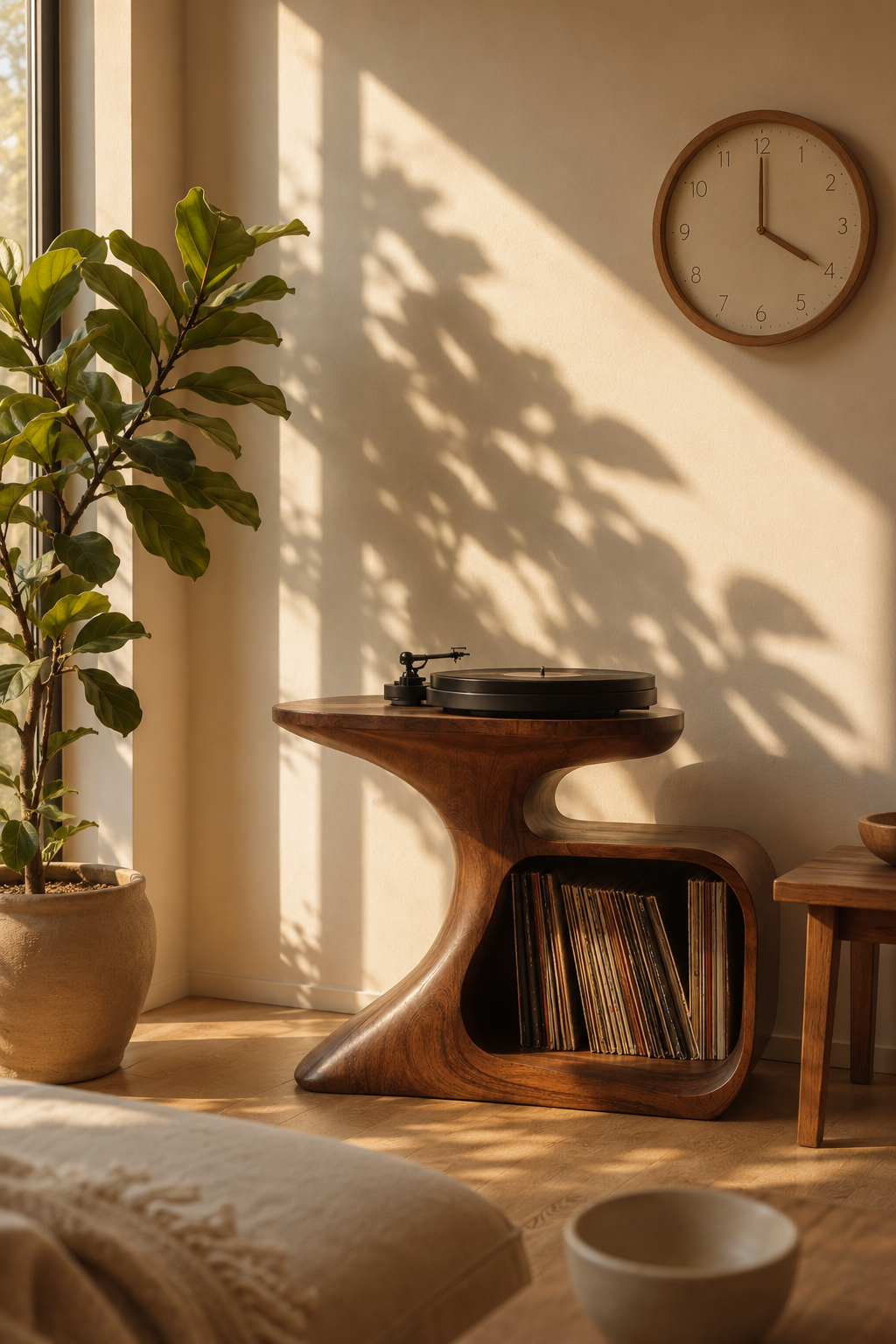
LELELINKY Record Player Stand
LELELINKY Record Player Stand, Walnut Vinyl Record Storage Table with 4 Cabinet Up to 100 Albums, Mid-Century Modern Turntable Stand
Home Decor · Interior Inspiration · Style Guides
Walnut record player stand works best when sizing, placement, light, and material are planned together so the room stays calm, useful, and easy to maintain.
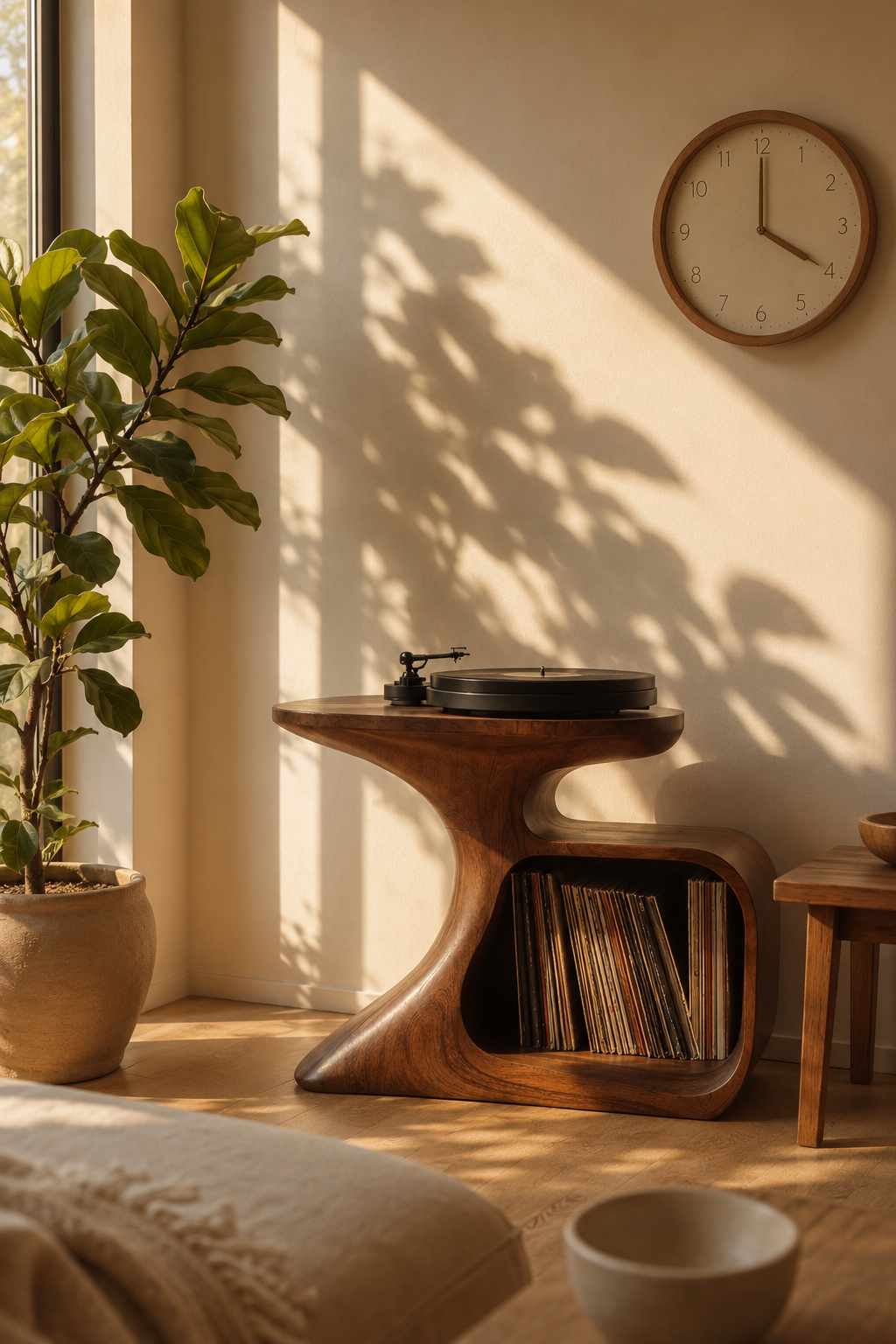
LELELINKY Record Player Stand, Walnut Vinyl Record Storage Table with 4 Cabinet Up to 100 Albums, Mid-Century Modern Turntable Stand
A record player stand has to do two jobs at once: hold equipment safely and make the music corner feel like part of the room. Walnut is a useful material for this because it brings depth without needing a large footprint. This walnut record player stand guide keeps the focus on proportion, maintenance, and how the room feels in daily use.
In our room edits, the change works only when it solves a visible problem instead of adding another layer to manage. Use the same restraint behind C-shaped console table and slow-living living room: measure first, repeat materials deliberately, and leave enough blank space for the change to read.
Curved designs work particularly well in modern living rooms. They soften the rectangle of the turntable, hide some of the visual weight of records, and make the piece feel less like a media cabinet.
The top has to be stable, level, and wide enough for the turntable with space for the dust cover to open. If speakers sit on the same unit, check vibration. In many rooms, speakers are better on separate stands or shelves.
The lower storage should keep records upright, not leaning. Vinyl hates pressure and heat, so avoid placing the stand against a radiator or in direct sun all day.
Walnut reads richer than pale oak and softer than black metal. It pairs well with cream walls, beige sofas, dark picture frames, and leafy plants. In a neutral room, it can be the one deeper tone that gives the corner weight.
If the rest of the room is very pale, repeat walnut once more with a frame, lamp base, side table, or small tray. That second note stops the stand from looking isolated.
LELELINKY Record Player Stand, Walnut Vinyl Record Storage Table with 4 Cabinet Up to 100 Albums, Mid-Century Modern Turntable Stand
Keep the top mostly clear. The turntable is already the focal point. Add one small lamp, one plant, or one ceramic object, not all three. A warm lamp nearby makes the corner usable at night and prevents the stand from feeling like equipment storage.
Use the wall above it carefully. One framed print or a small shelf is enough. Too much art above a record stand can make the corner feel like a display wall rather than a place to listen.
Measure record height, cable routes, and outlet distance before choosing a stand. A beautiful curved piece still needs space for power, audio cables, and the awkward daily act of flipping a record.
For this choice, this section matters most when it is checked from the doorway and from the seat or counter where the decision will be seen every day. Give the idea at least 24 hours in normal morning and evening light, then remove one nearby object before deciding whether the room needs anything else.
Place the stand where listening feels natural, not where the leftover wall space happens to be. If the turntable is too far from the seating area, it becomes decoration. If it is too close to the sofa arm, changing records interrupts the room every time someone is sitting there.
A good music corner usually has a triangle: the stand, a chair or sofa, and one low light source. The lamp matters because record players are tactile objects. You need to see the sleeve, needle, and controls without turning on the overhead.
Do not assume the speakers belong on the same piece of furniture. Small speakers can sit on a stand if vibration is controlled, but larger speakers usually sound better separated from the turntable. Even in a casual living room, vibration can cause skips or muddy sound.
If separate speaker stands feel too technical, try wall shelves, a sideboard, or low bookcases at either side of the stand. Keep the setup visually balanced without pretending the audio equipment is invisible.
Count the records you have and the records you are likely to buy. A stand that is full on day one will look messy within a month. Leave at least one empty section or a clear expansion plan.
Upright dividers help. They stop the records from leaning and make browsing easier. A single deep bin can hold a lot, but it often turns the lower section into a heavy block of album spines. Several smaller bays look more orderly.
Album art is already visual. Let it be part of the styling. A small ledge or now-playing stand can display one sleeve at a time and give the corner a changing focal point without buying more decor.
Keep the top of the stand functional. A record brush, headphones, small lamp, and one ceramic bowl for adapters or remotes are enough. Anything more starts interfering with the reason the piece exists.
Walnut pairs beautifully with cream upholstery, black metal, olive green, terracotta, and aged brass. It can look heavy beside very dark floors or dark walls, so add a pale rug or light artwork if the corner starts to sink.
If the room already has oak, walnut can still work as the deeper accent. Repeat it once with a picture frame or tray so it feels deliberate. For more living-room material logic, see a slow-living living room: shop the look.
Start with measurements rather than mood. Mark the likely footprint with painter's tape, books, or a folded towel before buying or rearranging anything. A useful rule is to leave at least 60 cm for a main walkway, 35-45 cm between a sofa and coffee table, and 10 cm of visible border around small textiles or objects that sit on the floor. Those numbers are not decorative; they decide whether the idea feels calm once people actually move through the room.
Check the material against what is already present. If the room has several glossy surfaces, add matte texture. If it has many pale fabrics, add one grounded wood, stone, black, or brass note. If it already has strong contrast, keep the new piece quieter. The goal is not to match every finish, but to repeat one material family so the choice feels connected to the room instead of dropped into it from a product photo.
Plan maintenance before styling. Anything near water, food, pets, children, or direct sun needs a cleaning rhythm and a tolerance for wear. Soft textiles may need weekly washing, stone may need coasters, acrylic may need microfiber cleaning, wood may need pads under objects, and lighting may need a dimmer that is compatible with the fixture. A beautiful choice that is annoying to maintain usually becomes visual clutter within a month.
Use the one-in, one-out test after the change lands. Add the new piece, then remove one smaller object in the same sightline. If the room feels more intentional, leave the smaller object out. If the room feels bare, return it after a week. This keeps the edit from turning into accumulation and protects the calm that made the change worth considering in the first place. Used this way, walnut record player stand becomes part of the room's structure rather than a loose accent.
Use the change as one clear decision, then remove or quiet the nearest competing object. The room should gain a job, a material note, or a focal point rather than another small thing to maintain.
Measure the available width, depth, height, and the walkway that remains after the piece or idea is in place. For most rooms, 60 cm of clear passage and visible breathing room around the object prevents a styled choice from becoming an obstacle.
Yes, if the choice is reversible and scaled to the room rather than the product photo. Freestanding pieces, textiles, plug-in lighting, removable hooks, and careful styling usually give the best result without changing the building.
The common mistake is treating the idea as decoration before checking proportion and maintenance. If the size is wrong or the material is hard to live with, even an attractive choice will make the room feel less settled over time.