Featured in this article
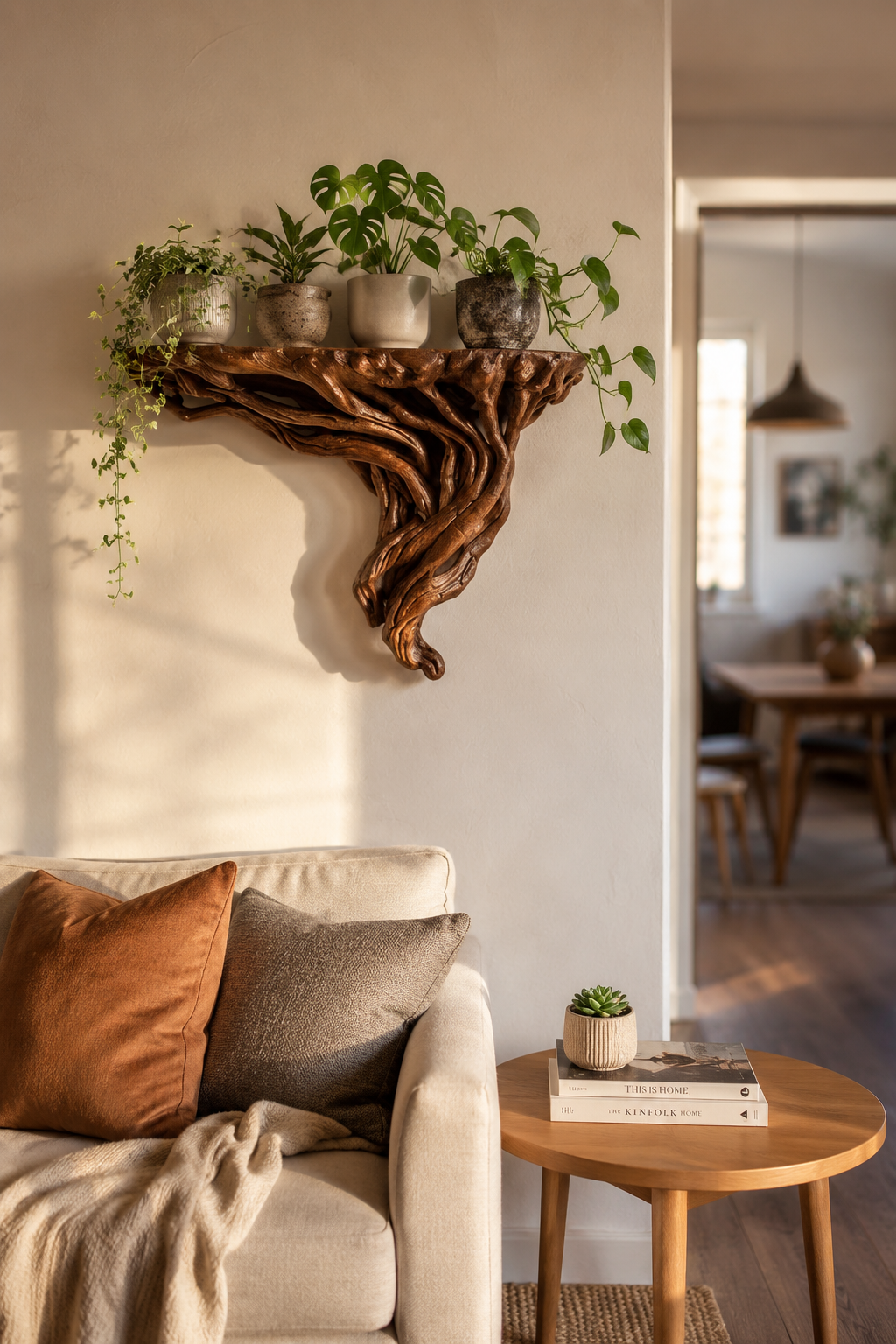
Rustic Tree Root Floating Wall Shelf
Small 3D-printed tree-root style floating wall shelf for lightweight plant pots, keys, perfume, or decorative corner displays.
Home Decor · Interior Inspiration · Style Guides
Rustic tree root wall shelf works best when sizing, placement, light, and material are planned together so the room stays calm, useful, and easy to maintain.
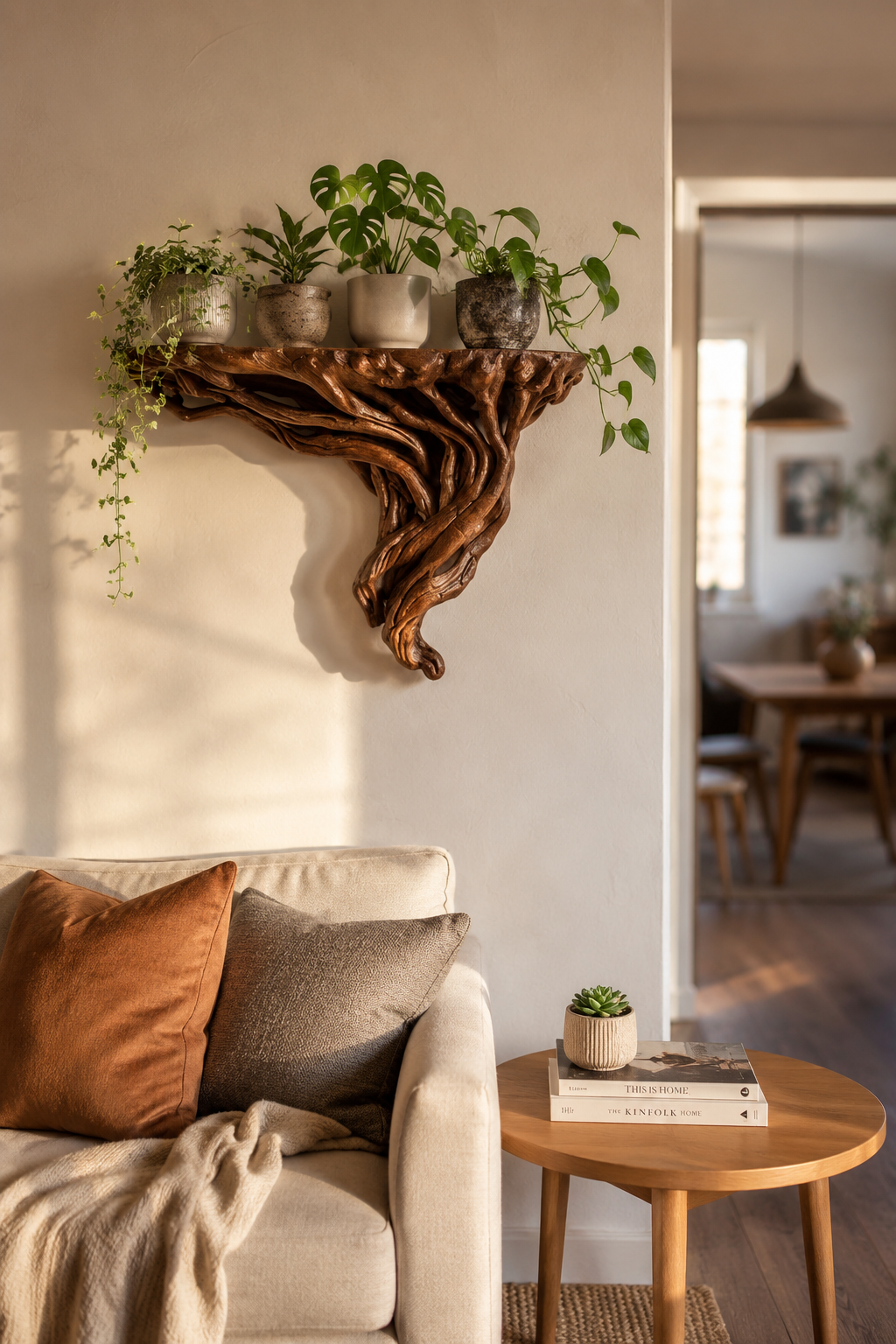
Small 3D-printed tree-root style floating wall shelf for lightweight plant pots, keys, perfume, or decorative corner displays.
A rustic tree root wall shelf is a very specific kind of accent. It is not trying to be a clean floating ledge, a bookcase, or a heavy storage solution. Its job is smaller: give a blank wall a bit of natural shape, hold one or two light objects, and make a corner feel less forgotten.
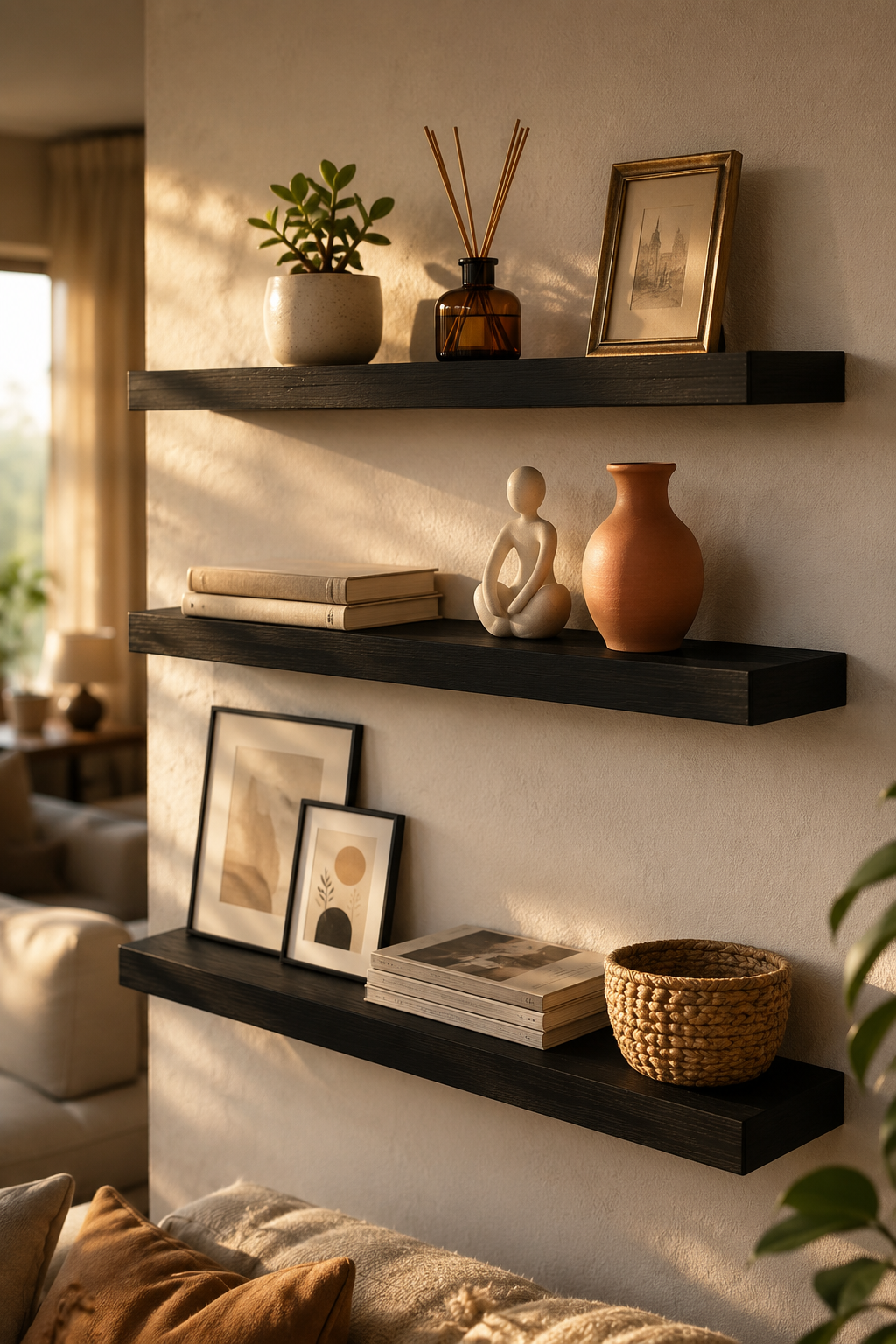
In our room edits, the change works only when it solves a visible problem instead of adding another layer to manage. Use the same restraint behind black floating wall shelves and gold bird figurines: measure first, repeat materials deliberately, and leave enough blank space for the change to read.
That distinction matters because the product look can be more sculptural than practical. This particular style is a compact 3D-printed shelf with a root-inspired shape, so the smartest use is as a lightweight display point for small plant pots, keys, fragrance bottles, or one tiny object that needs a home.
Use a tree root shelf where the wall needs texture but the room cannot take another piece of furniture. A narrow entry, the side of a reading chair, the wall beside a sofa, or a small bedroom corner can all work.
The best placement is visible from the doorway but not in the traffic path. If people walk close to the corner every day, even a small projecting shelf can become annoying. Treat it like wall decor with function, not like deep storage.
Because the root shape is already busy, the objects should stay quiet. One small trailing plant, one ceramic pot, or a little glass vessel is enough. If the shelf becomes a cluster of tiny things, the root form disappears and the wall starts to feel cluttered.
Choose objects with simple silhouettes. Matte cream ceramic, smoked glass, black metal, pale stone, and soft green leaves all work well. Avoid patterned pots, bright labels, or too many mini accessories.
Small 3D-printed tree-root style floating wall shelf for lightweight plant pots, keys, perfume, or decorative corner displays.
The product detail lists PLA, which means this is a 3D-printed piece, not carved solid wood. That is not automatically bad, but it changes how you should use it. It is best for visual warmth and lightweight objects, not heavy books, large ceramic planters, or anything fragile enough to hurt if it falls.
If you want the look of a tree-root shelf without the price or weight of real wood, this can make sense. If you want heirloom material, visible wood grain, or a shelf that can hold heavier decor, look for real wood or live-edge options instead.
Before installing, hold the shelf against the wall with painter's tape and step back. The root shape can look better slightly off-center than perfectly aligned. Test it from the doorway, from the sofa, and from the standing height where you will usually see it.
Use wall fixings that match your wall type. Drywall, plaster, brick, and tile all behave differently. Even for a lightweight shelf, poor fixing makes the whole corner feel temporary. If the shelf will hold a plant pot, test with the pot empty and then with the pot watered, because water adds more weight than people expect.
For a living room, use one tiny plant in a plain pot and leave the rest empty. For an entry, use it as a key landing spot only if the shelf sits away from door swing and coat movement. For a bedroom, a small fragrance bottle or ceramic dish can work, but keep the surface edited.
This is not the place for a full vignette. The root shape is the decorative element. The object on top should support it, not compete with it.
A rustic root shelf looks best when the room around it stays restrained. Pair it with linen, boucle, oak, walnut, matte ceramics, and warm white walls. It can also soften modern rooms that have too many straight lines.
Avoid stacking rustic cues around it. Distressed signs, faux lanterns, burlap, and many wood finishes can push the look into theme decor. A single organic shape feels intentional; five rustic signals feel staged.
A root shelf is usually smaller and more decorative than a taller branch-style corner shelf. If you need more surface area or want a larger corner feature, the same rules still apply: keep the objects simple, check the projection into the room, and let the organic shape stay visible. If you only need one small organic accent, the root shelf is easier to place and easier to edit.
For a warmer real-wood look, walnut live edge corner shelves are the more grown-up option. They cost more visually and financially, but they bring real material depth.
Before buying, confirm the dimensions, mounting method, and material. Decide exactly what will sit on the shelf before it arrives. If the answer is "a few little things," wait until you can name one object. Small shelves become cluttered faster than large ones because every extra item changes the silhouette.
The best version is simple: one root-shaped shelf, one quiet object, one blank corner made warmer. Use it as a small decorative accent and it can feel charming. Ask it to solve storage, and it will probably disappoint.
Start with measurements rather than mood. Mark the likely footprint with painter's tape, books, or a folded towel before buying or rearranging anything. A useful rule is to leave at least 60 cm for a main walkway, 35-45 cm between a sofa and coffee table, and 10 cm of visible border around small textiles or objects that sit on the floor. Those numbers are not decorative; they decide whether the idea feels calm once people actually move through the room.
Check the material against what is already present. If the room has several glossy surfaces, add matte texture. If it has many pale fabrics, add one grounded wood, stone, black, or brass note. If it already has strong contrast, keep the new piece quieter. The goal is not to match every finish, but to repeat one material family so the choice feels connected to the room instead of dropped into it from a product photo.
Plan maintenance before styling. Anything near water, food, pets, children, or direct sun needs a cleaning rhythm and a tolerance for wear. Soft textiles may need weekly washing, stone may need coasters, acrylic may need microfiber cleaning, wood may need pads under objects, and lighting may need a dimmer that is compatible with the fixture. A beautiful choice that is annoying to maintain usually becomes visual clutter within a month.
Use the one-in, one-out test after the change lands. Add the new piece, then remove one smaller object in the same sightline. If the room feels more intentional, leave the smaller object out. If the room feels bare, return it after a week. This keeps the edit from turning into accumulation and protects the calm that made the change worth considering in the first place. Used this way, rustic tree root wall shelf becomes part of the room's structure rather than a loose accent.
Use the change as one clear decision, then remove or quiet the nearest competing object. The room should gain a job, a material note, or a focal point rather than another small thing to maintain.
Measure the available width, depth, height, and the walkway that remains after the piece or idea is in place. For most rooms, 60 cm of clear passage and visible breathing room around the object prevents a styled choice from becoming an obstacle.
Yes, if the choice is reversible and scaled to the room rather than the product photo. Freestanding pieces, textiles, plug-in lighting, removable hooks, and careful styling usually give the best result without changing the building.
The common mistake is treating the idea as decoration before checking proportion and maintenance. If the size is wrong or the material is hard to live with, even an attractive choice will make the room feel less settled over time.