Featured in this article
Aredpoook Acrylic Display Risers, 3 Tier
Clear three-tier acrylic display stand for perfume organization, skincare, figures, party desserts, countertop storage, and decorative shelf styling.
Home Decor · Interior Inspiration · Style Guides
Clear acrylic display risers work best when scale, placement, material, and maintenance are planned together before the room fills with new decor.
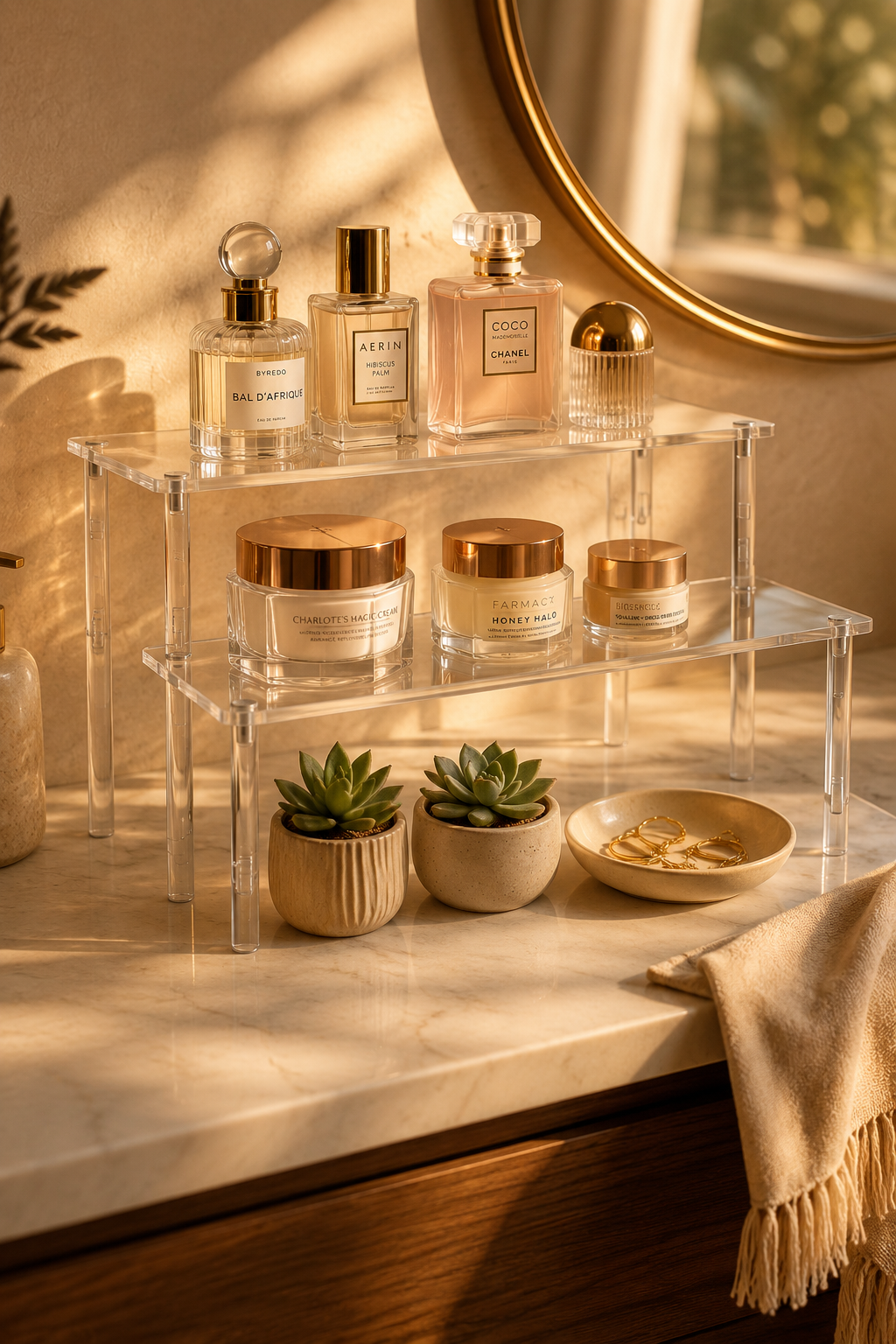
Clear three-tier acrylic display stand for perfume organization, skincare, figures, party desserts, countertop storage, and decorative shelf styling.
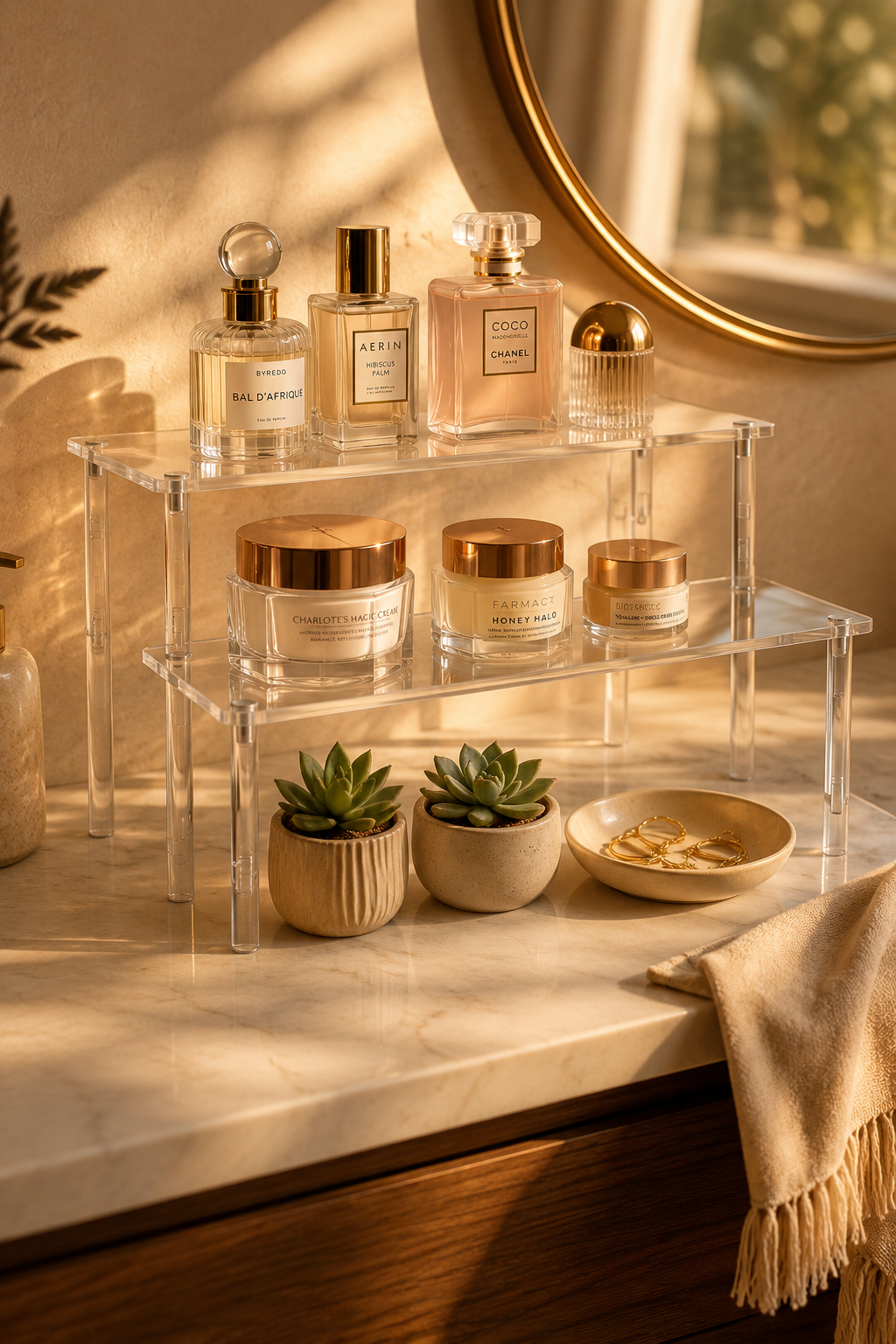
Clear acrylic display risers are practical because they add vertical storage without making a countertop feel heavier. Perfume bottles, skincare jars, small figures, nail polish, candles, and dessert styling pieces can all sit in tiers instead of spreading across the surface.
In our room edits, the change works only when it solves a visible problem instead of adding another layer to manage. Use the same restraint behind acrylic side tables and small living rooms: measure first, repeat materials deliberately, and leave enough blank space for the change to read.
That vertical lift matters most in small bathrooms and bedrooms. A flat counter gets crowded fast. A three-tier riser lets you see what you own, reach it easily, and keep the surface underneath easier to clean.
Acrylic is useful when the objects are already decorative. Perfume bottles, glass jars, pretty skincare packaging, and small ceramics look intentional when grouped on clear shelves. The riser gives them structure without hiding them.
It is also good when the room already has enough visual weight. Wood, stone, baskets, and ceramic containers can all be beautiful, but too many opaque organizers make a vanity feel crowded. Clear acrylic keeps the line of sight open.
Use the top tier for the tallest or prettiest bottles. Use the middle tier for daily skincare, small jars, or fragrances you reach for often. Use the bottom tier for a jewelry dish, small plant, hand cream, or lower items that need a home.
Do not fill every inch. Clear storage only looks calm when there is space between objects. If the riser becomes packed edge to edge, it stops feeling transparent and starts feeling like a crowded shelf.
Clear three-tier acrylic display stand for perfume organization, skincare, figures, party desserts, countertop storage, and decorative shelf styling.
Place the riser near a mirror, but not where it blocks the sink, outlet, or daily routine. The best organizer is the one you do not have to move to get ready.
Pair acrylic with one warmer material nearby. A wood tray, linen towel, brass mirror, or ceramic cup keeps the clear shelves from feeling too clinical. If the surrounding space is already warm, the acrylic adds a clean modern layer.
Measure the counter depth before buying. A riser that fits technically may still feel too deep if it sits close to the sink. Leave room for hand washing, toothbrushes, and cleaning cloths.
Think about water spots too. Acrylic can look crisp, but it shows dust, fingerprints, and hard water marks. Keep it slightly away from splash zones, and wipe it with a soft cloth rather than abrasive scrubbers.
These risers can also work in a linen closet, craft area, kitchen cabinet, party table, or shelf display. In a cabinet, they help small jars avoid getting lost behind taller ones. On a dessert table, they add height without stealing attention from the food.
For everyday rooms, keep the use specific. A riser that holds perfume is useful. A riser that holds random tiny things becomes clutter with levels.
Avoid mixing too many clear organizers in one zone. Acrylic drawers, acrylic trays, acrylic cups, and acrylic risers together can make a vanity feel like a store display. Use one clear piece and balance it with softer textures.
Avoid using a display riser for heavy items unless the product dimensions and support points make sense. The shelves are best for lighter objects: bottles, small jars, decor, and party pieces.
Clear acrylic display risers work when they make daily objects easier to see and easier to put back. Choose the exact category they will hold before buying, leave space around each item, and keep the surrounding materials warm enough that the organizer feels intentional.
For this choice, this section matters most when it is checked from the doorway and from the seat or counter where the decision will be seen every day. Give the idea at least 24 hours in normal morning and evening light, then remove one nearby object before deciding whether the room needs anything else.
Start with measurements rather than mood. Mark the likely footprint with painter's tape, books, or a folded towel before buying or rearranging anything. A useful rule is to leave at least 60 cm for a main walkway, 35-45 cm between a sofa and coffee table, and 10 cm of visible border around small textiles or objects that sit on the floor. Those numbers are not decorative; they decide whether the idea feels calm once people actually move through the room.
Check the material against what is already present. If the room has several glossy surfaces, add matte texture. If it has many pale fabrics, add one grounded wood, stone, black, or brass note. If it already has strong contrast, keep the new piece quieter. The goal is not to match every finish, but to repeat one material family so the choice feels connected to the room instead of dropped into it from a product photo.
Plan maintenance before styling. Anything near water, food, pets, children, or direct sun needs a cleaning rhythm and a tolerance for wear. Soft textiles may need weekly washing, stone may need coasters, acrylic may need microfiber cleaning, wood may need pads under objects, and lighting may need a dimmer that is compatible with the fixture. A beautiful choice that is annoying to maintain usually becomes visual clutter within a month.
Use the one-in, one-out test after the change lands. Add the new piece, then remove one smaller object in the same sightline. If the room feels more intentional, leave the smaller object out. If the room feels bare, return it after a week. This keeps the edit from turning into accumulation and protects the calm that made the change worth considering in the first place. Used this way, clear acrylic display risers becomes part of the room's structure rather than a loose accent.
Use the change as one clear decision, then remove or quiet the nearest competing object. The room should gain a job, a material note, or a focal point rather than another small thing to maintain.
Measure the available width, depth, height, and the walkway that remains after the piece or idea is in place. For most rooms, 60 cm of clear passage and visible breathing room around the object prevents a styled choice from becoming an obstacle.
Yes, if the choice is reversible and scaled to the room rather than the product photo. Freestanding pieces, textiles, plug-in lighting, removable hooks, and careful styling usually give the best result without changing the building.
The common mistake is treating the idea as decoration before checking proportion and maintenance. If the size is wrong or the material is hard to live with, even an attractive choice will make the room feel less settled over time.