Featured in this article
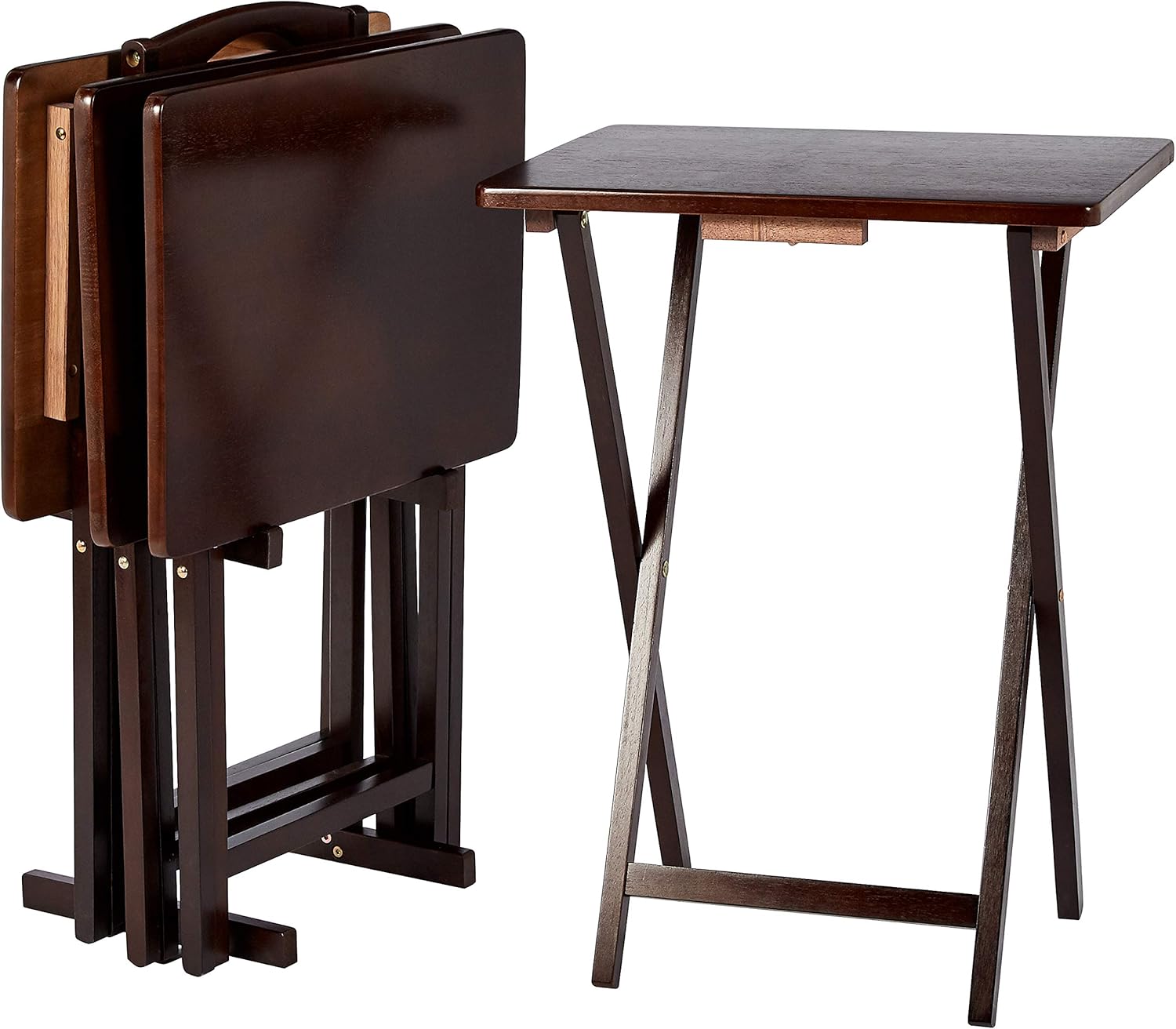
Dark Espresso Foldable TV Tray Table
A space-saving foldable TV tray table in dark espresso for small living room comfort, apartment dining, and easy home organization.
Home Decor · Interior Inspiration · Style Guides
A foldable tv tray table is the perfect space-saving solution for small living rooms, offering versatile dining and workspace without the bulk.
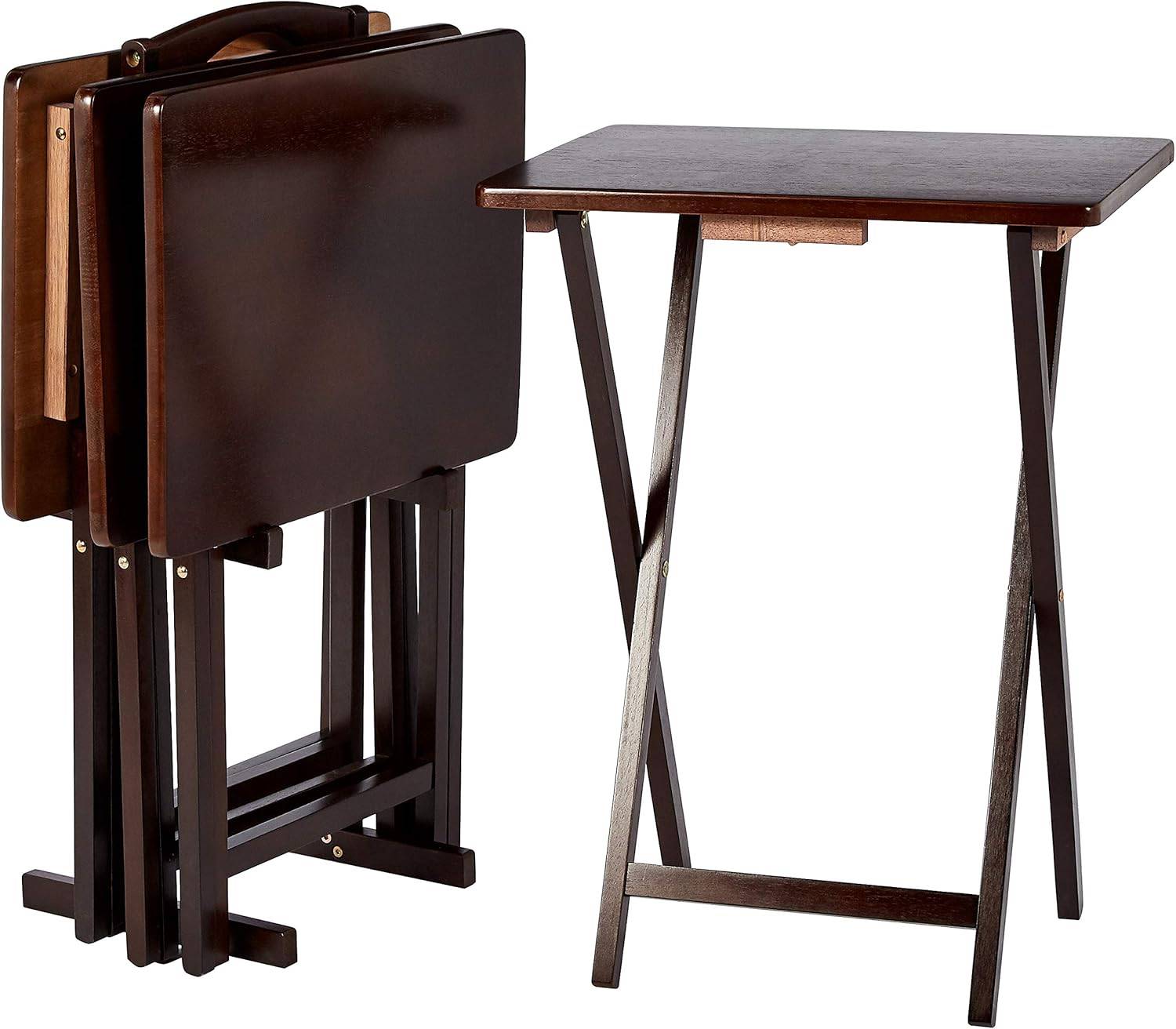
A space-saving foldable TV tray table in dark espresso for small living room comfort, apartment dining, and easy home organization.
When decorating a compact apartment or a challenging layout, one piece of furniture consistently solves more problems than almost anything else: the foldable tv tray table. For years, I have seen clients struggle to balance their need for a dining surface, a laptop desk, and an end table in spaces that barely fit a standard loveseat. A massive coffee table often becomes a roadblock, interrupting the natural flow of the room and making it feel significantly smaller.
The secret to small-space living is not necessarily owning fewer things, but owning pieces that can disappear when they are not earning their footprint. A well-designed tray table does exactly that. By offering a sturdy surface that collapses to a profile of just 5 cm, it gives you back your floor space the moment you finish using it. This is spatial flexibility at its finest.
Every small living room has what I call a "spatial ceiling"—the point at which adding even one more permanent piece of furniture makes the room feel crowded rather than cozy. In rooms under 15 square meters, a traditional coffee table paired with a side table often hits that ceiling immediately. The room starts to feel like an obstacle course, and the simple act of walking to the window requires navigating around sharp corners.
When you swap those permanent fixtures for a foldable tv tray table, the room breathes again. You get the functional surface you need for a cup of coffee, a dinner plate, or a laptop, but without the permanent commitment of a heavy wooden block dominating the center of your floor plan. The key is in the edit. If a piece of furniture does not serve a purpose 24 hours a day, it should not take up space 24 hours a day. For more on this editing philosophy, you can read our guide on small living rooms that feel twice their size.
Over the past nine years of styling small rentals, I have noticed that clients who switch to collapsible furniture report feeling much more relaxed in their homes. Visual clutter and physical blockages are intimately linked; removing a physical barrier often feels like removing a mental one.
Not all trays are created equal, and choosing the wrong size can defeat the purpose entirely. For optimal use from a sofa, the table needs a height of roughly 65 to 70 cm. This allows the surface to hover comfortably over your lap without requiring you to hunch forward, maintaining a healthy, ergonomic posture whether you are eating or working.
The tabletop itself should be approximately 48 cm wide and 38 cm deep. These dimensions are specific for a reason: they are large enough to hold a standard 25 cm dinner plate, a glass, and a small side bowl, but narrow enough to easily store behind a door or slide under a low-profile couch. Any wider, and the table becomes unwieldy to fold and move with one hand. Any narrower, and it loses its utility as a reliable dining surface.
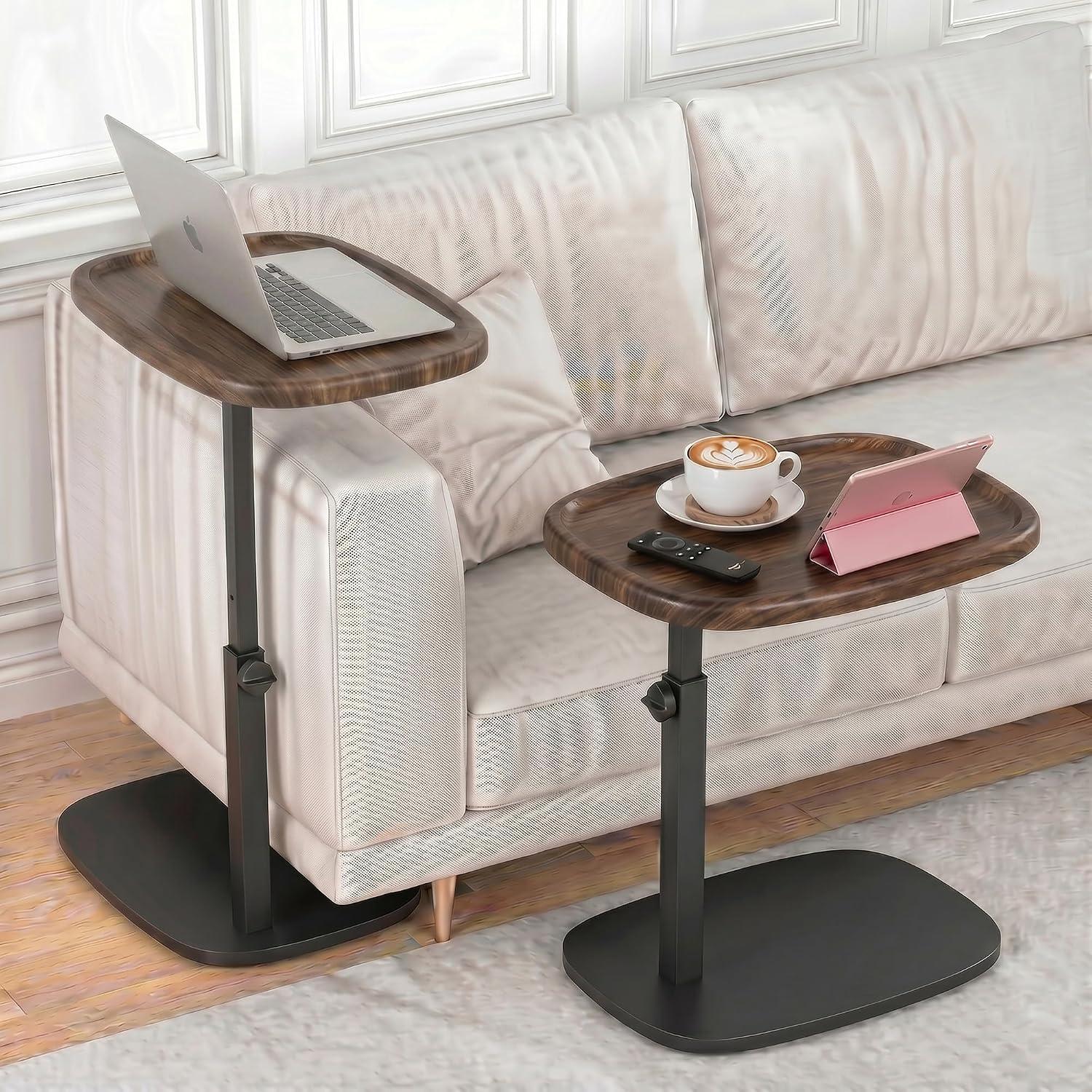
You must also consider the leg design. Traditional X-frame legs are sturdy and classic, but they require you to sit further back. C-shaped designs allow you to pull the table much closer, reducing strain. Whichever style you choose, make sure the legs have rubber or felt glides. If you are moving the piece daily, you do not want to risk scratching hardwood or snagging a delicate cozy fleece throw blanket.
The material you select for a small, portable table significantly influences how the room feels. In a space heavily anchored by soft, light neutrals—like cream linen sofas and oatmeal rugs—a dark finish provides necessary visual weight. A dark espresso or rich walnut wood finish acts as an anchor. It stops the room from floating away into a sea of beige and offers a crisp, tailored contrast.
I frequently recommend dark woods for these smaller accent pieces because they disguise wear and tear much better than painted white or raw pine surfaces. A tray table takes a beating; it holds hot mugs, damp glasses, and heavy laptops. A solid wood construction with a durable espresso finish will maintain its elegant appearance long after cheaper composite materials have chipped.
A space-saving foldable TV tray table in dark espresso for small living room comfort, apartment dining, and easy home organization.
When introducing a dark wood piece into a light room, repetition is essential. Ensure that the dark espresso tone appears in at least one other place—perhaps in a picture frame, a curtain rod, or a lamp base. This deliberate repetition makes the addition feel intentional rather than accidental.
When the table is in use, placement is straightforward. But the true test of this furniture is how it behaves when folded. If you have to shove it into a crowded hallway closet every time you want it out of sight, you simply won't use it.
The best storage solutions are integrated directly into the living room layout. A folded table, at roughly 5 cm thick, can easily slide behind an armchair that is pulled slightly away from the wall. This takes advantage of the "dead zone" created by the chair's tilted backrest. Alternatively, if you have a sofa with a skirt or a high clearance, slipping the folded tray horizontally underneath is completely invisible.
If hidden storage is impossible, embrace visible storage. Lean the folded tray against the wall in a narrow alcove, and place a tall, textured ceramic vase in front of it. The tray then acts as a subtle architectural backdrop rather than a discarded piece of furniture. It becomes part of the layering of the room.
The beauty of flexible furniture is that it adapts to the rhythms of your day. In the morning, it serves as a minimalist coffee station beside a sunny window. In the afternoon, it becomes a temporary desk for answering emails. By evening, it is a dining table for a quiet meal while watching a film.
This versatility is crucial for maintaining order in small spaces. By refusing to let one bulky piece of furniture dictate the layout, you reclaim control over how your room functions. The layout serves you, not the other way around.
When you pair this approach with thoughtful lighting—relying on warm 2700K floor lamps rather than harsh overheads—and keep the floor clear of unnecessary clutter, a small living room can feel incredibly luxurious. The discipline of the one-in, one-out editing rule, combined with smart, collapsible solutions, ensures that your space remains a peaceful retreat regardless of its square footage.