Featured in this article
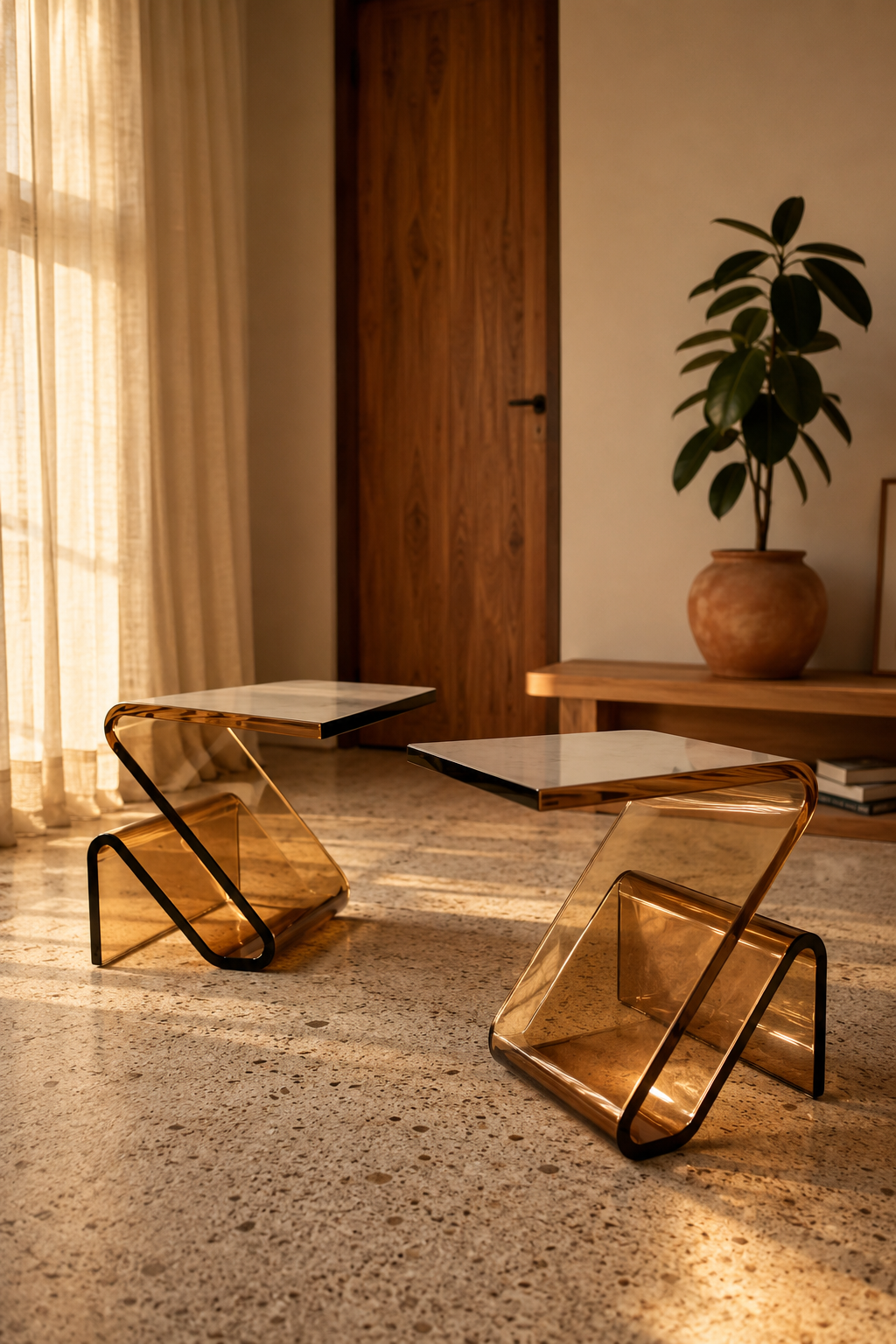
Acrylic Record Player Table | Orange Storage Side Table Decor
Style an acrylic record player table for a bright vinyl corner with modern side table storage. Perfect for small space decor, magazines, and home audio.
Home Decor · Interior Inspiration · Style Guides
Setting up a record player in a tight living room requires a surface that handles the weight and vibration of home audio equipment without blocking the floor plan.
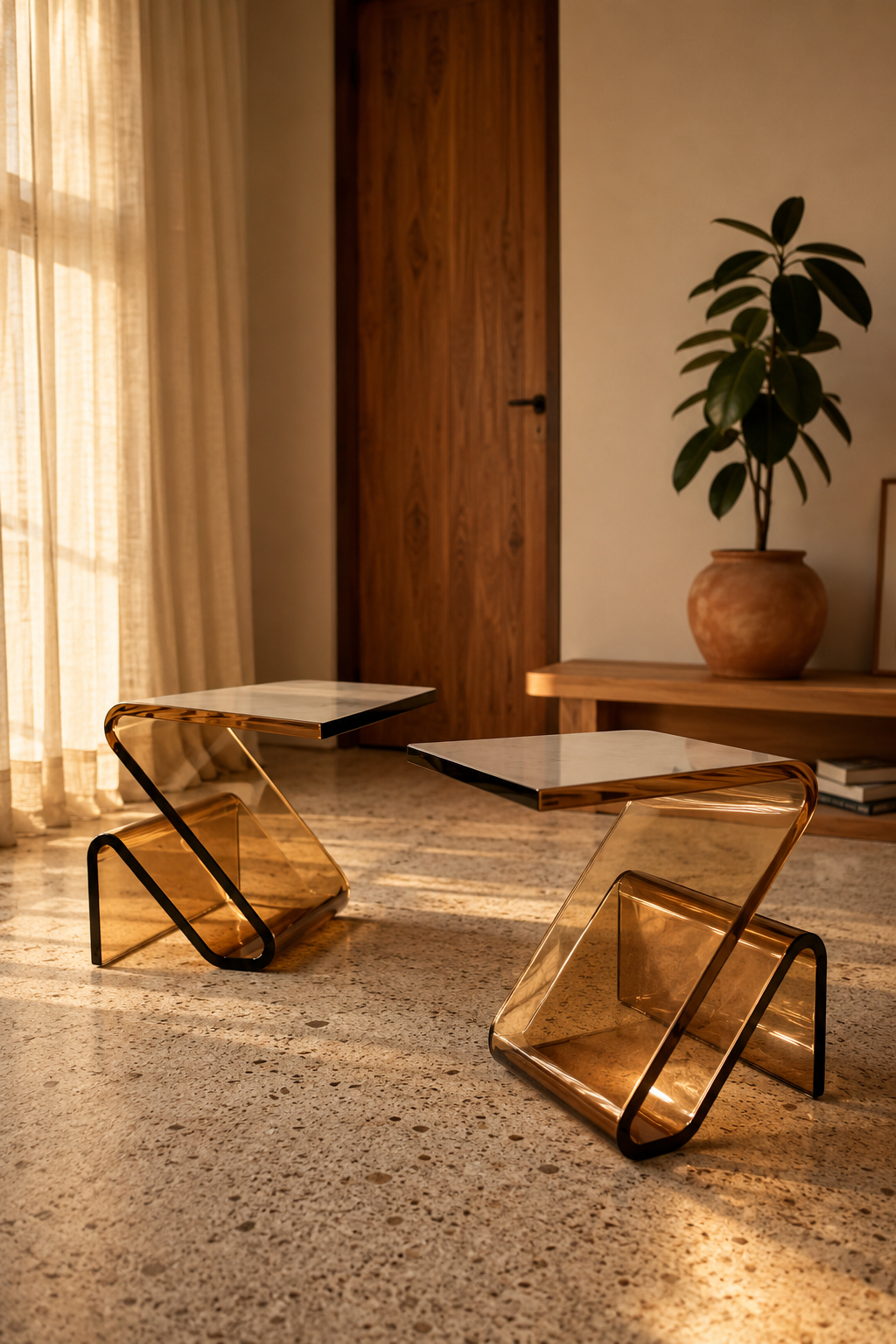
Style an acrylic record player table for a bright vinyl corner with modern side table storage. Perfect for small space decor, magazines, and home audio.
Setting up a home audio corner in a compact apartment often feels like a puzzle with conflicting pieces. You need a dedicated surface that is perfectly level, sturdy enough to isolate a sensitive stylus from foot traffic, and proportioned correctly to hold twelve-inch vinyl records. Traditional media consoles and solid wood cabinets easily meet these structural requirements, but they introduce visual bulk. In a tight room, adding a heavy wooden box to a corner immediately shrinks the available floor space and stops the flow of natural light.
The alternative is a material that provides the necessary structural support without the accompanying visual weight. Transparent acrylic practically disappears against a wall, allowing the eye to travel through the furniture rather than stopping at its edge. However, clear acrylic can sometimes feel sterile or overly clinical, resembling a retail display rather than a residential fixture. Choosing a tinted option—specifically an orange acrylic record player table—solves both problems. The transparency preserves the open feeling of the room, while the warm, amber-like tone introduces a saturated color that makes the setup feel intentional and anchored.
When styling rental apartments for clients who insist on keeping their turntable setups in the main living space, I often face the challenge of vibration management. A record player cannot share a surface with its speakers, nor can it sit on a wobbly side table, because the stylus will physically trace the vibrations and translate them into a muddy, booming distortion through the speakers.
Acrylic, despite its visual lightness, is a surprisingly dense and rigid material. A table crafted from thick, cast acrylic—typically half an inch to three-quarters of an inch thick—has enough mass to resist the subtle vibrations caused by walking across a hardwood floor. Unlike thin metal frames that can ring or resonate, or lightweight particleboard that flexes under pressure, a solid piece of acrylic remains inert. This deadening quality makes it an excellent foundation for analog audio equipment. The orange tint adds a practical benefit as well: it subtly filters the light, making dust and minor fingerprints slightly less visible than they would be on completely clear acrylic.
Before introducing any new furniture piece, the dimensions of your specific audio equipment dictate the required surface area. A standard turntable, such as those made by Audio-Technica or Pro-Ject, typically measures between 16 and 17 inches wide, and about 13 to 14 inches deep. The table must be large enough that the feet of the turntable sit securely within the edges of the top surface, with at least an inch of clearance on all sides to prevent accidental bumps.
If you are using active, powered speakers, your space requirements end at the turntable itself. However, if you are running passive speakers with a separate stereo receiver or integrated amplifier, you need a secondary shelf. Many standard receivers are 17 inches wide and surprisingly deep—sometimes up to 15 inches to accommodate the speaker wire terminals at the back.
Style an acrylic record player table for a bright vinyl corner with modern side table storage. Perfect for small space decor, magazines, and home audio.
When evaluating an orange acrylic side table for this purpose, measure the internal clearance of the lower shelf. You need enough height to slide the receiver in, plus at least two inches of breathing room above it. Amplifiers generate heat, and while cast acrylic is durable, trapping heat directly beneath a plastic shelf is a recipe for long-term warping. If your receiver runs hot, consider placing the records on the middle shelf and positioning the amplifier on the very bottom or on a separate stand entirely.
Introducing a bright, translucent material into a room requires a thoughtful balancing act. If the surrounding furniture is heavily patterned or equally glossy, the room can quickly veer into a chaotic, retro-futuristic aesthetic. To keep the focus on the music and maintain a calm atmosphere, pair the bright orange table with matte, textured, and organic materials.
In small living rooms, a saturated orange pairs beautifully with natural walnut, matte black metals, and soft cream linens. The contrast between the rigid, glossy plastic and the soft, woven fabric of a sofa grounds the table. If your primary sofa is upholstered in a light cream linen or a textured bouclé, the orange acrylic serves as a deliberate pop of color that draws the eye toward your vinyl collection without overwhelming the seating area.
Conversely, if you have a dark charcoal, deep green, or navy sofa, the orange table introduces a complementary burst of warmth. This is the same principle applied when styling amber acrylic side tables in minimalist settings: the color does the heavy lifting, allowing you to keep the rest of the decor restrained and simple.
The most significant drawback of transparent furniture is that it offers nowhere to hide your mess. A traditional wooden console conceals the tangle of power cords, speaker wire, and RCA cables behind a solid back panel. With an acrylic table, every wire is on full display from every angle.
To maintain the sleek, modern aesthetic, cable management must be aggressively planned rather than treated as an afterthought. Start by replacing the standard black power cords with braided cables in a color that matches your baseboards or wall paint, such as white or light grey. Use clear, adhesive cable clips attached to the back edge of the acrylic table's legs to route the cables directly down to the floor in a straight, taut line.
For the speaker wires, consider running them along the baseboard using a discreet wire channel, rather than letting them drape lazily across the floor. If you must use a power strip, do not leave it resting visibly beneath the table. Mount the power strip directly to the wall behind the table, low enough to be obscured by the records stored on the bottom shelf. The goal is to make the equipment look completely wireless from a seated position on the sofa.
The visual clarity of an acrylic table is its greatest asset, but that clarity demands a specific and unforgiving maintenance routine. Acrylic is softer than glass and is highly susceptible to micro-scratches from improper cleaning.
Never wipe an acrylic table with a dry cloth, paper towels, or an abrasive sponge. The dust particles sitting on the surface will act like sandpaper, leaving thousands of tiny, dulling scratches in the plastic. Similarly, avoid ammonia-based glass cleaners, which will chemically degrade the acrylic, causing it to cloud or craze over time.
Instead, keep a dedicated, high-quality microfiber cloth nearby. When the table needs cleaning, lightly mist it with a specialized plastic cleaner or a simple mixture of distilled water and a single drop of mild dish soap. Wipe gently in a single direction, turning the cloth frequently to avoid dragging captured dirt across the surface. Because the table houses a record player, you will likely be dusting the area frequently anyway, as vinyl records are magnetic for ambient room dust. Incorporating the table wipe-down into your regular record-cleaning ritual keeps the entire corner looking pristine.
Plan maintenance before styling. Anything near water, food, pets, children, or direct sun needs a cleaning rhythm and a tolerance for wear. Soft textiles may need weekly washing, stone may need coasters, acrylic may need microfiber cleaning, wood may need pads under objects, and lighting may need a dimmer that is compatible with the fixture. A beautiful choice that is annoying to maintain usually becomes visual clutter within a month.
When placing the table, position it away from direct sunlight. Not only will intense UV rays eventually fade or warp the acrylic over many years, but direct sunlight will also warp your vinyl records. The ideal location is an interior wall, relatively close to an outlet, and safely out of the primary traffic path where someone might accidentally brush against the tonearm while a record is playing.
Use the one-in, one-out test after the change lands. Add the new acrylic piece, then remove one smaller, visually busy object from the same corner. If the room feels more intentional and focused on the music, leave the smaller object out. If the corner feels bare, return it after a week. This strategy keeps the room from turning into a collection of accumulated items and protects the clean, structural calm that makes the transparent furniture effective in the first place.