A swivel oval wall mirror adds adjustable angles to a bathroom or dressing room — but sizing, mounting height, and fixture pairing decide whether it works.
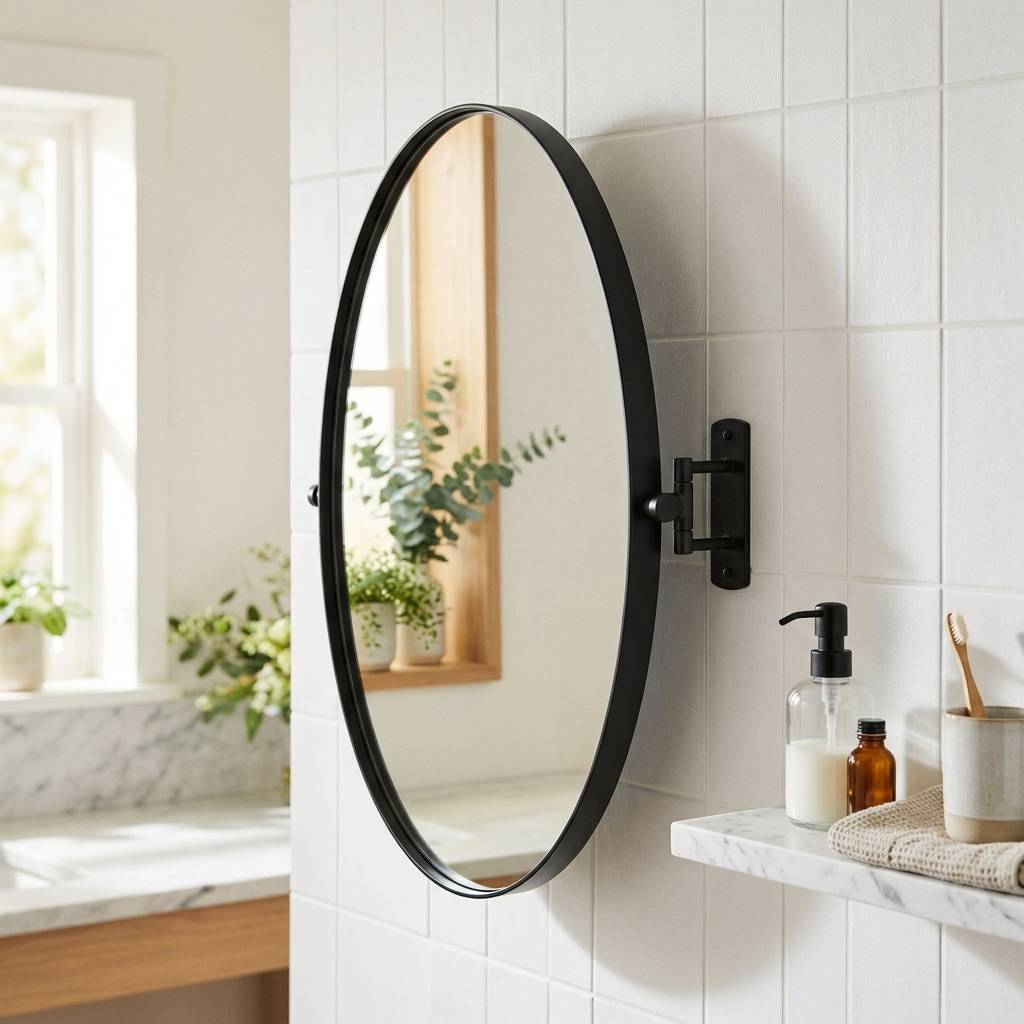
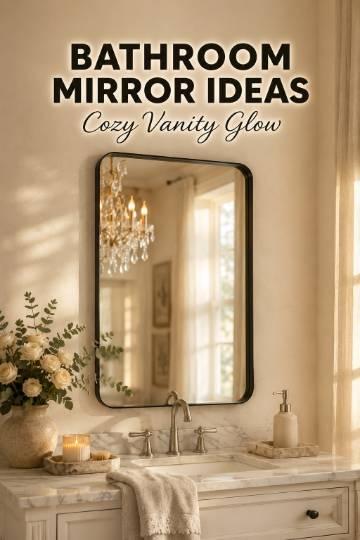
Swivel Corner Mirror, Oval Bathroom Mirror with Metal Frame (Black, 30×60 cm)
Rotating oval wall mirror with black metal frame in three sizes (30×60, 40×80, 50×90 cm), HD vanity mirror for bathrooms, dressing rooms, and entryways.
A fixed bathroom mirror gives you one angle and one answer. A swivel oval wall mirror gives you several, which matters more than most bathroom upgrades because the angle you need for applying makeup, shaving, or checking the back of your head is rarely the angle the builder chose when they tiled the wall. The oval shape softens a room full of rectangles — tile grids, vanity edges, shower doors — and the swivel bracket turns a decorative object into a functional tool you actually adjust.
I helped a client in a narrow London bathroom replace a 50 cm square mirror with a 40×80 cm oval swivel. The room looked taller, the morning light reflected differently depending on the tilt, and she stopped using the magnifying mirror she had suction-cupped to the shower glass. One piece, two problems solved.
The rest of this guide covers sizing, mounting, fixture pairing, and the care details that keep a swivel mirror working and looking clean for years. If you are updating other bathroom details alongside the mirror, our guide to black chenille bath mats covers a similar logic: one dark accent, placed deliberately, repeated in at least one other fixture.
Why Oval Works in a Bathroom
Bathrooms are dominated by hard geometry. Rectangular tile, rectangular vanity, rectangular shower enclosure. An oval mirror interrupts that grid without clashing with it. The curve draws the eye and creates a visual pause — exactly what a small utilitarian room needs.
Oval mirrors also tend to occupy vertical space more efficiently than round ones. A round mirror with the same width would be shorter, which means less usable reflection area for a standing adult. An oval stretches the useful zone from chin to hairline without requiring a wider frame.
The black metal frame adds a second function: it echoes matte black hardware (faucets, towel bars, cabinet pulls) that has become the default finish in modern bathroom design. If your bathroom already has brushed nickel or chrome, a black frame still works — but you will need to add one more black accent to prevent the mirror from looking orphaned. A black soap dispenser or a set of black wall hooks is enough.
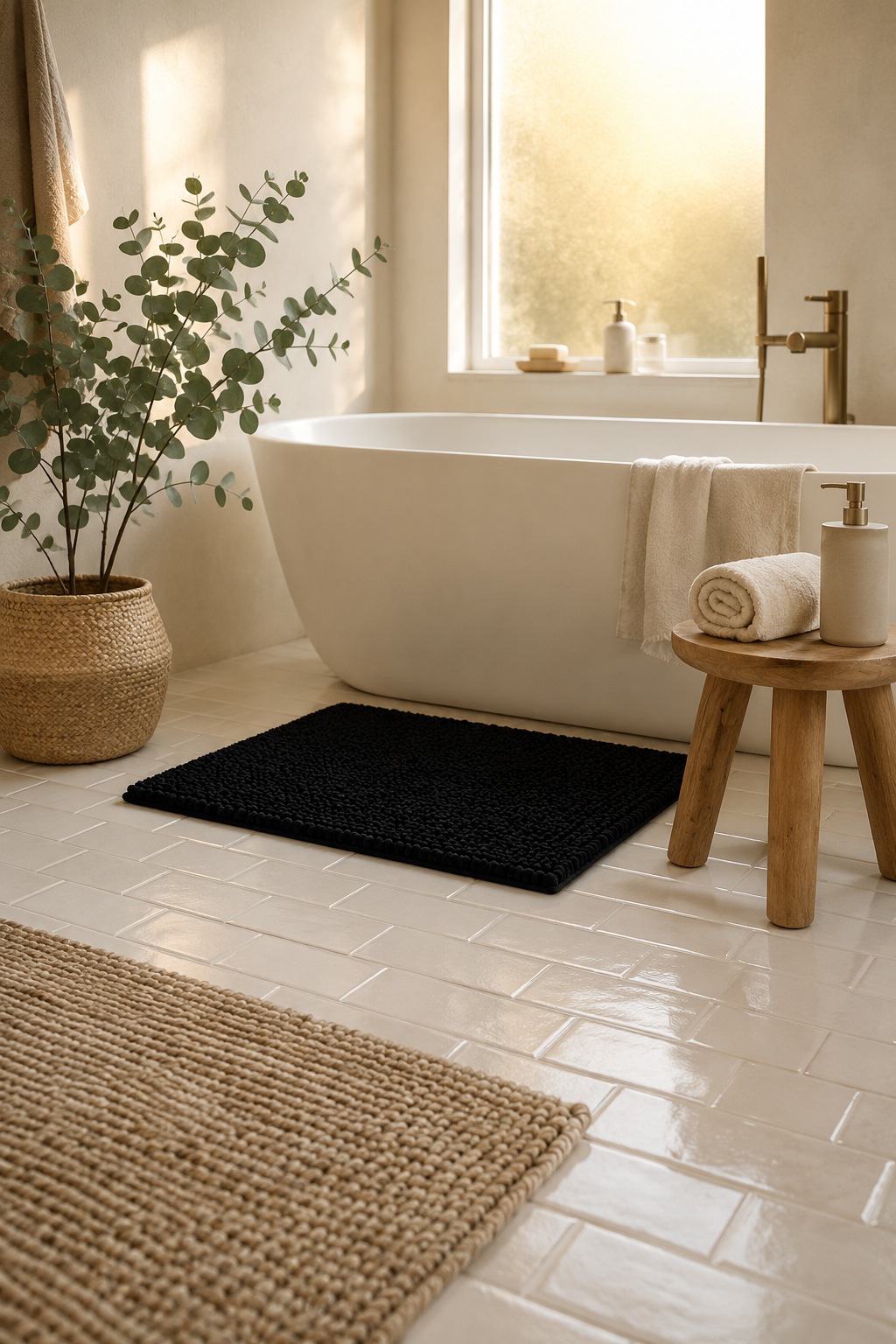
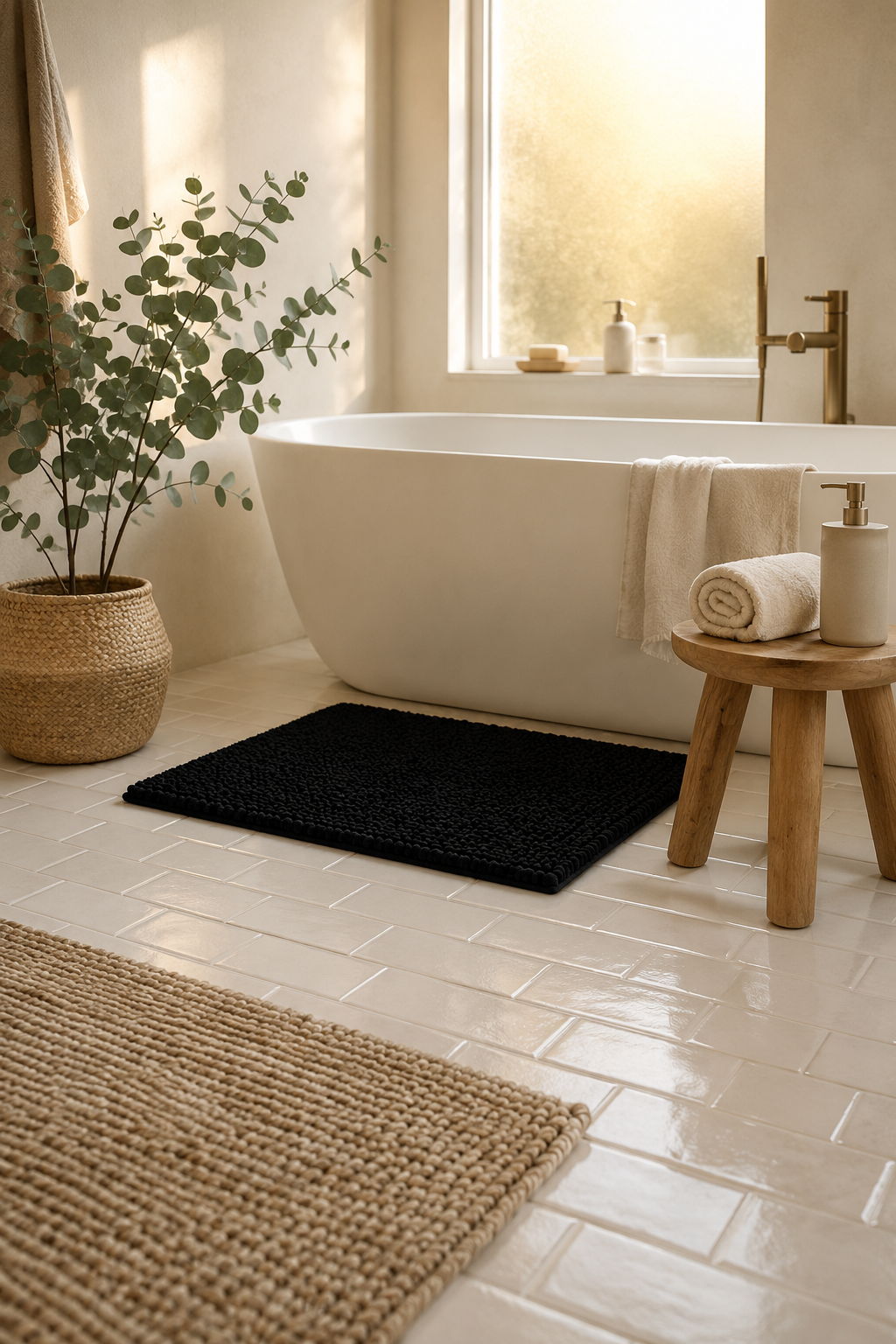
One often-overlooked echo is the floor. A black textile underfoot — a chenille bath mat in matte black — extends the palette downward and grounds the mirror visually. The mirror anchors the wall; the mat anchors the floor. Two dark accents, two different planes, one cohesive scheme.
Cozy Black Chenille Bath Mat
Soft black chenille shaggy bath mat with a machine-washable, non-slip design for modern minimalist bathrooms and spa-style routines.
This mirror comes in three sizes, and the choice depends on the vanity width and the wall space above it.
| Mirror size | Best for | Minimum vanity width |
|-------------|----------|---------------------|
| 30 × 60 cm | Small powder rooms, secondary mirrors, narrow walls | 45 cm |
| 40 × 80 cm | Standard single vanities, most bathrooms | 60 cm |
| 50 × 90 cm | Wide vanities, dressing rooms, statement walls | 80 cm |
Measure the wall space between light fixtures or between the vanity edge and the nearest obstruction (towel bar, shelf, door frame). The mirror should sit comfortably inside that gap with at least 8–10 cm of clearance on each side. Tight fits look accidental; generous margins look planned.
For dressing rooms, the larger 50×90 cm size works well because you are usually standing further from the wall than in a bathroom. The extra height captures more of your outfit, which is the point of a dressing room mirror.
Mounting Height and Swivel Range
Standard mounting places the center of the mirror at roughly 150–160 cm from the floor — eye level for most adults. With a swivel mirror, you have more flexibility because the tilt adjusts, but the default resting angle should still be comfortable for the primary user without adjustment.
The swivel bracket typically allows 15–30 degrees of forward and backward tilt. This range is enough to angle the mirror down toward a seated vanity user or up for a taller standing user. It is not enough to turn the mirror sideways, so the pivot point should still align with where you actually stand.
Mounting on tile
Drilling into tile intimidates people, but the process is straightforward with the right bit. Use a diamond-tip or carbide drill bit, set the drill to rotation only (no hammer), and tape over the mark with painter's tape to stop the bit from skating. Drill slowly. Use wall plugs rated for the tile and wall material behind it. If the wall is plasterboard behind tile, use a toggle or cavity anchor, not a standard plastic plug.
Check that the bracket screws are level before tightening fully. A swivel mirror amplifies small alignment errors — if the bracket is 2 degrees off, the mirror hangs visibly crooked at rest.
Pairing with Fixtures and Lighting
A black-framed swivel mirror becomes a design anchor. Like any anchor, it needs at least one echo in the room. The easiest pairings:
Matte black faucet — the most common and strongest echo
Black towel hook or rail — visible from the same sightline as the mirror
Black-framed shower screen — creates a bookend effect across the room
Black soap dispenser or toothbrush holder — the lightest touch, sufficient in a small powder room
Avoid matching every single fixture to black. Three or four black accents in a bathroom create cohesion. Eight black accents create a theme bathroom that feels heavy and difficult to change later.
Lighting matters because a swivel mirror reflects the light source differently at each angle. Wall sconces flanking the mirror at head height produce the most even facial lighting. A single overhead light creates shadows under the brow and chin — the swivel can mitigate this slightly by tilting down, but it cannot fix poor placement. If you are rewiring, flanking sconces at roughly 150 cm height and 20–30 cm to each side of the mirror frame are the standard recommendation.
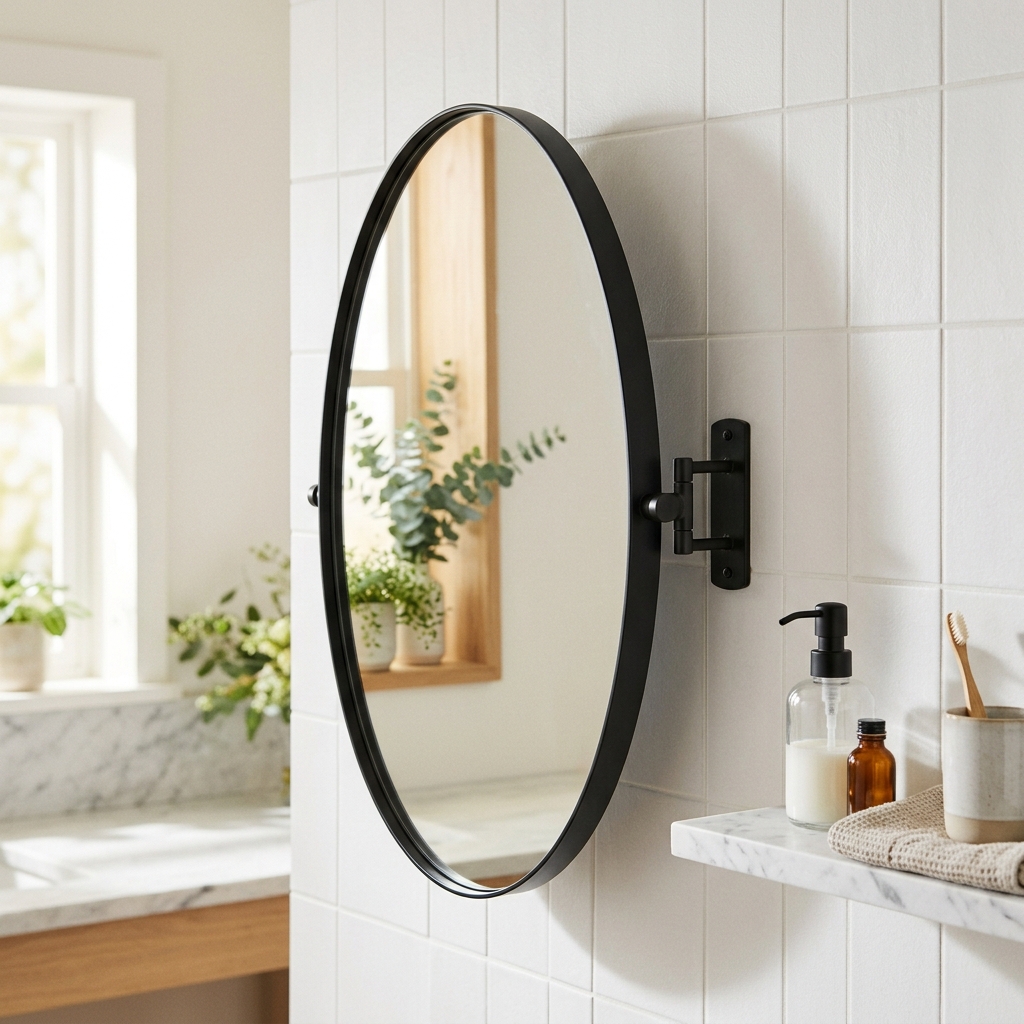
Swivel Corner Mirror, Oval Bathroom Mirror with Metal Frame (Black, 30×60 cm)
Rotating oval wall mirror with black metal frame in three sizes (30×60, 40×80, 50×90 cm), HD vanity mirror for bathrooms, dressing rooms, and entryways.
An oval mirror with a metal frame needs two separate cleaning routines.
Glass surface: Use glass cleaner or a 50/50 water-vinegar solution with a lint-free cloth. Spray the cloth, not the mirror, to prevent liquid from seeping behind the frame and staining the backing. Clean every one to two weeks in a daily-use bathroom.
Metal frame: Wipe the frame with a dry or barely damp microfibre cloth. Matte black finishes show water spots and toothpaste spray quickly. Avoid abrasive cleaners, which can scratch the powder coating and expose the base metal to moisture. If the finish does chip, touch-up paint designed for metal furniture (available in small pots) prevents rust from spreading.
Swivel mechanism: The pivot point collects dust and moisture. Once every three to six months, wipe the bracket with a dry cloth and check the tightening bolt. A loose pivot lets the mirror drift from its set angle, which is the most common complaint about swivel mirrors — and the easiest to fix.
Dressing Room Use
In a dressing room, the swivel mirror serves a different purpose: checking full outfits. Mount it on the wall opposite the wardrobe or clothing rack so you can see yourself while choosing. The 50×90 cm size is the minimum for this use; a 40×80 cm works only if you stand close.
The swivel matters more in a dressing room than a bathroom because the lighting angle changes with what you wear. Dark clothing reflects less light; light clothing reflects more. Being able to tilt the mirror 10–15 degrees adjusts the reflection enough to compensate, especially in rooms with a single ceiling fixture.
If the dressing room has a window, mount the mirror on the wall adjacent to the window rather than opposite it. This avoids direct glare in the reflection while still using natural light to check fabric color accurately. Artificial light shifts color temperature; morning window light is the most reliable check.
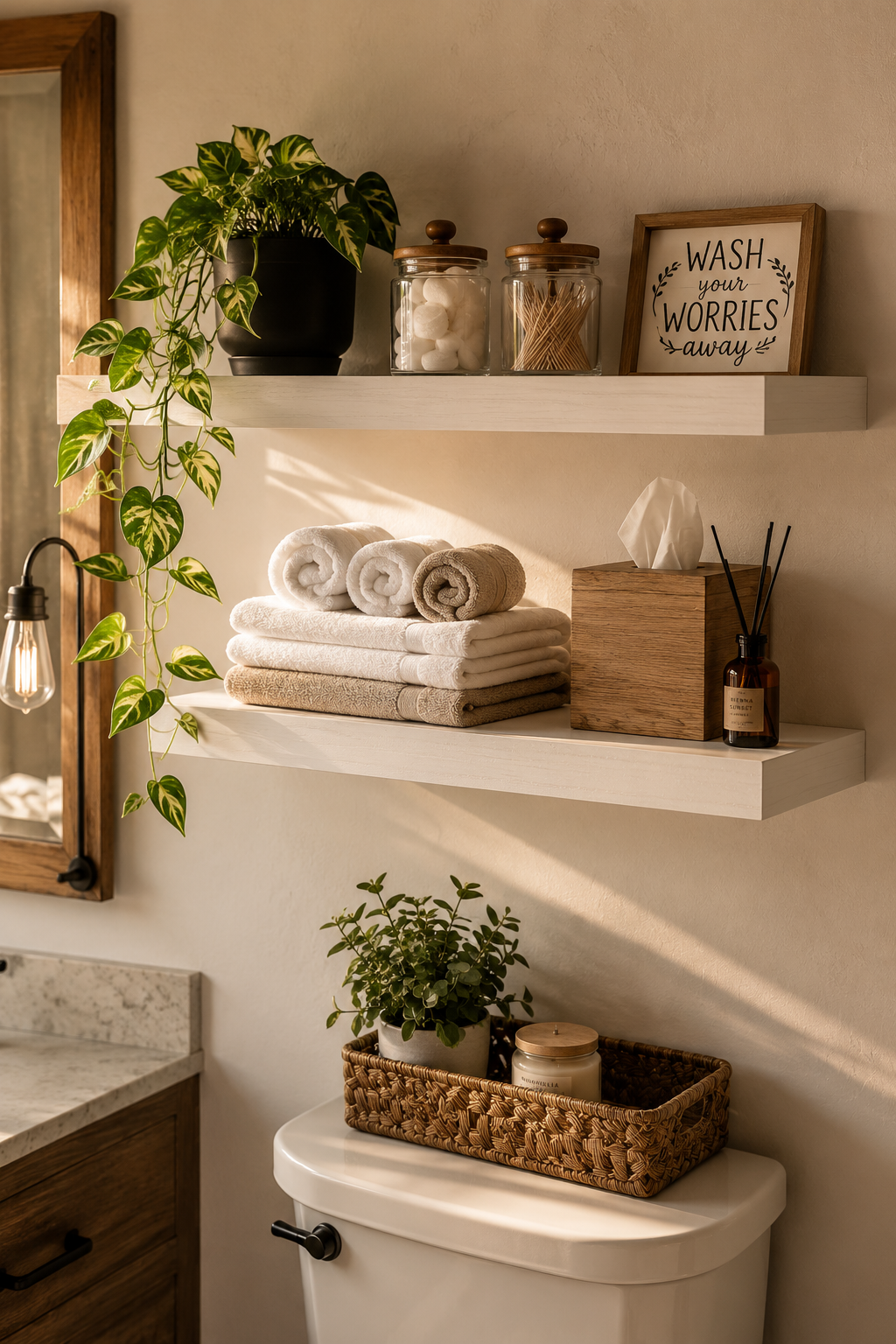
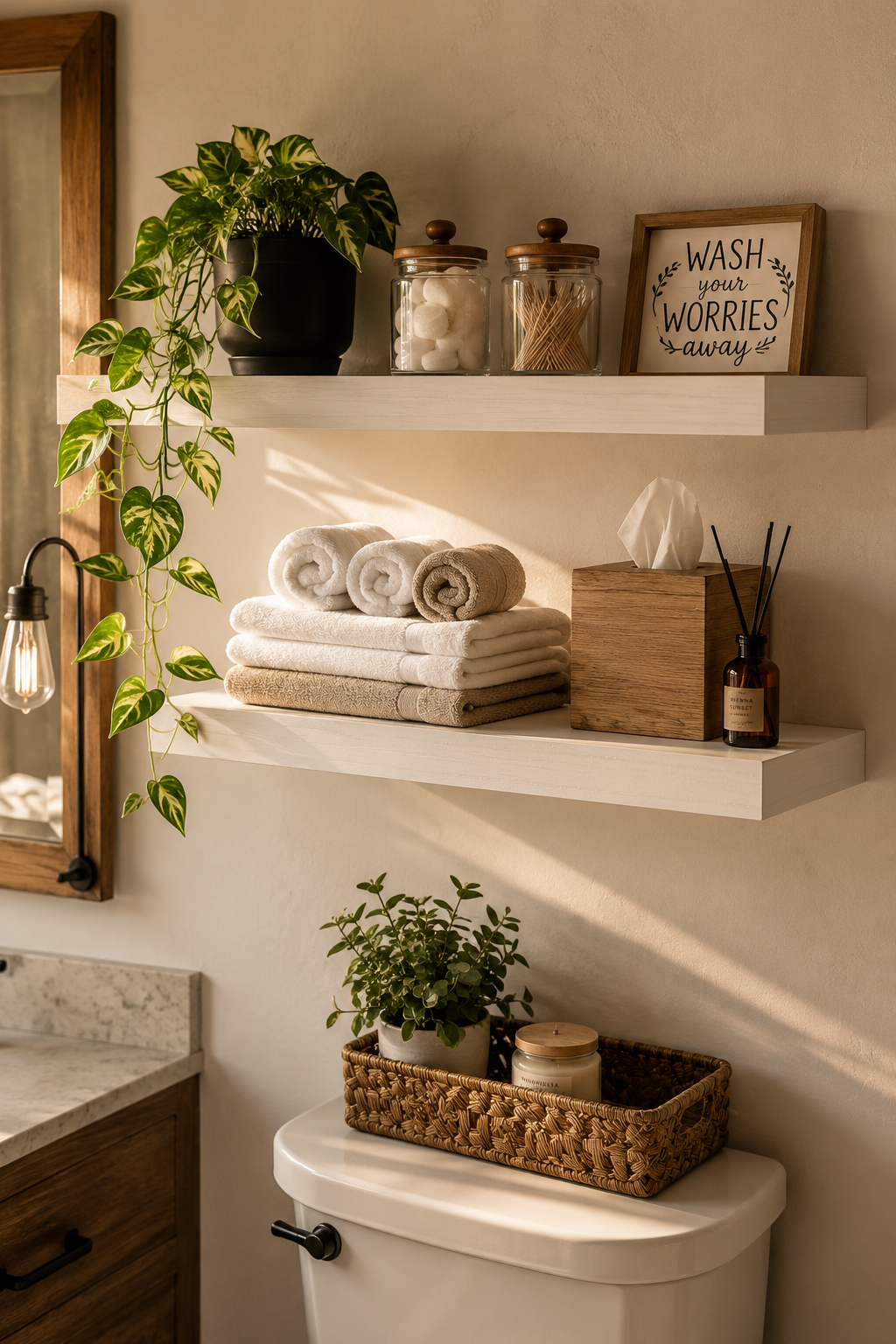
In the bathroom, the wall beside the mirror often holds toiletries, skincare, or morning essentials. A pair of small floating shelves keeps these items accessible without crowding the vanity counter. Mount them on the hinge side of the mirror — the side that does not swing — so the mirror clears the shelves at full rotation.
QEEIG White Bathroom Floating Shelves, Set of 2
Set of two white 15.7 x 6.7 inch wall-mounted floating shelves for over-toilet bathroom storage, farmhouse display, and small decor.
Start with measurements rather than mood. Mark the bracket position with painter's tape and check it from the position where you actually stand — not from the doorway. Measure the vanity width, the gap to the nearest fixture, and the height from the counter to where your eyes sit. Those numbers determine the mirror size and mounting point before anything decorative matters.
Check the finish against what is already in the room. If your faucet, shower rail, and towel bar are all chrome, a single black mirror can look deliberate if you add one more black accent. If the room already has mixed metals, keep the new addition within one of the existing families rather than introducing a third.
Plan the cleaning routine before you mount it. Bathroom mirrors collect spray, steam, and dust constantly. A pivot bracket adds one more surface to maintain. If you already avoid cleaning a fixed mirror, a swivel mirror will not improve that habit — it will just be a dirty mirror that also wobbles. Set a fortnightly reminder and keep a microfibre cloth within reach.
FAQ
Can I mount a swivel mirror on tile without cracking it?
Yes, with a diamond-tip or carbide drill bit and painter's tape over the mark to prevent skipping. Drill slowly, without hammer mode, and use wall plugs rated for ceramic or porcelain. If the tile is large-format, aim for the center of a tile rather than near an edge.
What size swivel mirror works best over a single vanity?
A 40×80 cm oval covers most single-basin vanities without crowding wall sconces. If the vanity is narrow (under 60 cm), the 30×60 cm size keeps better proportion. Measure the gap between your light fixtures before ordering.
Does the swivel mechanism loosen over time?
On most metal-bracket swivel mirrors, the pivot bolt can be tightened with a hex key if it loosens. Check the tension every six to twelve months. Avoid pulling the mirror past its designed rotation range, which stresses the bracket and the wall anchor.
How do I pair a black-framed mirror with other bathroom finishes?
Repeat the black in at least one other fixture — a matte black faucet, towel hook, or soap dispenser. Two or three black accents lock the palette so the mirror looks chosen rather than mismatched. Chrome and black can coexist if the black pieces are matte.