Featured in this article
Cozy Black Chenille Bath Mat
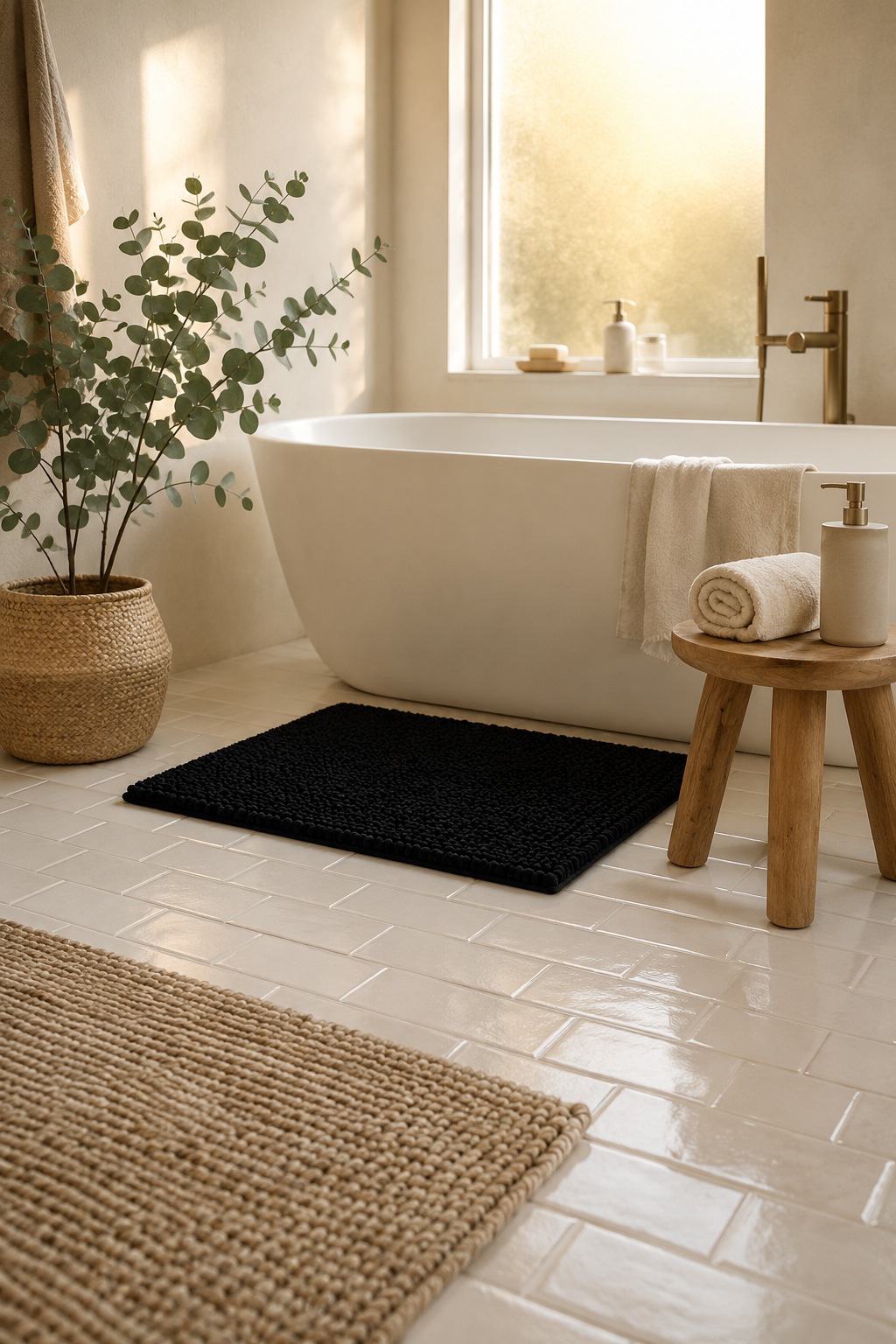
Soft black chenille shaggy bath mat with a machine-washable, non-slip design for modern minimalist bathrooms and spa-style routines.
Home Decor · Interior Inspiration · Style Guides
A black chenille bath mat anchors a modern bathroom without redesigning it — but only if contrast, placement, and towel pairing are handled deliberately.
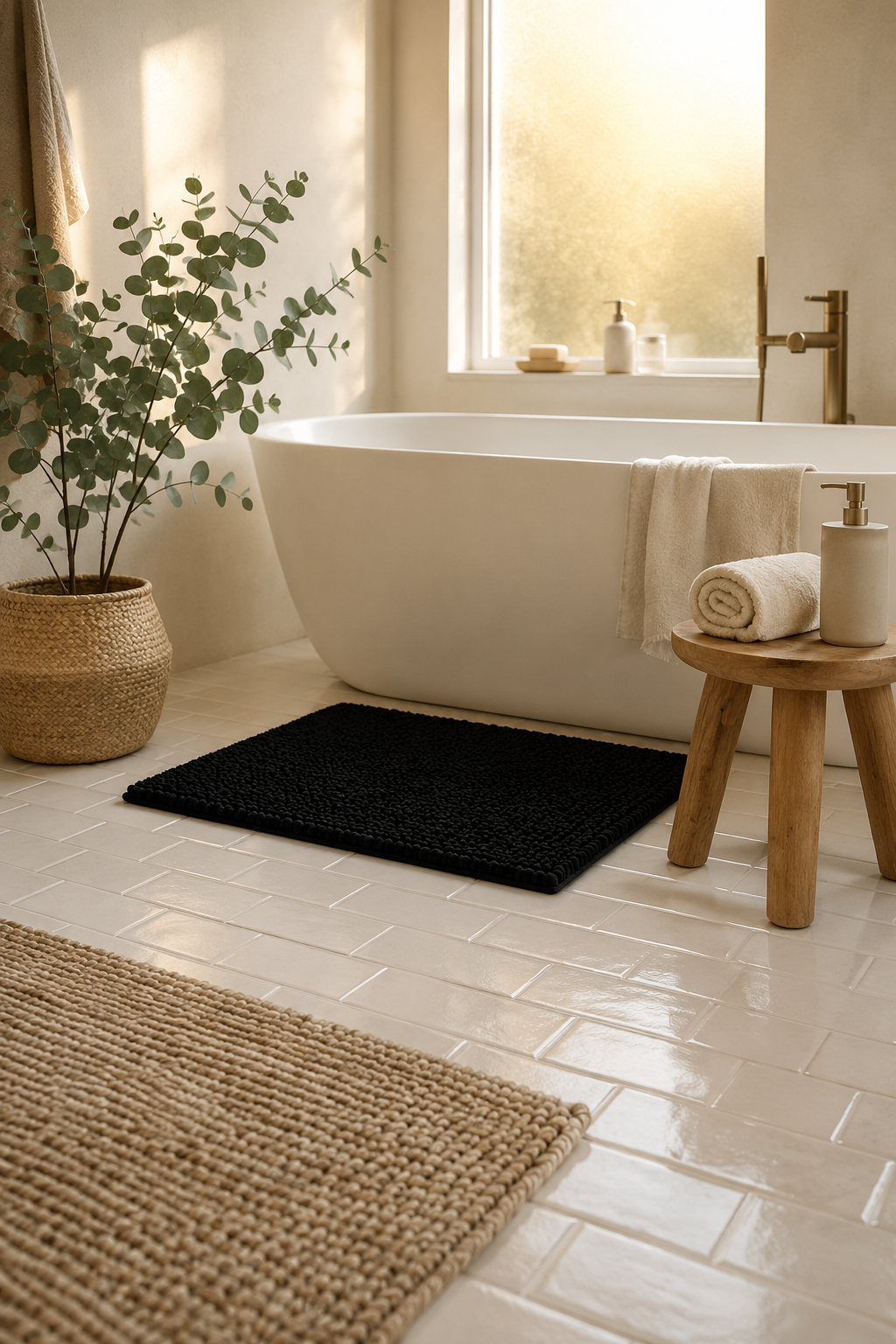
Soft black chenille shaggy bath mat with a machine-washable, non-slip design for modern minimalist bathrooms and spa-style routines.
A black chenille bath mat (or black bathroom rug) is one of the few changes you can make to a bathroom that costs very little and reads immediately. Like other small but high-impact accessories, it anchors the space instantly. It is not a neutral, though it is often treated as one. Dark, plush, and visually heavy relative to tile or grout, it shapes how the floor of the room feels — warmer, more deliberate, and more finished — or cluttered and accidental if the rest of the room is not managed around it.
This guide covers what works, what fails, and the specific decisions — sizing, placement, towel pairing, storage, and washing — that separate a bath mat that elevates a bathroom from one that just sits there.
Modern bathroom decor often relies heavily on hard, reflective, and neutral surfaces: glazed tile, glass, chrome, porcelain, mirror. Softness comes from towels, bath mats, and occasionally a plant. A black chenille mat introduces contrast and warmth simultaneously. The contrast is tonal — dark against light tile — and the warmth comes from the texture, which reads differently than a flat cotton mat of the same color.
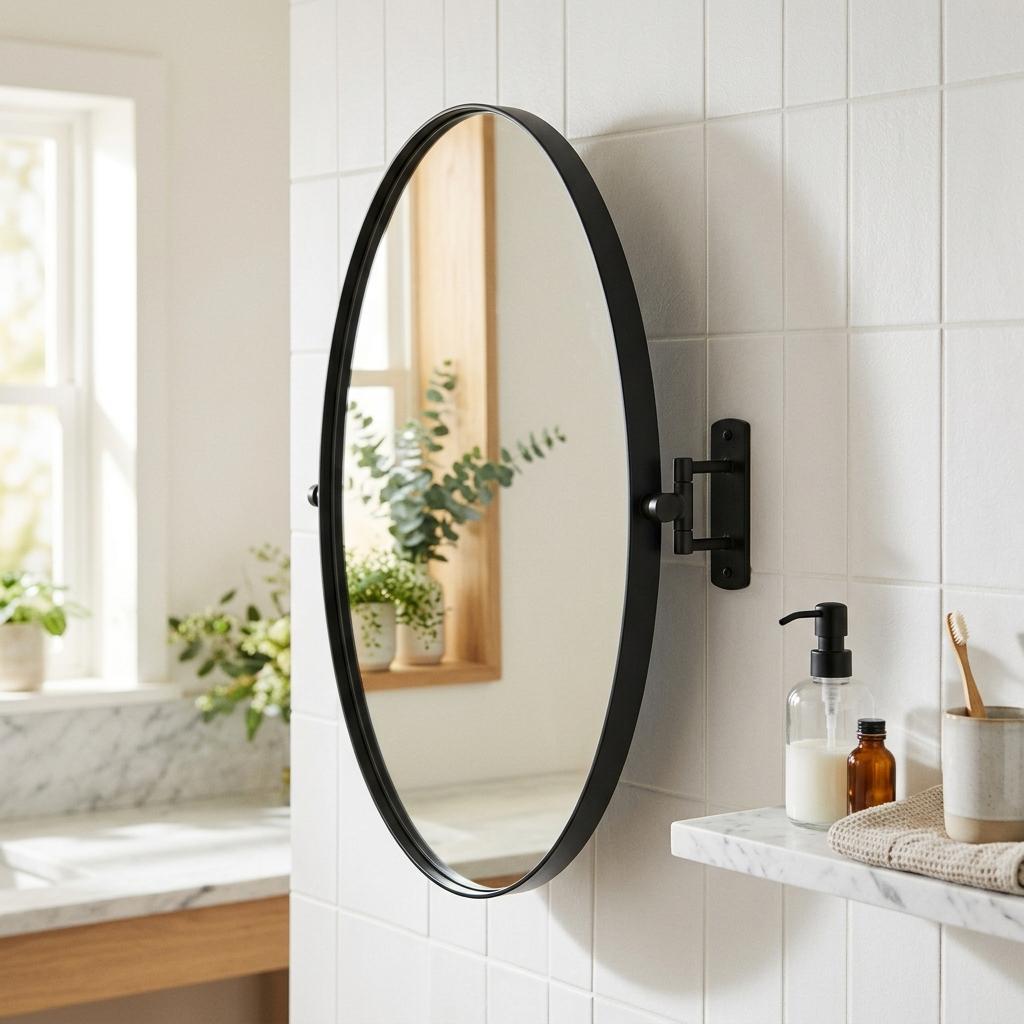
The principle that makes this work is repetition. One black object in a room can look accidental. A black mat that echoes a matte black faucet, a black-framed mirror, black cabinet pulls, or a black towel hook looks chosen. That repetition does not require many pieces — two or three small black accents is enough to lock the palette.
If your bathroom has no other black accents, the mat will float. In that case, add a single small echo: a black soap dispenser, a black toothbrush holder, or a black-framed print. The mat then becomes part of a system rather than a rogue dark patch on the floor.
Soft black chenille shaggy bath mat with a machine-washable, non-slip design for modern minimalist bathrooms and spa-style routines.
Most people buy the mat they find first or default to a standard size without measuring. In a small bathroom, this is the fastest way to make the floor look wrong.
Measure the landing zone first. The mat should cover where wet feet actually land — typically a rectangle 50–70 cm wide directly outside the shower door or bathtub edge. If the bathroom is narrow, a mat wider than the body swing of the shower door will constantly get caught underneath. If the bathroom is large, an undersized mat will look like a postage stamp.
Standard mat sizes run roughly 50×80 cm and 60×90 cm. If you need something smaller, round bath mats (diameter 60 cm) can work in tight corners without the angular alignment problem of rectangular mats.
Leave tile border on all visible sides. If the mat runs edge-to-edge between the shower and vanity, it looks like flooring rather than a textile detail. A visible border of at least 10 cm on each exposed side keeps the contrast deliberate.
Center the mat with the wet-foot landing zone, not with the room's geometric center. These are rarely the same point. A mat centered in the room for aesthetic reasons usually ends up in the wrong functional position, which means it gets kicked or repositioned every day.
Square it with tile lines or the tub edge — whichever is the dominant straight reference. A mat set at even a 3–5 degree angle to the tile grid will look wrong immediately, even to people who can't articulate why. In bathrooms with diagonal tile, align with the tub or vanity edge instead.
Keep it away from the toilet base. A mat that crowds the toilet looks like overflow, not a styling decision. Leave at least 20 cm of clear tile between the mat edge and the toilet base if layout allows.
Do not automatically match black towels to a black mat because they are the same color. Black on black — especially when both textures are plush — creates visual weight that can make the room feel damp and dense even when it is clean.
Better towel pairings:
If towels are light and textured (waffle weave, linen, low-loop terry), let the chenille mat be the sole plush element. When every textile is thick, fuzzy, and dark, the bathroom reads as overloaded rather than styled.
Chenille is looped or twisted pile — soft underfoot and good at moisture absorption. It is also the most maintenance-intensive common bath mat material. Know this before buying:
Washing frequency: Once per week for a daily-use bathroom. Chenille absorbs moisture into the pile; if it does not dry completely between uses and is washed infrequently, it will develop a mildew smell that laundering alone may not remove. After washing, hang or lay flat to dry — do not leave it in a ball in the dryer drum until you run another load.
Machine washing: Most chenille mats tolerate a standard 30–40°C wash. Higher temperatures can degrade the non-slip backing. Use a gentle cycle and avoid fabric softener, which coats the fibers and reduces absorption over time.
Non-slip backing: The backing type matters as much as the pile. Latex or thermoplastic rubber backings grip tile well when dry but can lose adhesion when wet if the tile is smooth or polished. If your tile is polished porcelain, test the mat immediately. Some mats work better on textured or matte tile.
Color fastness: Black chenille can transfer dye onto light tile grout or adjacent textiles when first washed. Wash new black mats separately once before placing them.
A black mat that lands in a cluttered bathroom becomes invisible — absorbed into visual noise rather than acting as a grounding note. Before adding the mat, edit what is visible from the bathroom doorway.
Counter: Decant products into clean bottles. Remove packaging. If skincare or fragrance needs display, a small riser or tray creates containment.
Floor: The mat should be the only textile on the floor. A second rug, a pile of towels, or a cluttered bin next to the mat competes with it. One piece of floor textile — well-placed — reads better than three.
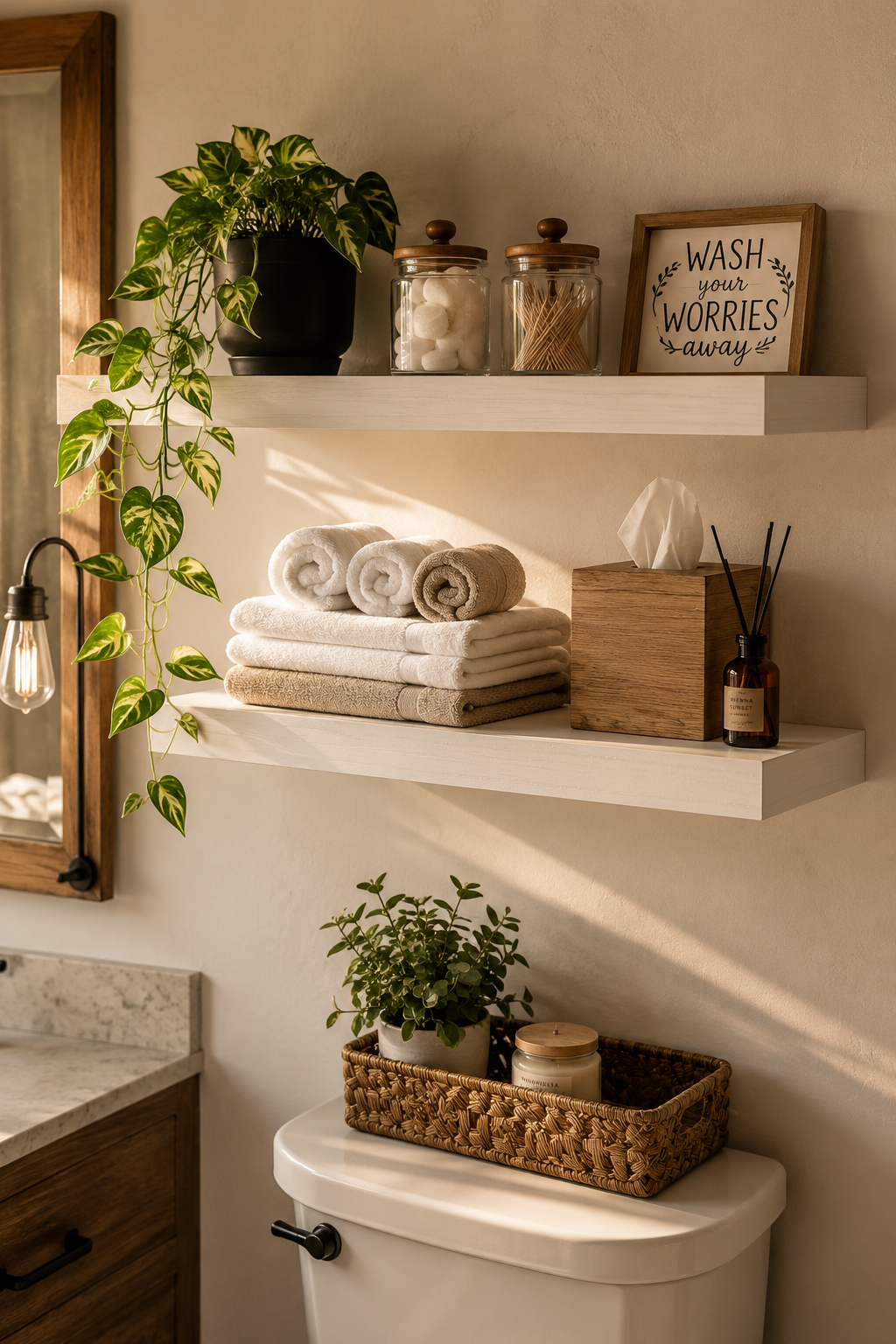
Vertical storage: Towels stored on hooks or a simple rail are calmer than towels draped over the tub edge or folded into unstable stacks. The mat will look better if the rest of the bathroom is not asking for attention simultaneously. For more on keeping vertical storage organized, see our guide to floating bathroom shelves.
Small bathrooms amplify every decision. Before purchasing:
Will a black bath mat make a small bathroom look smaller? Not if the surrounding tile is light and the mat is correctly sized. A mat that fits the wet-foot area reads as a deliberate detail; one that is too large for the landing zone crowds the floor.
How often should a chenille bath mat be washed? Weekly is the standard for daily-use bathrooms. Chenille traps moisture; consistent washing prevents mildew buildup inside the pile.
Can I pair a black bath mat with black towels? Possible, but requires restraint. If both the mat and towels are black and plush, the room reads as heavy. One dark textile at a time tends to work better.
Does chenille work on heated floors? Most chenille mats tolerate radiant heat. Verify the non-slip backing specification — rubber-backed mats can degrade faster on sustained heat above approximately 35°C.
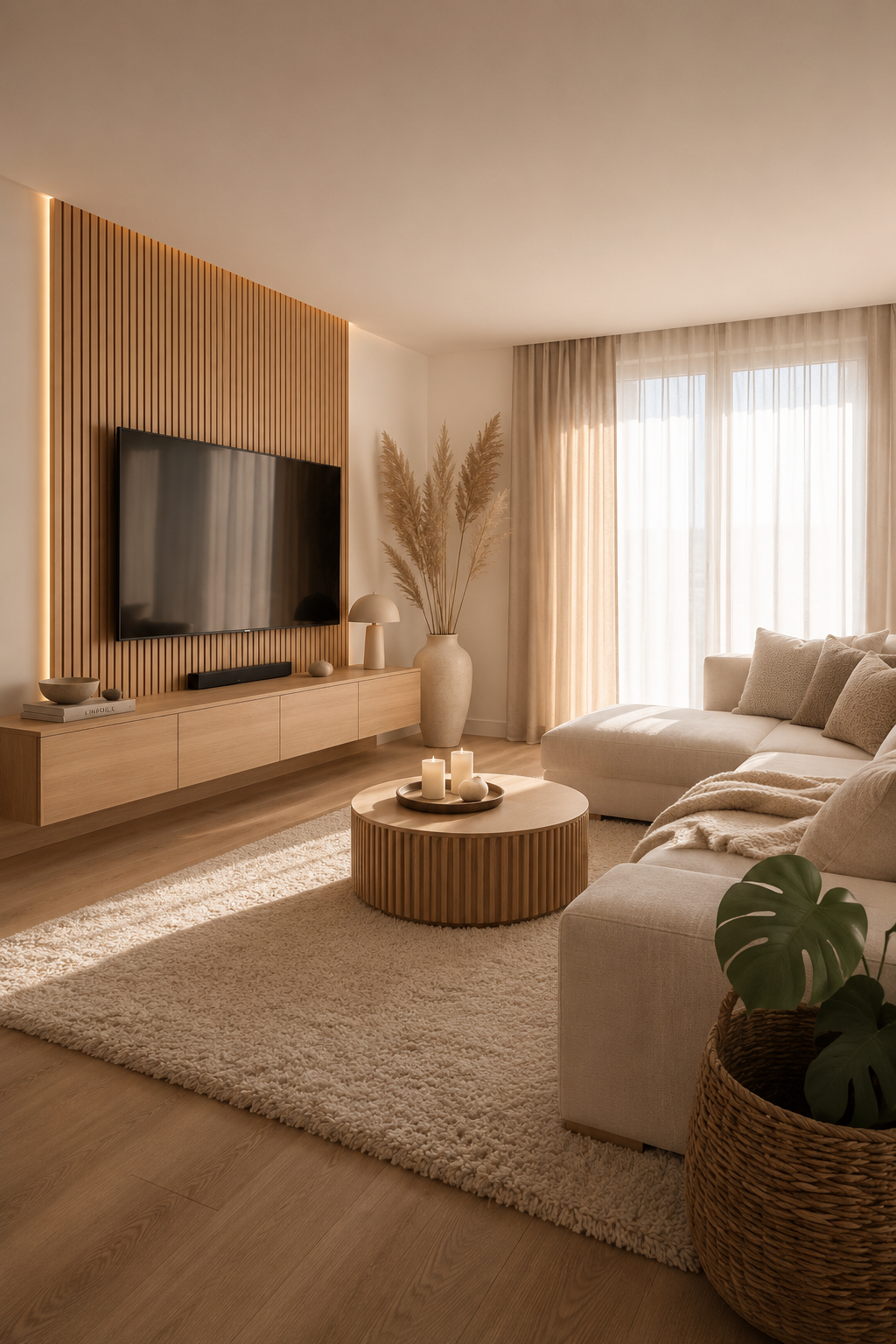
What is the best tile color to pair with a black chenille mat? Pale tile — white, cream, light grey, or warm stone — gives the most legible contrast. The mat functions as a tonal anchor, so the tile needs to be light enough to let it read as deliberate. If you are building a wider room scheme, consider how black anchors other earth-toned palettes.
A black chenille bath mat earns its place in a modern bathroom when: it repeats one other black accent in the room, it is sized and placed to match the actual wet-foot landing zone, towels are lighter and less texturally dense than the mat itself, and nearby storage is edited rather than accumulated. Wash it weekly, confirm the non-slip backing suits your tile type, and let it be the only floor textile in the space.