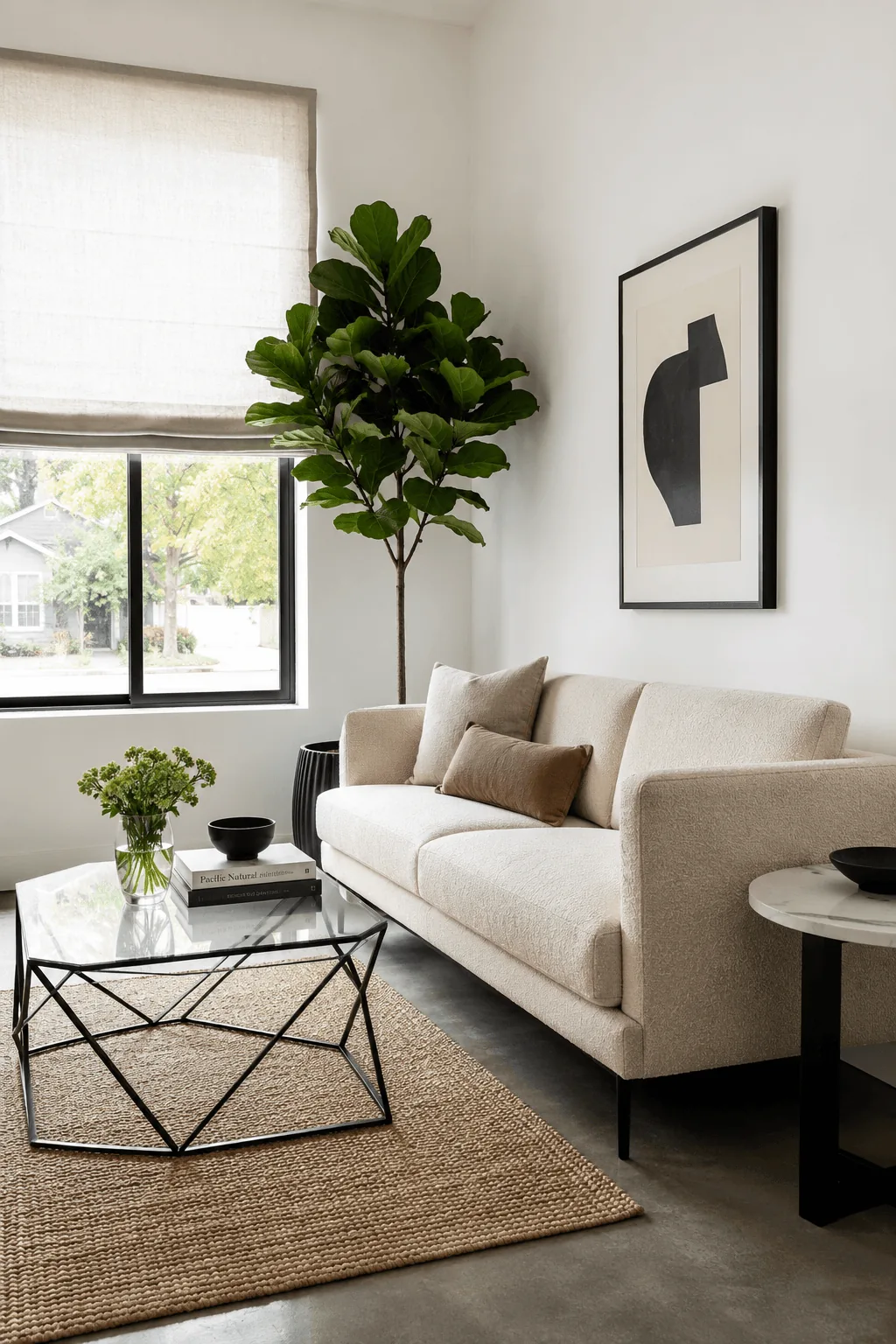
Featured in this article
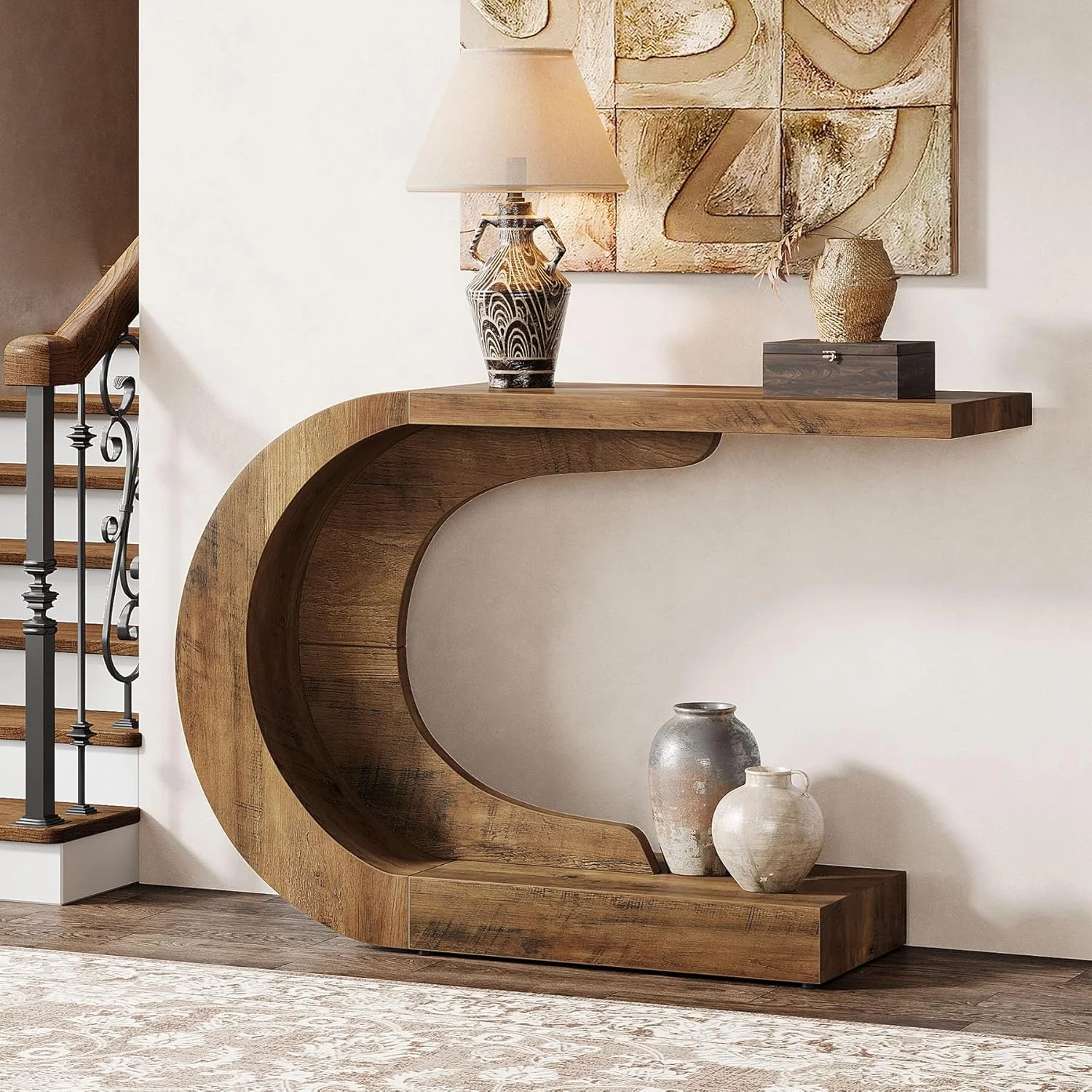
Tribesigns C-Shaped Console Table
Tribesigns 43.3" Mid-Century Modern Console Table for Entryway, Wood C-Shaped Hallway Entry Accent Table for Living Room, Brown
Home Decor · Interior Inspiration · Style Guides
Small living room ideas that actually work start with layout, scale, and editing — not more furniture. Here are the principles behind rooms that feel bigger.
Tribesigns 43.3" Mid-Century Modern Console Table for Entryway, Wood C-Shaped Hallway Entry Accent Table for Living Room, Brown
A small living room should not have to apologise for its size. The rooms that feel biggest are never the ones with the most square footage — they are the ones where every piece earns its place, the eye can move without interruption, and the layout solves problems instead of creating them. This guide collects the principles, measurements, and material decisions that make compact rooms feel generous, drawn from dozens of real-room layouts in the 12–25 square metre range.
The approach here is different from a typical mood-board roundup. We focus on repeatable decisions — furniture height, rug sizing, light temperature, walkway clearance, texture repetition — because those are the levers that actually change how a room feels to stand in, sit in, and walk through. Style labels (Scandi, Japandi, boho, mid-century) matter less than whether you get the spatial principles right.
Every small living room problem starts with the same mistake: treating the room as a container to fill rather than a space to organise. The goal is not to fit as many pieces as possible. The goal is to make the floor, walls, and windows visible and legible.
Stand in the doorway and check three things: can you see the window trim, the front legs of each main seat, and one clear walking path? If any of those disappear, the room needs editing before it needs decorating.
The strongest small living rooms we have studied share five traits: low furniture profiles, a single generous rug, warm lighting below eye level, one repeated anchor texture, and ruthless editing of small objects. We cover each of these in depth below and in the supporting guides linked throughout.
For a detailed walkthrough of seven specific spatial moves, read our guide to small living rooms that feel twice their size, which applies these principles step by step.
Furniture scale is the single biggest lever. A sofa with a seat height under 40 cm keeps the sightline clear to the walls and windows. A coffee table at knee level or below lets the rug read as one continuous plane. A floor lamp instead of a table lamp saves surface area and can be tucked into a dead corner.
The common mistake is buying a sofa that feels comfortable in the showroom without checking how it reads from the doorway. A high-back sofa with over-stuffed cushions and rolled arms might feel wonderful to sit in. It also visually consumes a third of the room before you put anything else in it.
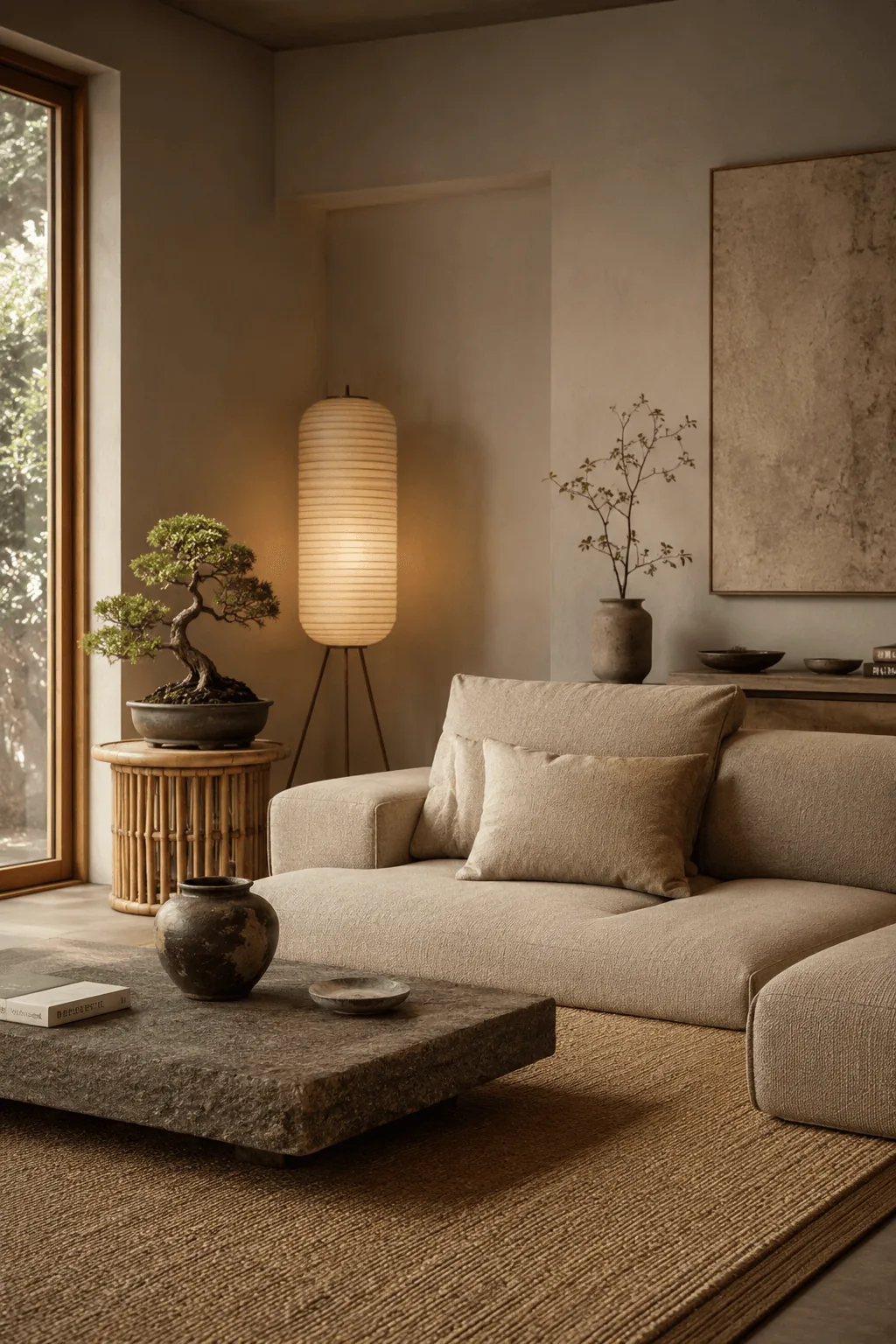
Low-profile seating is the foundation of every style that works in tight spaces. Whether you go Japandi (seat height around 38 cm, visible wood frame) or modern curved (deep seat, soft upholstery, modular delivery), the spatial logic is the same: keep the top of the sofa well below window height so the room reads as one continuous volume. For specific curved-sofa guidance, including footprint taping and fabric care, see modern curved sofa living room ideas.
Tribesigns 43.3" Mid-Century Modern Console Table for Entryway, Wood C-Shaped Hallway Entry Accent Table for Living Room, Brown
| Furniture decision | Target measurement | Why it matters in a small room |
|---|---|---|
| Sofa seat height | Under 40 cm | Keeps sightlines open to walls and windows |
| Coffee table height | 35–45 cm (knee level) | Lets the rug read as one continuous plane |
| Main walkway clearance | 60 cm minimum, 75 cm preferred | Prevents the room from feeling like an obstacle course |
| Sofa-to-coffee-table gap | 35–45 cm | Close enough to reach a drink, far enough for knee clearance |
| Rug extension beyond sofa | 60 cm each side | Anchors the seating zone as a unified area |
The instinct in a small room is to push everything against the perimeter to open up the centre. This is the exact wrong move. A room with a 2 m × 2 m empty middle and furniture flat against three walls reads as a waiting room, not a living room.
Pull the sofa 15–30 cm off the wall. Put a slim console or a single row of books behind it. The room now has two zones — a circulation path behind the sofa and a seating zone in front — and it immediately reads as larger and more functional. The empty perimeter that feels like wasted space is actually what makes the room breathable.
The same logic applies to armchairs, side tables, and floor lamps. Nothing should look like it was pushed into position by someone worried about running out of space. Everything should look like it was placed with intent, and the gaps between pieces are part of the design.
Use a single rug, sized so the front legs of the sofa sit on it. No rug layering in a small room — it chops the floor into zones and makes the space feel smaller. A single, generously sized rug unifies the seating area and lets the eye read the room as one piece.
The size rule: the rug should extend at least 60 cm beyond the sofa on each side. A 1.6 × 2.3 m rug under a 2 m sofa reads as too small and makes the sofa look like it is standing on a postage stamp. A 2 × 3 m rug under the same sofa anchors the seating area and the room feels intentionally composed.
Colour should be calmer than the sofa. Oatmeal, stone, mushroom, warm grey, or a quiet woven texture works. Pattern is fine if it is low-contrast and does not create visual noise. The rug is the foundation, not the feature.
Small rooms feel coldest when the only light source is a single overhead fixture at 4000 K or above. The fix is not more brightness — it is lower, warmer, better-aimed light.
Replace the overhead fixture with a flush mount at 2700 K for navigation, then add one warm floor lamp in the darkest corner for atmosphere. A single floor lamp tucked into a dead corner creates wall-grazing light that gives the room depth and height simultaneously. For three specific sub-$70 lighting solutions that apply this principle, see lighting upgrades under $70.
The colour temperature principle matters everywhere. Cool-neutral palettes (cream, stone, sage) paired with warm-temperature lighting (2700 K) is the combination that makes the walls recede and the light draw you in. It is the same trick restaurants use to make a 20-seat room feel intimate rather than cramped.
The floor is the most valuable real estate in a small room. Every object that sits on it costs you perceived space. Bookshelves instead of coffee-table stacks. Wall-mounted plants instead of floor pots. Floating shelves instead of cabinets.
This is where black floating wall shelves become particularly useful — a pair of dark shelves on a light wall adds contrast, function, and architecture without consuming any floor area. Mount them at the height of the doorway lintel or the upper third of the sofa wall for the strongest visual line.
A tall mirror leaning against a wall reads as architecture and doubles the apparent depth of the room. The same money spent on small surface objects reads as clutter. Choose vertical interventions first, then only add floor-level objects that earn their footprint.
The room is finished when you cannot add anything without taking something away. That is not minimalism for its own sake — it is the practical ceiling of a compact space. Respect it and the room stays generous; ignore it and the walls close in.
After placing any new piece, remove one smaller object from the same sightline. If the room feels more intentional, leave the smaller object out. If the room feels bare, return it after a week. This keeps every edit from becoming accumulation, which is the most common way small rooms lose the calm that made the original layout work.
For a living room example that builds this editing philosophy into a full product-by-product approach, see our slow-living living room shop-the-look guide.
Buying the biggest sofa you can afford. A large sofa is comfortable. It also announces itself from the doorway and leaves no room for the eye to rest. In small rooms, a loveseat or a compact two-seater with one separate armchair gives more flexibility and better circulation.
Overhead-only lighting. A room lit from a single ceiling point looks flat and institutional. Add at least one source below eye level.
Too many small objects. Three small vases on a shelf feel busier than one substantial piece. Fewer, larger, better-spaced objects read as designed; many small objects read as accumulated.
Matching everything. A room where every wood tone, metal finish, and textile colour matches looks commercial, not personal. Repeat one material deliberately and let everything else be complementary, not identical.
Ignoring the window. If the window is the best feature in the room, furniture should not compete with it. For a detailed treatment of this idea, see living rooms that don’t compete with the window.
A seat height under 40 cm keeps sightlines open to walls and windows, which makes the room feel larger. Avoid high-back designs that visually crowd the space from the doorway. Japandi and low-profile modern frames in the 36–40 cm range tend to work best.
The rug should extend at least 60 cm beyond the sofa on each side. A 2 × 3 m rug under a 2 m sofa anchors the seating zone; a 1.6 × 2.3 m rug under the same sofa makes the furniture look like it is floating on a postage stamp.
No. Pulling furniture even 15 cm off the walls creates circulation space and makes the layout feel intentional rather than packed. A floating arrangement with a slim console behind the sofa reads as larger than a wall-hugging perimeter.
2700 K warm white makes cream, stone, and sage feel rich instead of cold. Cool-white bulbs above 4000 K flatten neutral palettes and make small rooms feel clinical. Use 2700 K for evening atmosphere and keep brighter task light separate.
It can, but tape the full footprint on the floor first, including any chaise or ottoman projection. A curved sofa needs at least 60 cm of clear walkway around it to avoid feeling trapped. A straight sofa with one rounded accent chair may give the same softness with less commitment.