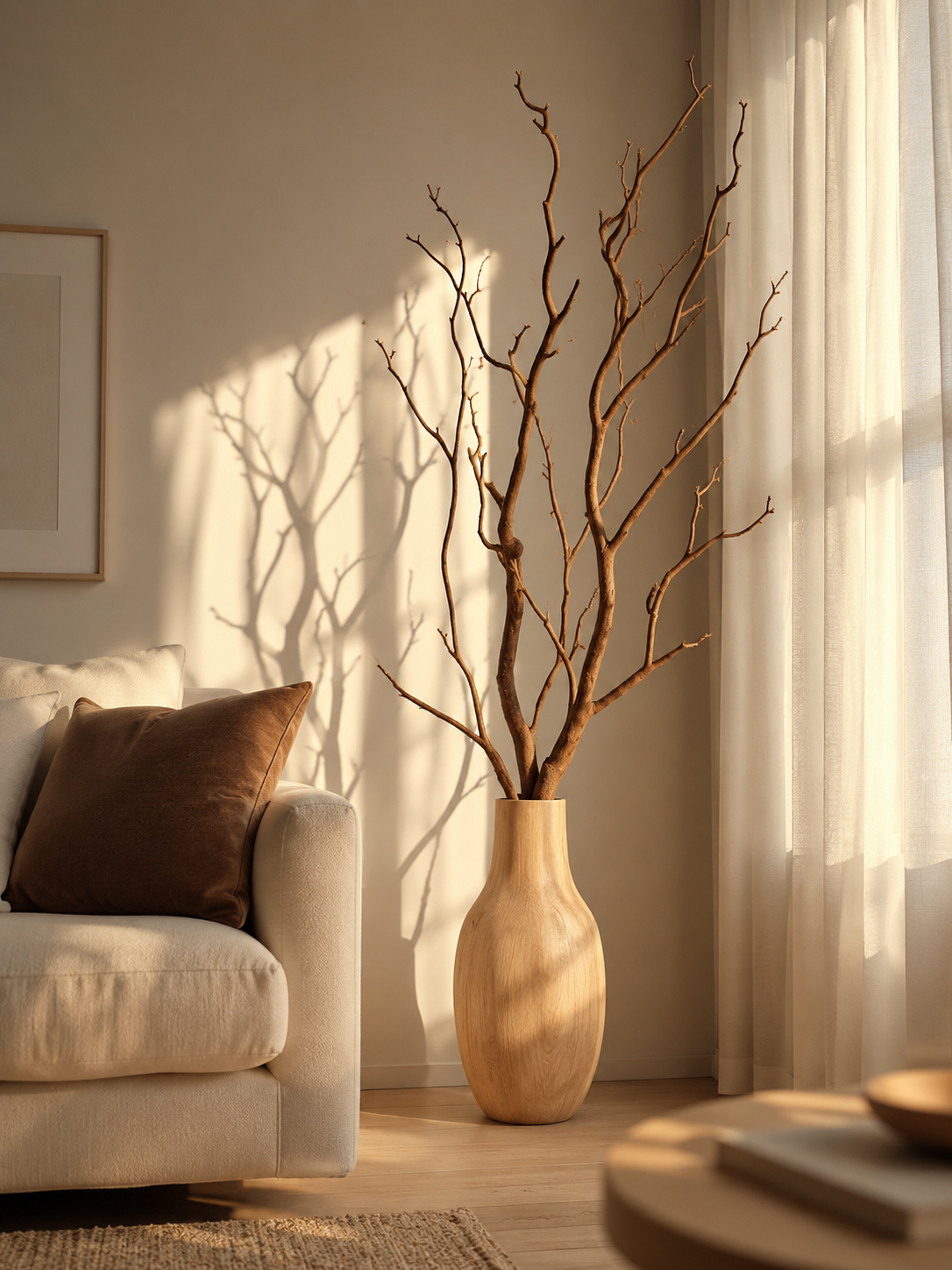
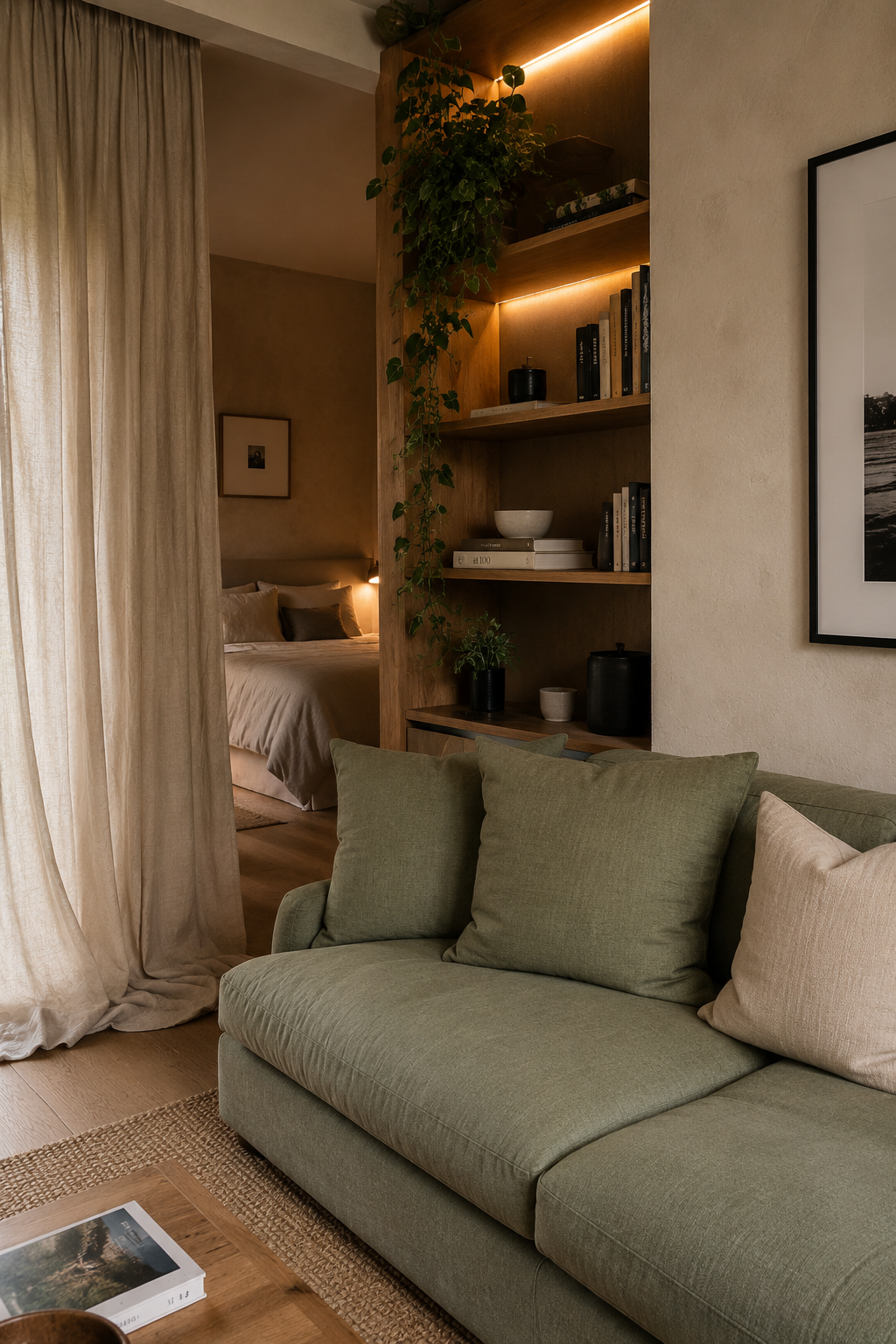
Lighting upgrades under $70 works best when sizing, placement, light, and material are planned together so the room stays calm, useful, and easy to maintain.
Most homes are lit wrong. A single overhead fixture at 4000 K makes every room feel like a waiting room. The fix isn't expensive — it's directional and warm. Three products, three rooms, under $70 total. This lighting upgrades under $70 guide keeps the focus on proportion, maintenance, and how the room feels in daily use.
In our room edits, the change works only when it solves a visible problem instead of adding another layer to manage. Use the same restraint behind modern twisted chandelier and calm kitchen: measure first, repeat materials deliberately, and leave enough blank space for the change to read.
Before we get to the products, the principle. Residential lighting has three jobs: navigation (don't trip), task (read, cook, work), and atmosphere (make the room feel like somewhere you want to be). Overhead fixtures handle navigation reasonably well. They handle task and atmosphere badly. The whole strategy below is to keep overhead lights on a dimmer for navigation only, and let directional sources handle everything else.
1. The corner floor lamp ($65)
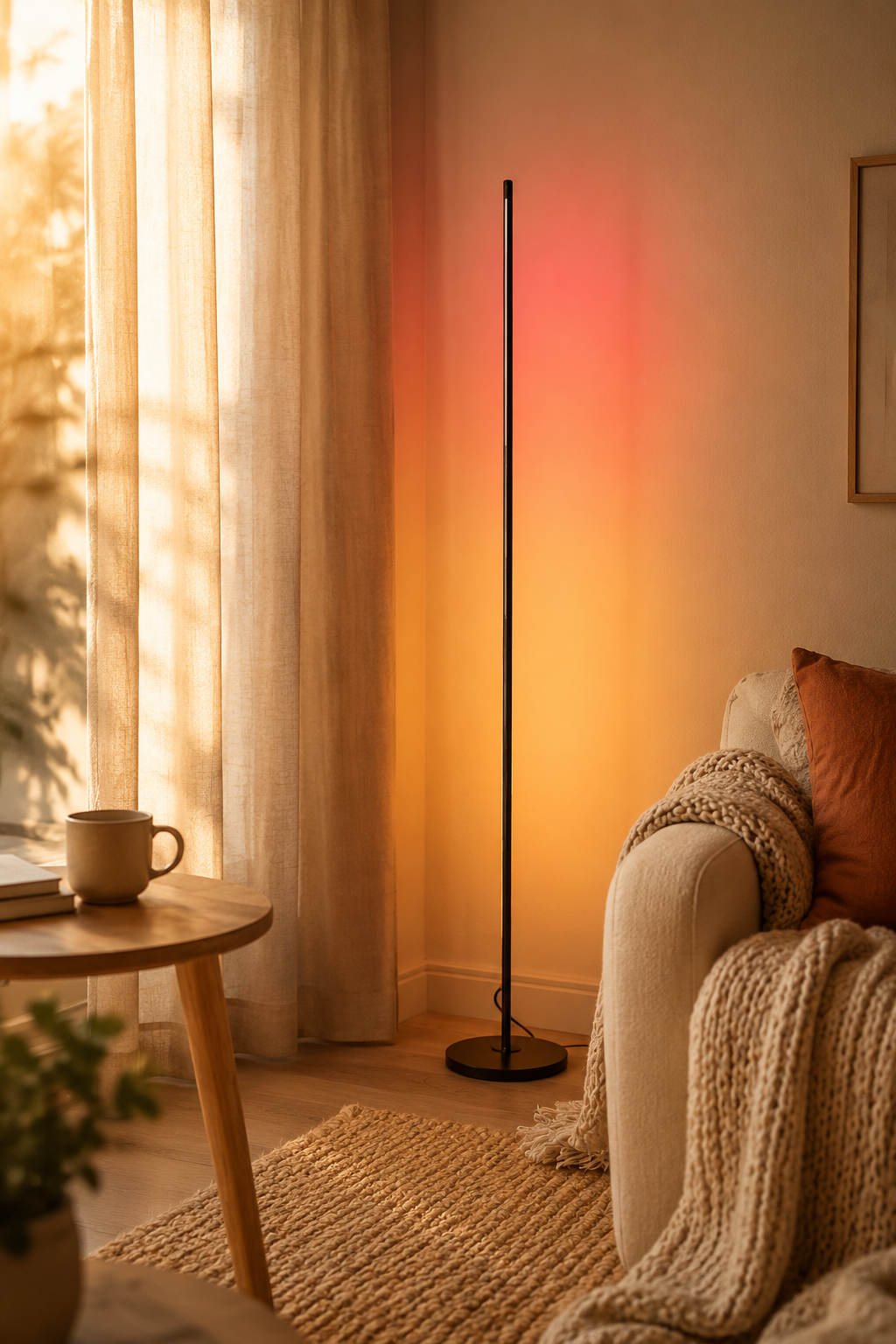
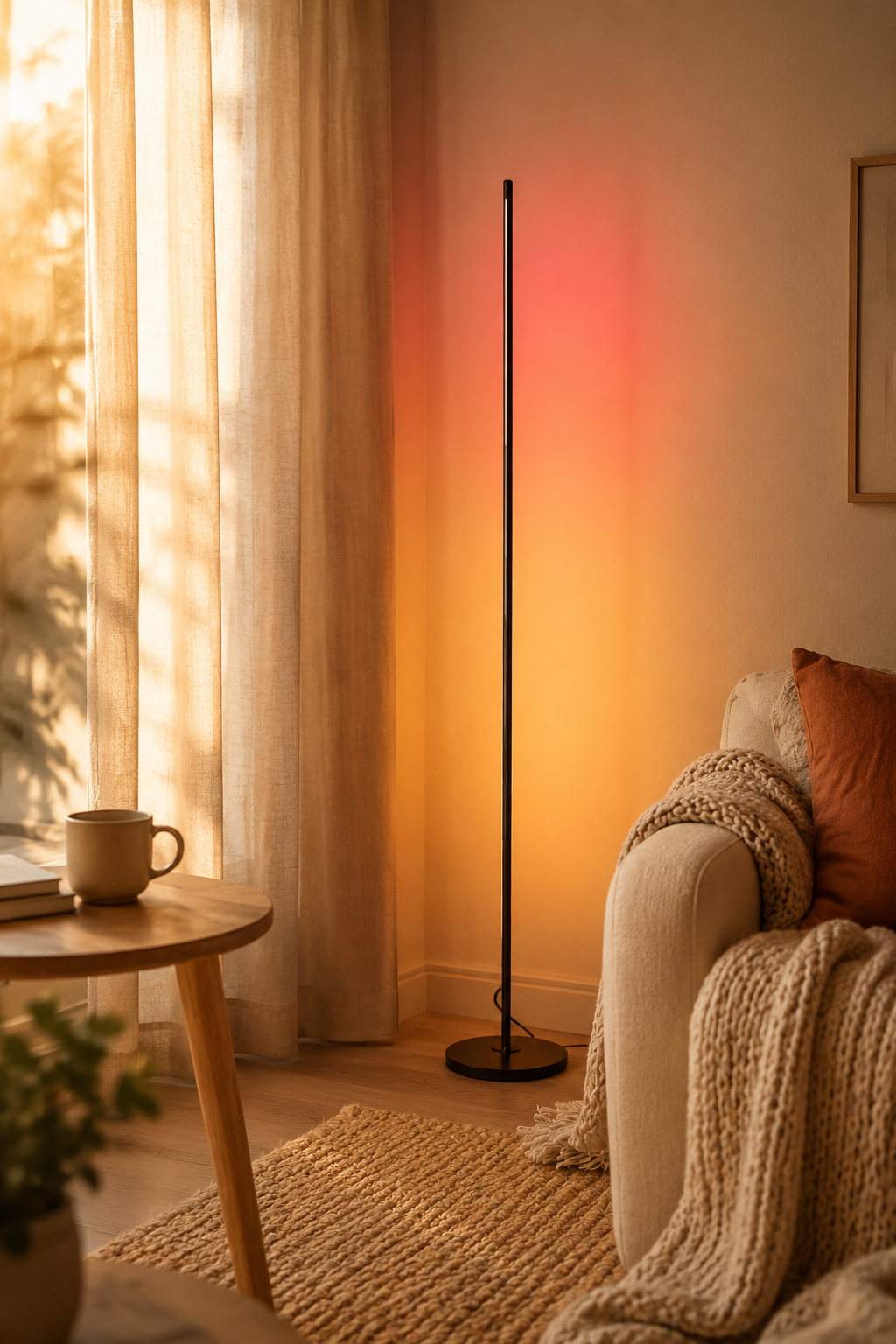
A single floor lamp in a dead corner does more for a living room than any overhead fixture. Choose a slim corner lamp with dimming, a stable base, and a warm-white setting around 2700 K; colour modes are optional, but the everyday setting should be a soft amber at about 30% brightness. That is what turns a forgotten corner into the cosiest spot in the room.
Why it works. Light that comes from below eye level and washes up a wall creates the illusion of height and warmth simultaneously. Overhead light flattens a room; corner light sculpts it. The phenomenon has a name in architectural lighting design — "wall-grazing" — and it's the technique used in galleries, restaurants, and well-lit hotel lobbies. A single floor lamp tucked into a corner replicates the effect for under $70.
Specifications worth caring about. Look for a lamp that supports 2700 K natural white in its temperature range, not just an "warm" RGB approximation. The latter looks orange on photo and yellow-green in person. A real 2700 K bulb reads as candlelight; a fake one reads as a stage prop.
Renter-friendly. Plugs in, no wiring. Connects to Alexa or Google Assistant if you want voice control, but the physical remote is enough. We unplug it when we travel and the bulb hasn't degraded after a year of daily use.
Govee RGBIC Floor Lamp Basic
Govee RGBIC Floor Lamp Basic, LED Corner Lamp Works with Alexa, 1000lm Modern Floor Lamp with Music Sync and 16 Million DIY Colors
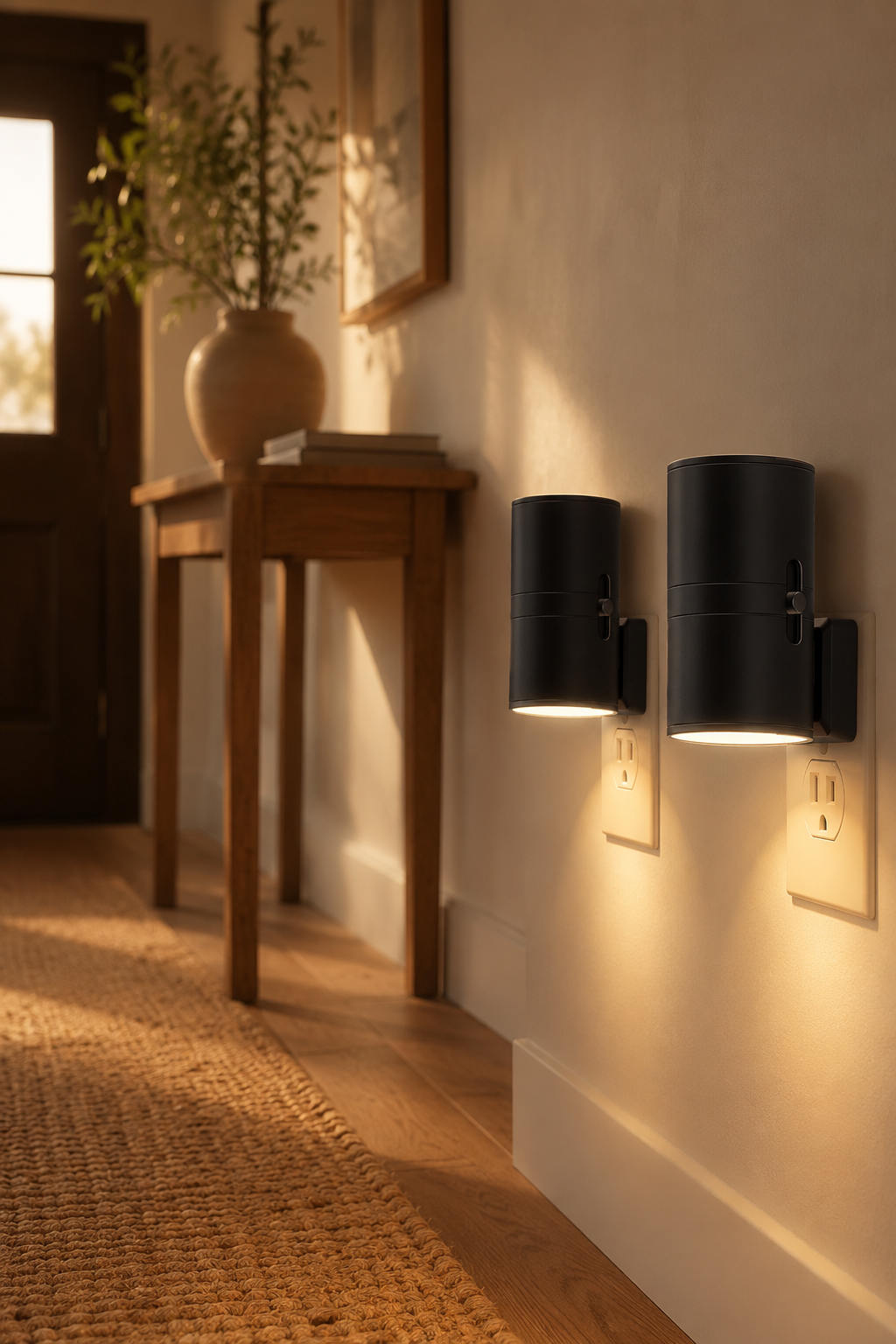
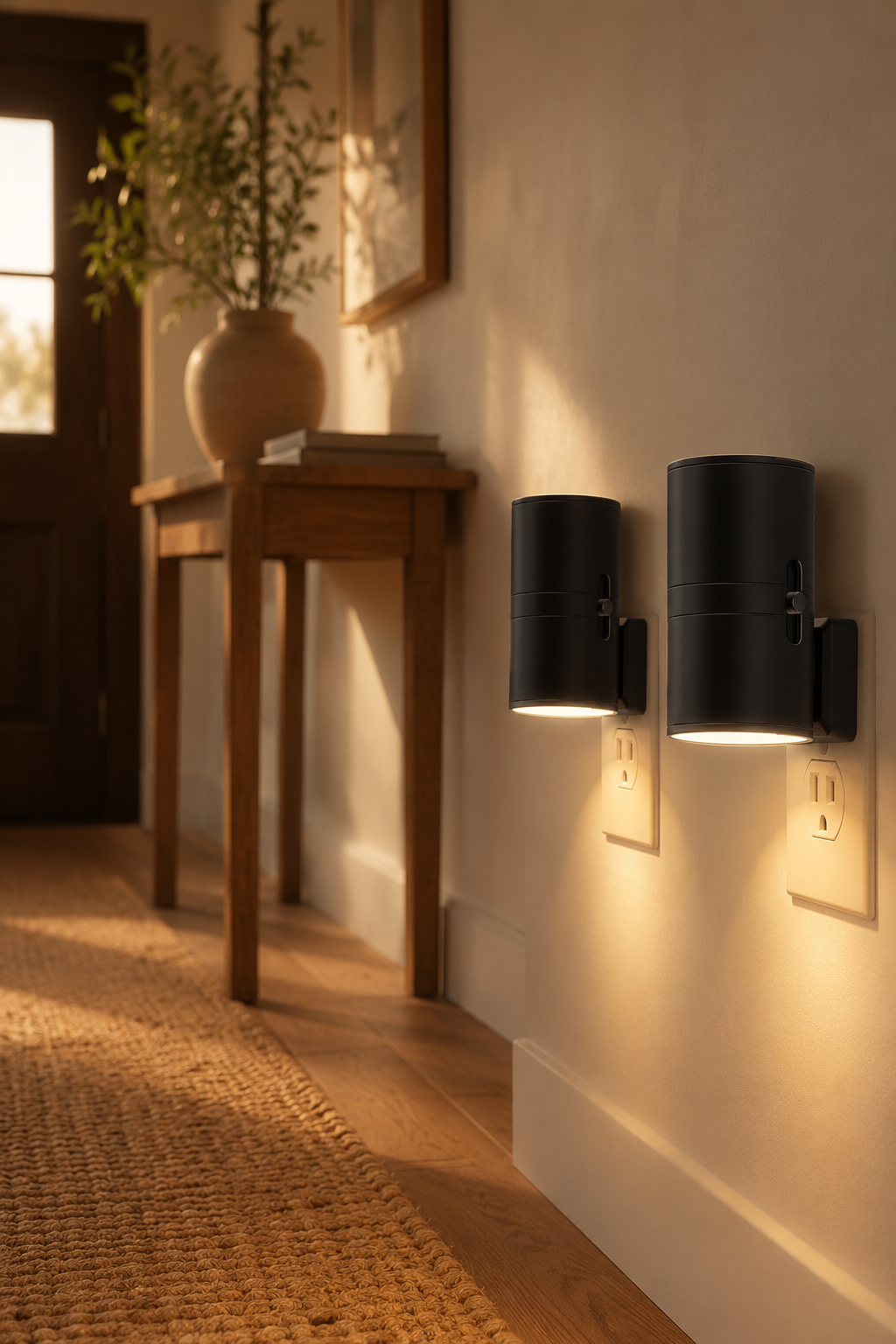
The hallway between the bedroom and the bathroom is the most-used path in any home after dark — and usually the worst-lit. Either nothing, or the bedroom light flicked on at full brightness at 3 am, which wakes both occupants. Plug-in LED night lights solve it for almost no money.
What to look for. A dusk-to-dawn sensor (zero effort), adjustable brightness (so you can set it to barely-glowing for a bedroom corridor), and a matte-black or matte-white housing rather than the translucent white plastic that's standard. The matte ones disappear into the wall instead of screaming "safety device."
Why warm direction matters. Night lights that point up at the ceiling are too bright; ones that point down toward the skirting board are dim enough to navigate by but not so bright they wake your circadian rhythm. The warm temperature (2700–3000 K) keeps melatonin suppression minimal — important for the 3 am bathroom trip you don't want to remember in the morning.
Cost to run. Pennies per year. LED, cool to the touch, no bulb to replace.
L LOHAS LED Night Light Plug in, 2 Pack
L LOHAS LED Night Light Plug in, Modern Night Lights, Dusk to Dawn Sensor, Soft White 3000K, 0-100LM Adjustable Brightness, 2 Pack
A patio without lighting is a patio you stop using at 7 pm. Fifty feet of weatherproof café-style string lights with a dimmer remote turns any outdoor space into somewhere you want to sit after dinner.
Why it works. Overhead string lights at 2700 K mimic the canopy of a restaurant terrace. The remote lets you dim to 20 % for conversation or brighten for cooking. A timer means you never have to remember to turn them off — particularly important for renters who can't run them off a smart switch.
Installation. Hook-and-loop clips on a fence, pergola, or gutter. No electrician, no ladder drama. We zigzag ours across a 4 m × 3 m balcony in a tight S-pattern; the strings hang about 30 cm above head height at the lowest point and feel like a ceiling rather than a decoration.
The bulb question. Avoid the "Edison-effect" filament-style bulbs unless they're genuinely LED. Real Edison bulbs run hot, eat power, and burn out in about 1500 hours. The shatterproof LED-with-filament-effect bulbs in the kit we tested are indistinguishable visually and last 25 000 hours.
addlon Outdoor String Lights 50FT G40
addlon Outdoor String Lights 50FT G40 with Remote, 27 LED Shatterproof Bulbs, Dimmable Patio Globe Lights Waterproof
Ambient, task, and accent lighting solve different problems, so one ceiling fixture should not be asked to do all three. Ambient light is the room's general glow, task light helps a specific activity, and accent light gives walls, corners, plants, or shelves shape. The under-$70 strategy is to keep overhead lighting dim and functional, then add warm directional sources where the room feels flat: a corner floor lamp for living rooms, low plug-in night lights for circulation, and dimmable string lights outdoors. The U.S. Department of Energy describes 2700–3000 K as warm light and 3600–5500 K as cool light, which is why a 2700 K source usually feels calmer in bedrooms, living rooms, and evening paths. The goal is not more brightness; it is lower, warmer, better-aimed light that supports how the room is used after sunset.
Room problem
Under-$70 fix
Why it works
Flat living room corner
Warm corner floor lamp
Washes light up the wall and creates depth
Dark night path
Downward plug-in night lights
Guides movement without waking the whole room
Unused patio after dusk
Dimmable string lights
Creates a low outdoor ceiling for conversation
Harsh overhead-only room
2700 K bulb plus dimmer habit
Keeps navigation light separate from mood light
All three upgrades share the same logic: move light away from the ceiling, make it warm, and give it a direction. That's the entire theory of residential lighting in one sentence. The overhead fixture stays off; the room comes alive.
Check the kelvin range first. A lamp that cannot hold a real 2700 K or 3000 K white setting will be harder to live with than one with fewer app features and better white light. RGB colour modes are useful for parties and photographs; warm white is what makes the room feel better on a Tuesday evening. If the listing hides the kelvin range, assume the white setting is simulated and keep looking.
Check control next. The best low-cost lighting upgrade is the one you will actually use, which means the switch has to be obvious. For bedrooms and hallways, a physical switch, timer, dusk sensor, or remote beats app-only control. App-only lights are fine as a secondary layer, but they become annoying when a guest, child, or half-asleep adult needs to turn them off.
Finally, check the cable path. A floor lamp with a black cable across a pale rug will make the whole corner look temporary. Measure from the outlet to the corner, decide whether the cable can run behind a sofa or along a skirting board, and add inexpensive cable clips before judging the lamp. Good lighting still looks bad when the installation reads messy.
Room-by-room placement
In a living room, place the first warm lamp diagonally across from the largest window or the darkest corner, not beside the television. That position gives the room depth after sunset and stops every conversation from being lit by the screen. In a bedroom, keep the source lower than eye level when you are sitting in bed; a lamp that shines into your face will feel bright even at low wattage. In a hallway, aim light toward the floor and wall junction so the path is clear without creating glare.
The outdoor version follows the same rule. String lights should define the edge of the space rather than sag through the middle like a decoration. Run them along a fence, pergola, balcony rail, or two anchor points that create a soft ceiling. If the bulbs are visible from indoors, dim them lower than you think. Outdoor lighting should invite you out, not glare through the glass.
Common mistakes
The first mistake is buying brightness instead of direction. A higher lumen number does not automatically make a room feel warmer. A small warm lamp aimed at the wall often beats a bright bare bulb in the center of the ceiling. The second mistake is mixing too many temperatures. If one lamp is 2700 K and another is 5000 K, the room never settles. Keep evening fixtures within the same warm family and reserve cooler light for task zones like a desk or utility area.
The third mistake is stopping at one source. A single floor lamp can transform a corner, but most rooms need at least two low sources before the overhead can stay off. Start with the darkest corner, then add the path light or table lamp that solves the next most annoying daily moment. Lighting works best as a sequence, not a single purchase.
What we'd skip
Smart bulbs in fixed fixtures. They sound clever but you spend $40 on each bulb and lose control if the wifi drops. A $15 dimmable LED in a plain fixture is more reliable.
RGB strips along the ceiling cove. Reads as a dorm room, not a home. Skip unless you specifically want a TV-room mood-light effect.
Anything sold as "Hollywood vanity lighting." The mirror-edge bulbs are designed to be unforgivingly bright at 6000 K. Right for a dressing room; wrong for any room you want to feel calm in.
The cheapest renovation in any home is turning off the overhead light and turning on something warm at eye level or below.
This final check is deliberately practical: look at the section from the doorway, then again from the place where you use the room most often. If the idea only works from one angle, simplify the surrounding objects before you add anything else.
How to Use Lighting upgrades under $70 at Home
Start with measurements rather than mood. Mark the likely footprint with painter's tape, books, or a folded towel before buying or rearranging anything. A useful rule is to leave at least 60 cm for a main walkway, 35-45 cm between a sofa and coffee table, and 10 cm of visible border around small textiles or objects that sit on the floor. Those numbers are not decorative; they decide whether the idea feels calm once people actually move through the room.
Check the material against what is already present. If the room has several glossy surfaces, add matte texture. If it has many pale fabrics, add one grounded wood, stone, black, or brass note. If it already has strong contrast, keep the new piece quieter. The goal is not to match every finish, but to repeat one material family so the choice feels connected to the room instead of dropped into it from a product photo.
Plan maintenance before styling. Anything near water, food, pets, children, or direct sun needs a cleaning rhythm and a tolerance for wear. Soft textiles may need weekly washing, stone may need coasters, acrylic may need microfiber cleaning, wood may need pads under objects, and lighting may need a dimmer that is compatible with the fixture. A beautiful choice that is annoying to maintain usually becomes visual clutter within a month.
Use the one-in, one-out test after the change lands. Add the new piece, then remove one smaller object in the same sightline. If the room feels more intentional, leave the smaller object out. If the room feels bare, return it after a week. This keeps the edit from turning into accumulation and protects the calm that made the change worth considering in the first place. Used this way, lighting upgrades under $70 becomes part of the room's structure rather than a loose accent.
FAQ
How do I use this idea without making the room feel busy?
Use the change as one clear decision, then remove or quiet the nearest competing object. The room should gain a job, a material note, or a focal point rather than another small thing to maintain.
What should I measure before choosing it?
Measure the available width, depth, height, and the walkway that remains after the piece or idea is in place. For most rooms, 60 cm of clear passage and visible breathing room around the object prevents a styled choice from becoming an obstacle.
Can this work in a rental or small home?
Yes, if the choice is reversible and scaled to the room rather than the product photo. Freestanding pieces, textiles, plug-in lighting, removable hooks, and careful styling usually give the best result without changing the building.
What is the most common mistake with this idea?
The common mistake is treating the idea as decoration before checking proportion and maintenance. If the size is wrong or the material is hard to live with, even an attractive choice will make the room feel less settled over time.