Featured in this article
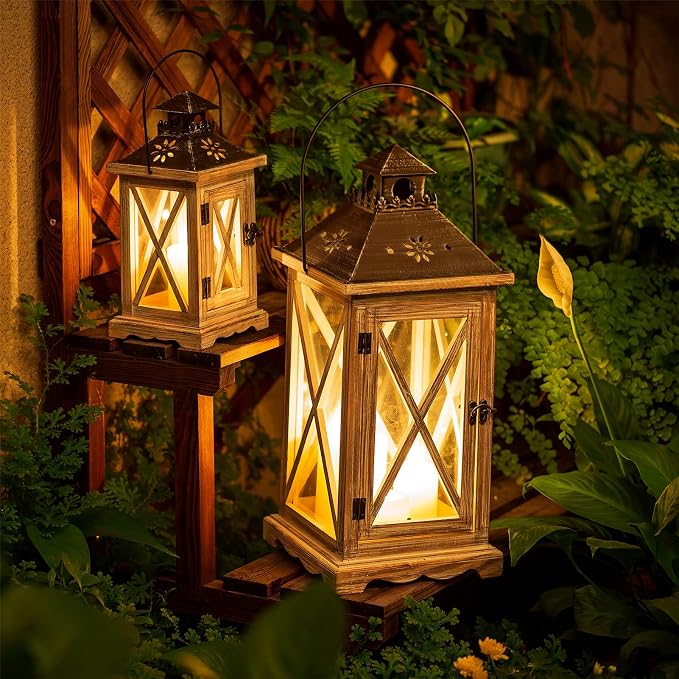
Sziqiqi Vintage Distressed Wooden Decorative Lantern (11" + 18.9")
Set of two vintage distressed wooden lanterns in natural wood, 11 and 18.9 inch heights, for rustic weddings, farmhouse decor, and indoor/outdoor use.
Home Decor · Interior Inspiration · Style Guides
Rustic wooden lanterns bring farmhouse warmth to patios, porches, and mantels — but wood, moisture, and scale need deliberate management to keep the look grounded and not theme-park.
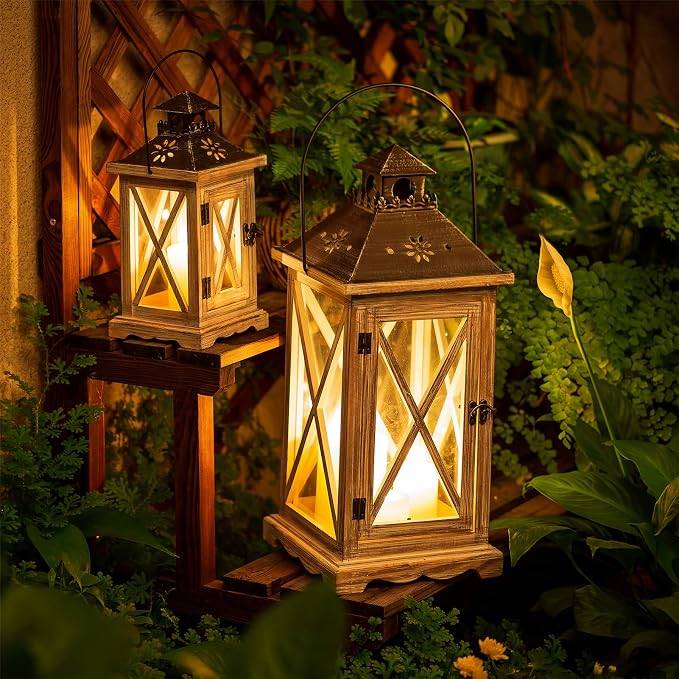
Set of two vintage distressed wooden lanterns in natural wood, 11 and 18.9 inch heights, for rustic weddings, farmhouse decor, and indoor/outdoor use.
Distressed wood lanterns bring something to a patio or farmhouse mantel that metal and glass lanterns cannot: the weight and grain of natural timber. The material itself tells a story. Where a metal lantern is precise and finished, a wooden lantern shows its construction — the joinery, the grain direction, the natural colour variation from board to board. That visible craft is what makes rustic wood lanterns feel grounded rather than decorative.
I styled a client's covered porch last spring with two distressed wooden lanterns — one about 48 cm tall, the other about 28 cm — flanking the front door on a low wooden bench. The porch had been bare for two years: just the bench, a doormat, and a forgotten terracotta pot. The two lanterns with LED candles transformed it. Guests started commenting on the entrance before they were through the door. The wood lanterns connected to the bench, the timber porch posts, and the garden visible beyond, creating a material thread that unified the outdoor space without adding a single plant.
For other lantern styles, see our guides on antique gold lantern decor and black decorative lanterns. For broader lighting ideas, our guide on three lighting upgrades under seventy dollars covers affordable ambient solutions. This article focuses specifically on rustic wooden lanterns — where they work, how to scale them, and how to manage the material outdoors.
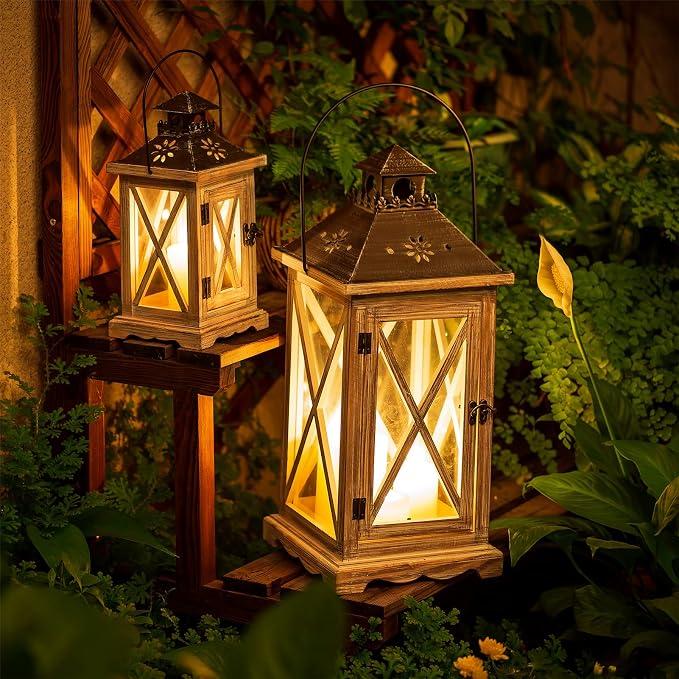
Wood lanterns feel different from metal ones because wood is a living material. Even finished and distressed, the grain catches light differently across the surface. Knots, colour variations, and the direction of the saw cuts all create visual texture that metal cannot replicate. A wooden lantern on a mantel looks collected — like it was found, not purchased. A metal lantern on the same mantel looks chosen.
This collected quality is the defining appeal. Farmhouse decor, cottage styling, and rustic outdoor spaces rely on objects that look like they have a history. Distressed wooden lanterns deliver that history through their material, even when the distressing is factory-applied. The key is choosing lanterns where the distressing looks plausible — wear on edges, fading on flat surfaces, slight roughness on the handle — rather than artificially scattered scratches that do not follow natural wear patterns.
The weight of wood also matters. Metal lanterns are light and portable. Wooden lanterns are heavier, which makes them feel substantial on a surface. On a porch in wind, that weight is practical — a wooden lantern stays put where a lightweight metal one might tip. On a mantel, the visual weight anchors the arrangement.
Rustic wood lanterns belong outdoors more naturally than any other lantern style. The material connects directly to garden environments — timber decking, wooden furniture, fence posts, trees.
| Placement | Size range | Quantity | Notes | |-----------|-----------|----------|-------| | Porch steps | 30–50 cm | 2–4 | Graduate sizes, tallest at bottom step | | Patio table centrepiece | 25–35 cm | 1–2 | Keep below sightline if used during meals | | Garden pathway (ground) | 35–50 cm | 2–6 | Spaced 2–3 metres apart along the path | | Outdoor bench or ledge | 25–40 cm | 1–2 | Pair with a low potted plant | | Wedding aisle | 30–45 cm | 4–8 | Alternate sides; match wood tone to venue | | Porch floor flanking | 40–60 cm | 2 | One each side of the door |
For porch steps, graduate the sizes so the tallest lantern sits on the bottom step and the shortest on the top. This creates a visual pathway that draws the eye upward and makes the entrance feel ceremonial without being formal. Two lanterns is the minimum for a flanking effect; four in graduating heights is the most satisfying arrangement for wide porches.
Ground placement in gardens works for evening events. Set lanterns directly on grass, gravel, or stone pathways. The light at ground level creates a different atmosphere than overhead string lights — it defines the path edges and draws people along the route.
Set of two vintage distressed wooden lanterns in natural wood, 11 and 18.9 inch heights, for rustic weddings, farmhouse decor, and indoor/outdoor use.
Wooden lanterns also work indoors, but the placement rules differ. The farmhouse quality of distressed wood needs a room that supports it — exposed beams, natural fibre textiles, neutral walls, or stone surfaces. In a sleek modern room, a rustic wooden lantern can look like a cabin prop.
The best indoor surfaces for wooden lanterns are:
Indoor wooden lanterns should be limited to one per surface. Two wooden lanterns on the same mantel can tip the room from "warm accent" to "log cabin." If you want a pair, use one wooden lantern and one ceramic or metal companion object to break the material repetition.
The defining limitation of wooden lanterns is moisture. Untreated or lightly finished wood absorbs humidity, rain, and condensation. Over time, this causes:
To protect outdoor wooden lanterns, apply a clear exterior sealant before first outdoor use. Marine-grade polyurethane or spar varnish provides the strongest weather barrier. Apply two coats, allowing full drying between coats, and reapply annually if the lantern stays outdoors year-round.
Even sealed, bring wooden lanterns inside during extended rain, snow, or freezing temperatures. The freeze-thaw cycle is particularly damaging — water trapped in the wood grain expands as it freezes and creates hairline cracks that worsen over successive cycles.
Wood lanterns look best in graduated groupings. Two identical lanterns side by side read as a retail display. A pair with a 15–20 cm (6–8 inch) height difference reads as styled.
The ideal grouping formula:
Odd numbers look more organic than even numbers in stationary groupings. A cluster of three lanterns on a patio table feels natural. Four feels symmetrical and staged. For pathways and aisles, even numbers work because the linear arrangement provides its own structure.
Wooden lanterns require more candle safety attention than metal ones because the frame is combustible.
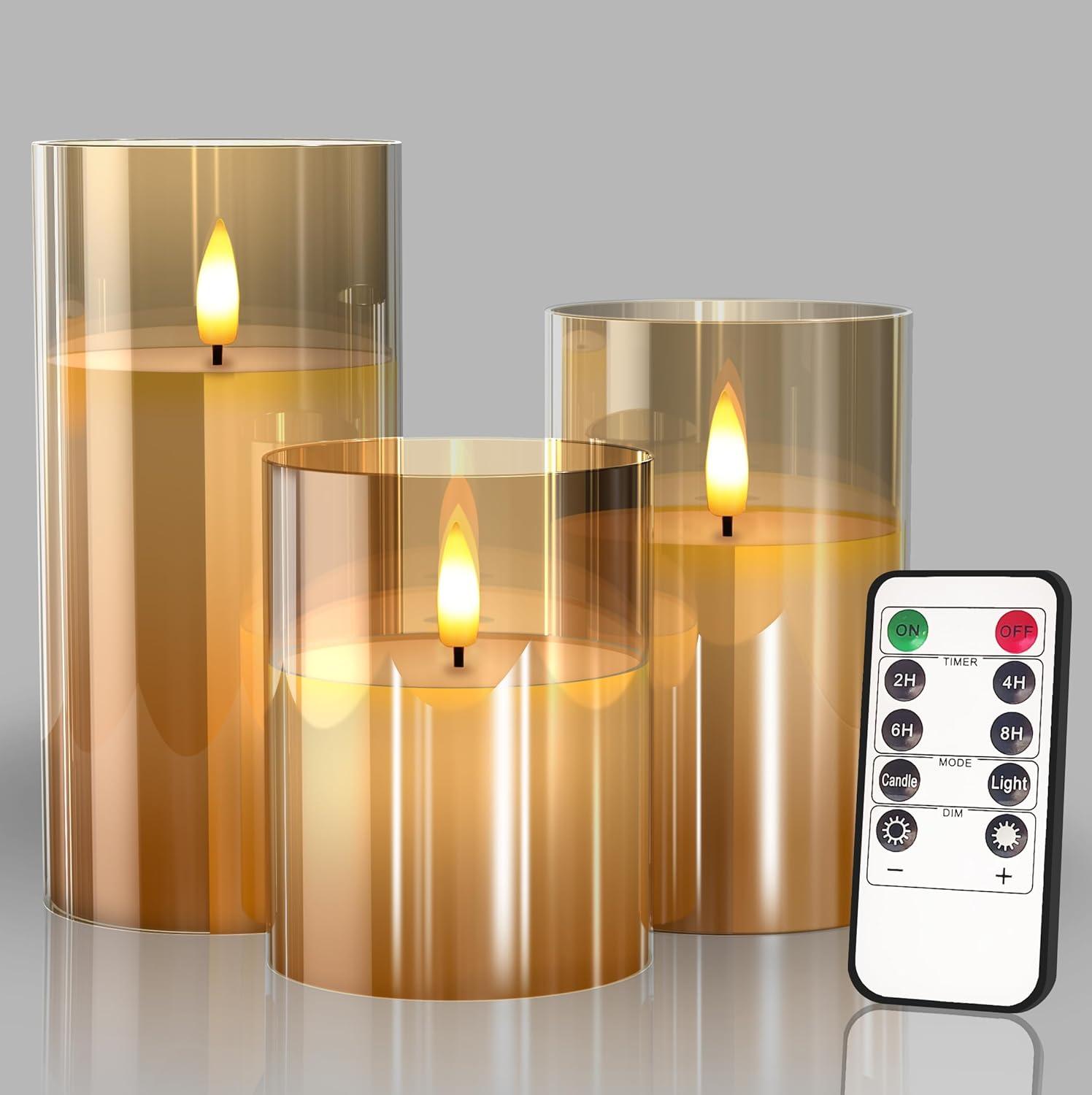
LED candles are the best practical choice for wooden lanterns used regularly. They produce the same visual warmth behind glass without any fire risk, smoke damage, or wax accumulation. Modern LED candles with a warm colour temperature (2700K) and flickering mode are nearly indistinguishable from real candles behind glass panels.
Can I paint or whitewash a wooden lantern? Yes. A thin whitewash (diluted latex paint or chalk paint) creates a coastal or shabby-chic look while preserving the visible wood grain. For a solid colour change, sand lightly, apply a primer, then two coats of exterior-rated paint. Allow full cure time (48–72 hours) before placing a candle inside.
Do wooden lanterns attract insects outdoors? Untreated wood can attract wood-boring insects in some climates. A sealed finish deters most insects. If using real candles outdoors, the wax drips and warmth may attract moths and small flies — LED candles avoid this problem entirely.
How long do distressed wooden lanterns last outdoors? With annual sealant reapplication and sensible weather management (bringing them in during heavy rain and freezing), a well-made wooden lantern can last 5–8 years outdoors. Without protection, the same lantern may show significant weathering within two seasons.