Featured in this article
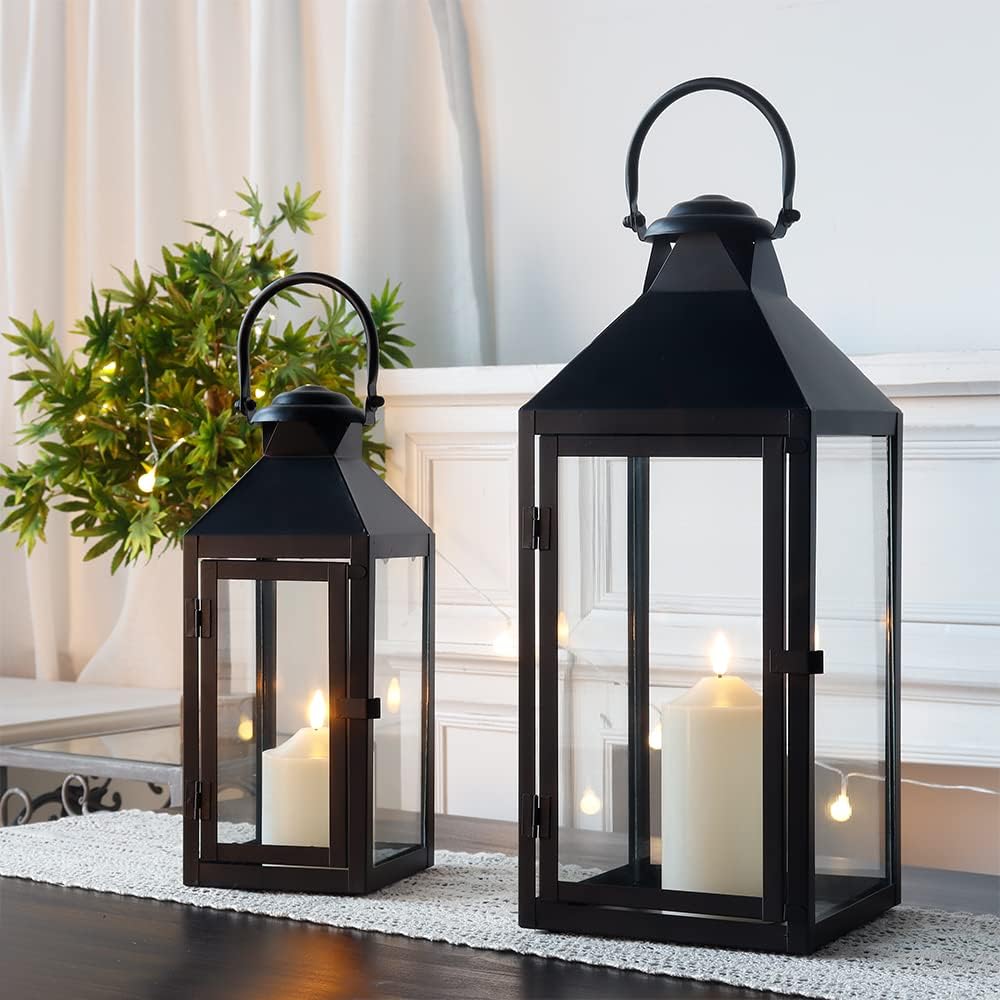
JHY DESIGN Set of 2 Black Decorative Lanterns (17.5" & 13.5")
Set of two black metal candle lanterns in 17.5 and 13.5 inch heights, vintage style for indoor/outdoor events, patios, weddings, and home decor.
Home Decor · Interior Inspiration · Style Guides
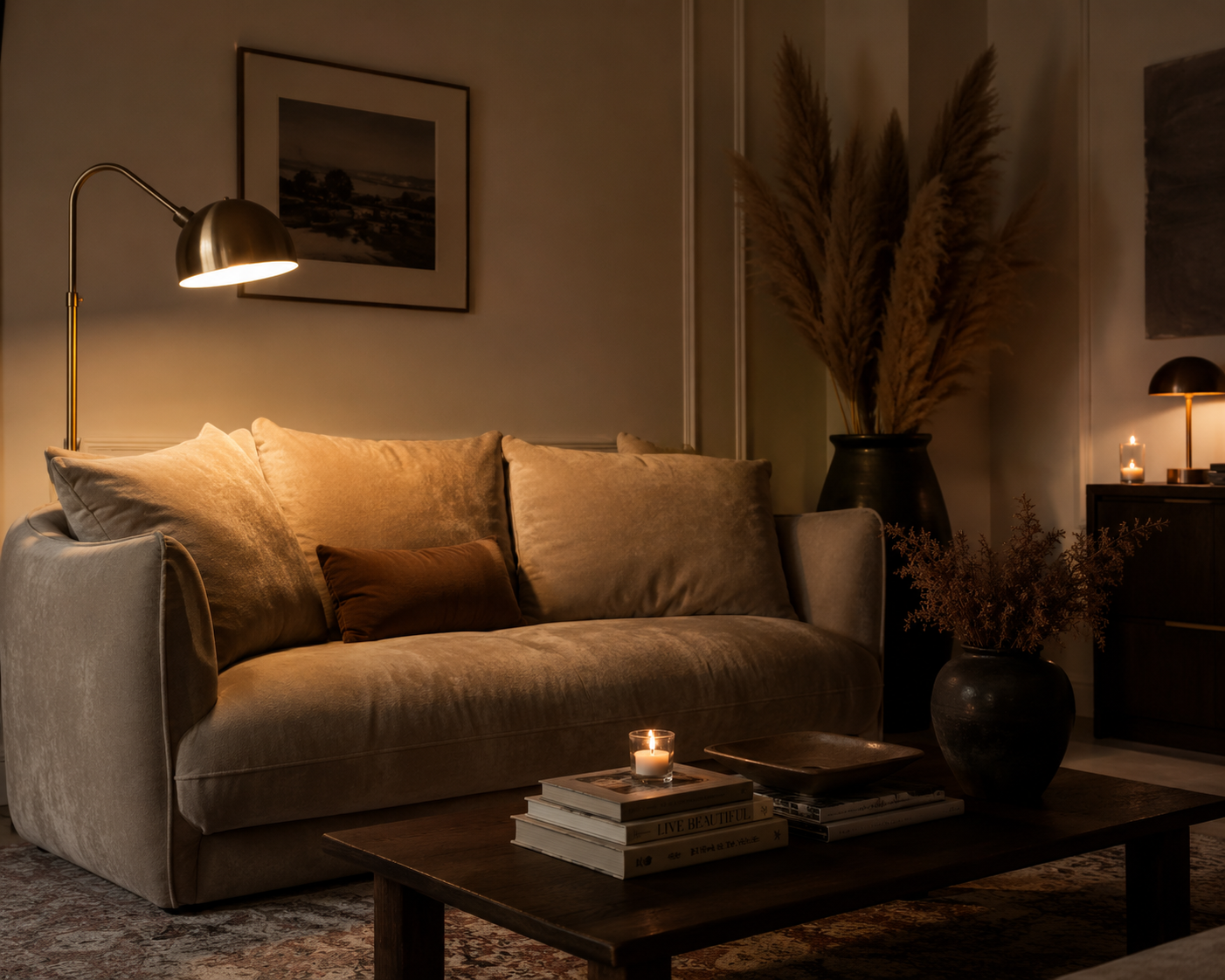
Moody jewel tones — sapphire, emerald, and plum — create intimate, enveloping spaces that neutral palettes cannot achieve. Here is how to balance dark interiors without making the room feel small.
Set of two black metal candle lanterns in 17.5 and 13.5 inch heights, vintage style for indoor/outdoor events, patios, weddings, and home decor.
When neutral, bright, and airy spaces start feeling too sterile, the design pendulum naturally swings back toward depth. Moody jewel tones — specifically sapphire blue, emerald green, and deep plum — offer a richness that flat greys and warm beiges simply cannot match. Decorating with these deeply saturated colours is not about creating a dark cave; it is about creating an enveloping, intimate atmosphere that feels like a retreat from the harshness of the outside world.
I worked with a client recently who wanted to transform a windowless basement TV room. Her initial instinct was to paint it brilliant white to "brighten it up." I explained that painting a windowless room white doesn't make it bright — it makes it look like a clinic. Instead, we leaned into the lack of natural light. We painted the walls, trim, and ceiling a deep, bruised plum colour and brought in an emerald velvet sofa. The room went from a gloomy storage space to a luxurious, velvet-lined jewel box that instantly became the most popular room in the house during the evenings.
For a look at the opposite end of the spectrum, see our guide on earth-toned palettes that feel warm. If you are looking to accessorise a moody space, explore five accessories that do the work of a whole redesign. This article focuses on how to execute moody jewel tones without overwhelming your home.
Jewel tones are highly saturated colours named after precious stones: emerald, sapphire, ruby, amethyst, and topaz. When we talk about "moody" jewel tones, we are focusing on the deeper, darker end of this spectrum — colours that have a high dose of black mixed into them.
These colours work because they absorb light rather than reflecting it. In a brightly lit white room, your eye bounces rapidly off the reflective walls. In a room painted dark sapphire or plum, your eye rests. The walls seem to recede into shadow, blurring the hard corners and boundaries of the architecture. This is why moody jewel tones are incredibly effective in bedrooms, dining rooms, and evening sitting rooms — spaces where relaxation and intimacy are the primary goals.
If you are nervous about committing to a dark palette, sapphire blue (often leaning toward navy or midnight blue) is the safest entry point. It is a deeply traditional colour that reads almost as a neutral when used on walls. Sapphire provides a perfect backdrop for artwork, especially pieces with warm gold or brass frames, as the cool blue makes the warm metals pop instantly.
When decorating with sapphire, avoid pairing it with stark, brilliant white trim. High contrast between dark blue walls and bright white skirting boards chops the wall height visually. Instead, paint the trim the same blue, or choose a muted, sludgy grey-blue for the woodwork to keep the contrast low.
Emerald green bridges the gap between deep moody interiors and the natural world. It has the enveloping quality of a dark colour but carries the psychological calm associated with nature and foliage.
Emerald works exceptionally well as an upholstery colour. An emerald velvet sofa is a modern classic that anchors a living room. If you are painting the walls emerald, consider the light source. North-facing rooms will make emerald look cool and almost black, while south-facing rooms will bring out its rich, grassy undertones. To prevent the room from feeling too heavy, balance emerald walls with natural wood tones — walnut and dark oak work beautifully to add warmth without breaking the moody spell.
Plum, aubergine, and deep burgundy are the most dramatic of the moody jewel tones. They are inherently luxurious colours historically associated with wealth and royalty. Plum is a warm colour, unlike sapphire and emerald, meaning it visually advances rather than recedes. It makes a large, cavernous room feel cosier and more intimate.
Plum is the perfect colour for a dining room. It looks incredible by candlelight. When decorating with plum, texture is vital. Flat matte plum paint can look slightly dead; pair it with light-catching textures like silk curtains, velvet upholstery, or high-gloss painted trim to bring the colour to life.
The primary fear of decorating with moody jewel tones is that the room will end up looking like a dungeon. To prevent this, you must strategically balance the darkness with light-reflecting elements and proper lighting.
Dark walls absorb light; you must intentionally add objects that bounce it back. Mirrors are the obvious choice, but they aren't the only one.
You cannot light a moody room with a single overhead pendant. Harsh overhead light ruins the enveloping atmosphere and highlights imperfections. Instead, rely on multiple, low-level light sources spread around the room.
You need at least three points of light: a floor lamp in a corner to wash light up the wall, a table lamp on a console or side table, and perhaps picture lights over artwork or wall sconces. All bulbs must be warm (2700K or lower). The goal is to create pools of warm light that make the jewel tones glow, leaving the rest of the room in soft shadow.
Set of two black metal candle lanterns in 17.5 and 13.5 inch heights, vintage style for indoor/outdoor events, patios, weddings, and home decor.
Colour drenching is the practice of painting everything — walls, skirting boards, doors, radiators, and often the ceiling — the exact same colour. In a moody jewel-toned room, this is highly recommended.
When you paint the trim white against a dark wall, you draw a hard line that highlights the exact dimensions of the room. When you colour drench the space, the boundaries disappear. The eye is no longer drawn to the edges of the room, making the space feel expansive and cohesive.
Moody jewel tones demand rich textures. A flat cotton sofa in sapphire blue looks fine, but a sapphire blue velvet sofa looks extraordinary. Velvet is the undisputed champion of jewel tones because the pile of the fabric catches the light, creating natural highlights and deep shadows that mimic the facets of a gemstone.
Beyond velvet, consider incorporating:
Decorating with moody jewel tones requires commitment. You cannot dip a toe in by painting one accent wall; it will just look like a mistake. But if you commit to the depth, manage your lighting, and layer your textures, you will create a space that feels uniquely sophisticated and deeply comforting.