A beige herringbone throw adds texture and warmth to a neutral sofa without adding color — but draping, sizing, and fabric weight decide whether it elevates or clutters.
A throw blanket is the fastest way to change how a sofa reads. Not a cushion, not a lamp — a throw. It adds a layer of texture, shifts the warmth of the palette, and makes the room look lived-in rather than showroom-flat. A beige herringbone throw does this without introducing a new color, which is its main advantage and its main risk: in a neutral room, it either adds depth or disappears.
When I styled a client's cream linen sofa last autumn, I tested four throws before settling on a herringbone in a slightly darker sand tone. The V-shaped weave caught the afternoon light from the window and created enough visual interest that we could remove two of the five cushions without the sofa looking bare. That trade — one textile replaces two — is the logic behind this guide.
The herringbone weave is a V-shaped pattern made by alternating the direction of warp and weft threads. It looks simple from a distance but creates a surface that shifts with light and angle. That quality matters in a neutral room because neutral colors rely on texture rather than hue for visual interest.
A flat-woven beige throw on a beige sofa reads as nothing. A herringbone-woven beige throw on the same sofa reads as a deliberate layer. The difference is the shadow line inside the weave, which gives the eye something to find when the colors are quiet.
Herringbone also has a directional quality — the Vs point up or down, which creates a subtle sense of movement. In home textiles, that movement prevents a neutral scheme from feeling static. It is the same reason linen curtains look more interesting than polyester ones even when the color is identical: the surface is doing work.
Size and Fabric Weight
A 130×170 cm throw is the standard European sofa-throw size. It covers the full arm of a two- or three-seat sofa when draped, or folds to cover a lap and legs when used. For reference:
| Throw size | Works for | Draping style |
|-----------|-----------|---------------|
| 130 × 170 cm | 2–3 seat sofas, armchairs | Arm drape, back drape, folded lap |
| 150 × 200 cm | Large sectionals, bed foot | Full blanket layer, draped across back |
| 100 × 140 cm | Accent chairs, small reading nooks | Folded on seat, tucked beside cushion |
Fabric weight affects both drape and warmth. A lightweight cotton herringbone (200–300 gsm) drapes softly and works year-round. A heavier cotton-acrylic or wool blend (400+ gsm) holds its shape better on an arm but can feel too warm in summer. For a living room that is used daily, mid-weight cotton is the safest choice because it washes easily and does not slide off smooth sofa fabrics.
The fringe matters too. Knotted fringe adds a 5–8 cm visual border that creates a finished edge. Self-fringe (loose warp threads) is more casual. Cut edges with no fringe can look unfinished when draped. For herringbone specifically, knotted fringe tends to complement the geometric quality of the weave.
How to Drape a Throw
There are three positions that consistently look good, and one that does not.
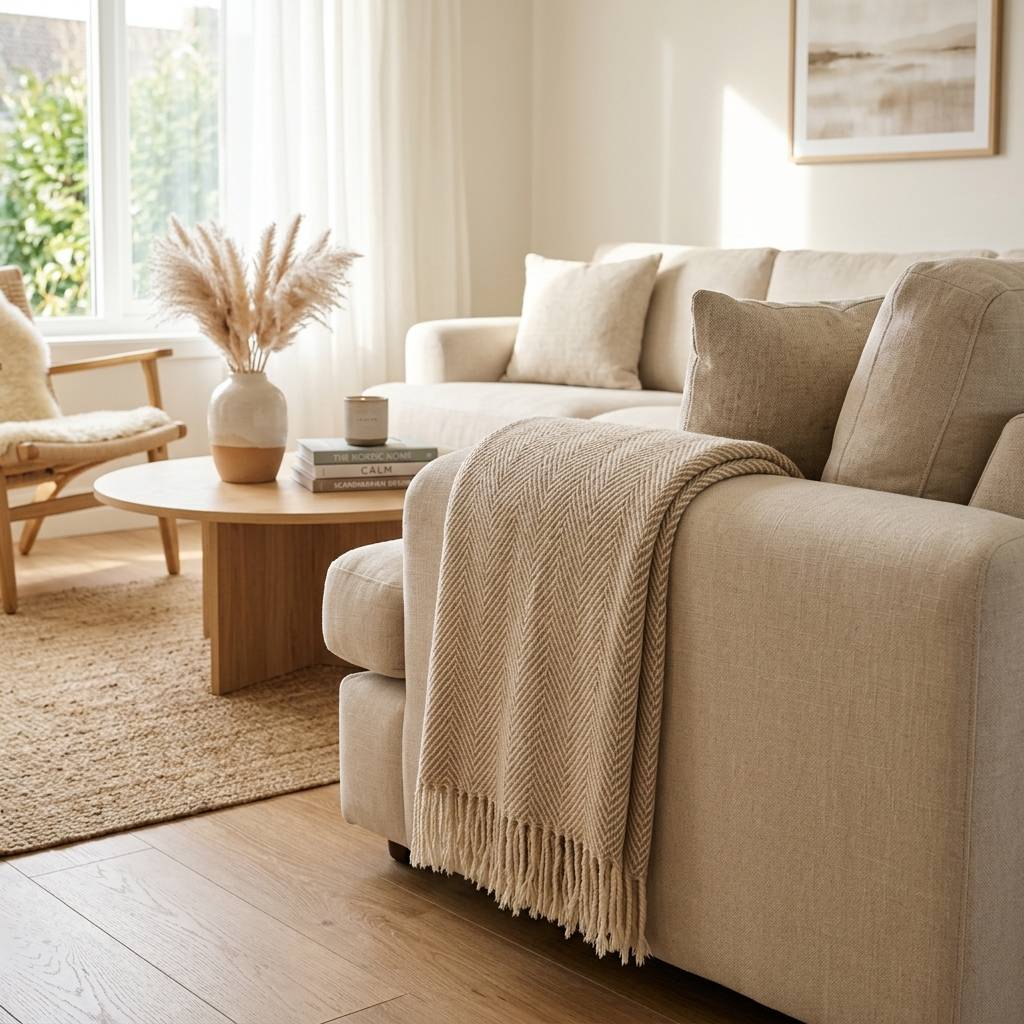
Arm drape: Fold the throw in half lengthwise and drape it over one arm of the sofa so the fold sits on the outer edge and the fringe falls on the inner side. This is the most photographed position because it reads clearly from across the room. It works best when the throw is a slightly different shade than the sofa.
Back drape: Lay the throw unfolded across the top third of the sofa back, letting it hang down the back cushions. This works on sofas with a high back and creates a casual, layered look. It does not work on low-back sofas because the throw will bunch and fall behind the cushions.
Folded on the seat: Fold the throw into a neat rectangle and place it on one seat cushion, slightly off-center. This is the calmest option and works in rooms where the sofa needs to look tidy most of the time. The folded throw acts like a cushion — it signals comfort without introducing disorder.
What does not work: A throw bunched in the middle of the sofa. It reads as abandoned laundry, not styling. If someone has been using the throw and left it in a heap, either re-drape it or fold it. The heap is never the answer.
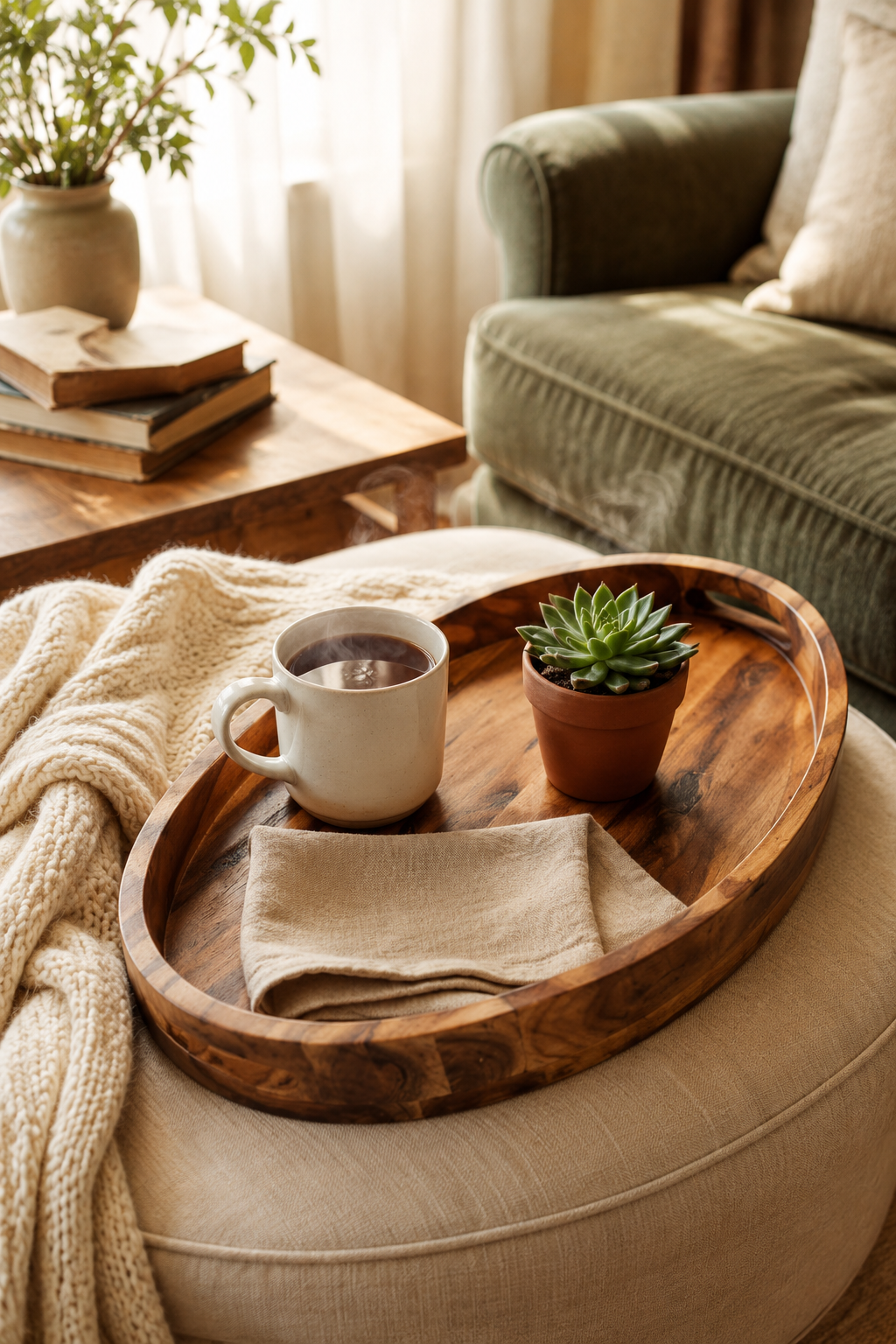
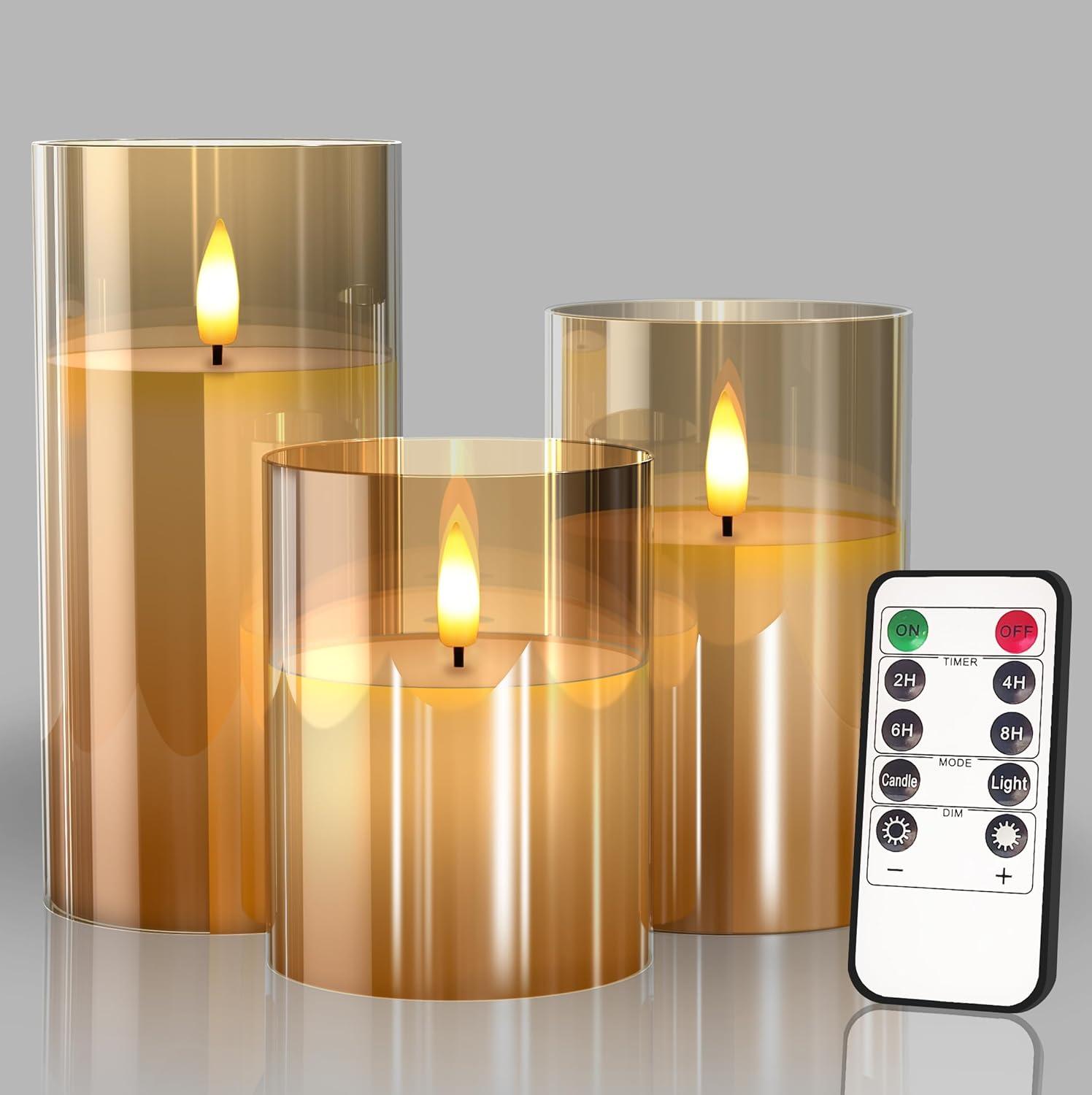
The coffee table in front of the throw-draped sofa matters too. A wood tray corrals the daily clutter — remote, coaster, candle — and creates a contained surface that echoes the natural warmth of the herringbone weave. The tray gives the eye a second styled moment without competing with the throw.
HouseJoy Acacia Wood Serving Tray with Handles
16.5 x 13 inch acacia wood tray with handles for ottomans, coffee tables, breakfast in bed, bathroom styling, and candle displays.
A beige herringbone throw pairs best with cushions that contrast in one dimension — texture, shade, or scale. A velvet cushion in a deeper taupe gives tonal contrast. A cream linen cushion in a larger size gives scale contrast. A small chunky-knit cushion gives textural contrast. Choose one type of contrast per cushion, not all three.
For rug pairing, the throw and rug should not match. They should belong to the same temperature family (warm beige, warm cream, warm oak) without repeating the same pattern. A herringbone throw with a herringbone rug creates a visual stutter. A herringbone throw with a flat jute rug, a plain wool rug, or a subtly textured loop rug lets each layer have its own voice.
If the room already has strong texture — a chunky knit blanket, a woven basket, a rattan chair — the herringbone throw may compete rather than complement. In heavily textured rooms, swap the throw for a flat-woven option or reduce another textured element before adding the herringbone.
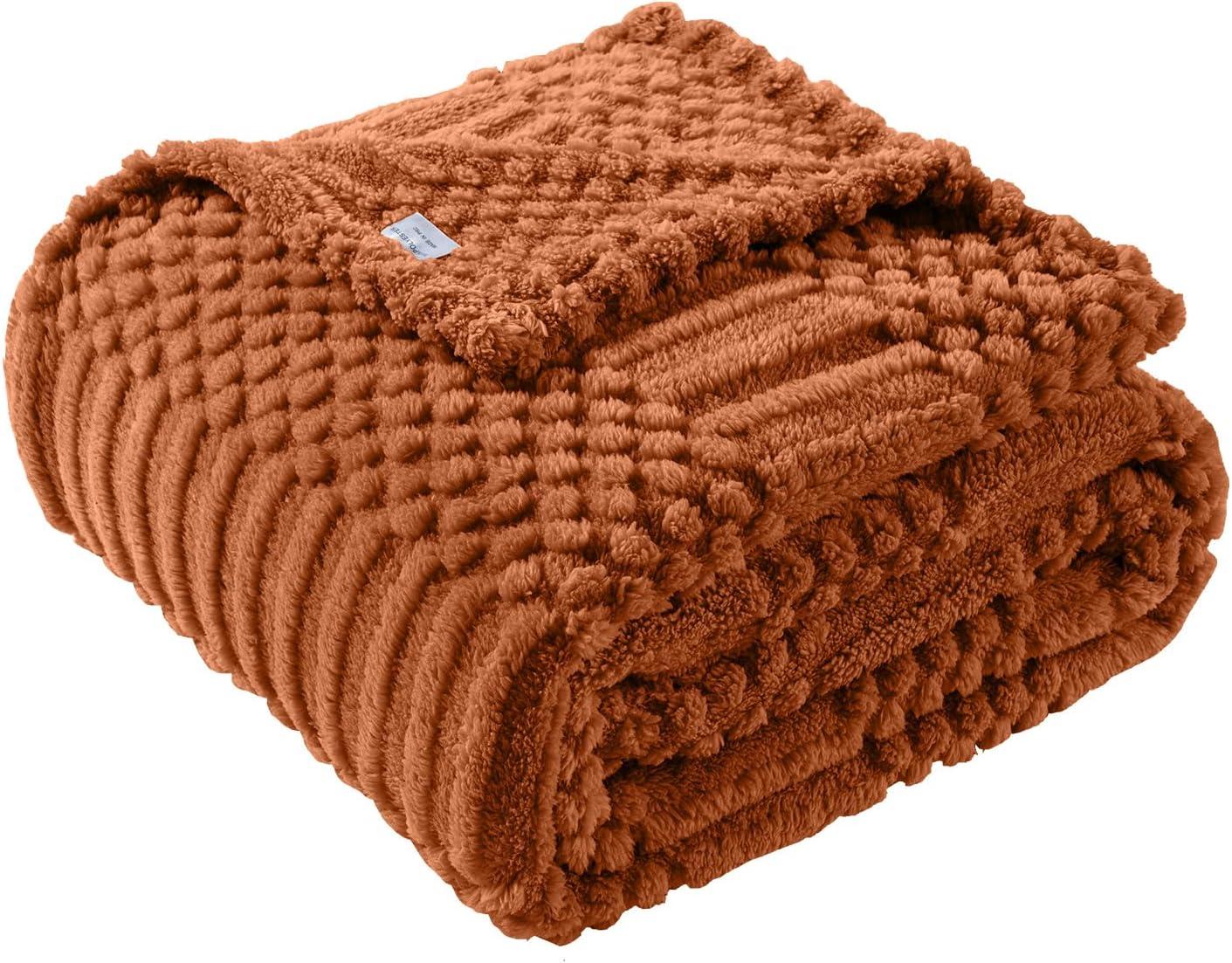
Decorative Beige Herringbone Throw, 130×170 cm
Beige herringbone-weave decorative throw blanket in a natural, Nordic-inspired style for sofas and living rooms, 130×170 cm.
A beige herringbone throw works in every season, but its role shifts.
Autumn and winter: The throw is functional. It covers laps, warms shoulders, and adds a layer of insulation to the sofa zone. Drape it on the arm for easy access. Pair with warmer cushion fabrics — wool, bouclé, velvet — and a warmer-toned rug.
Spring and summer: The throw becomes decorative rather than functional. Fold it neatly on the seat or drape it lightly on the sofa back. Swap heavy cushions for lighter linen or cotton covers. If the room gets hot, store the throw entirely and bring it back when evenings cool. There is no rule that says a throw must be visible year-round.
The beauty of a neutral herringbone is that it transitions without clashing. A red plaid throw is a seasonal statement. A beige herringbone is infrastructure — it works until the room tells you it does not.
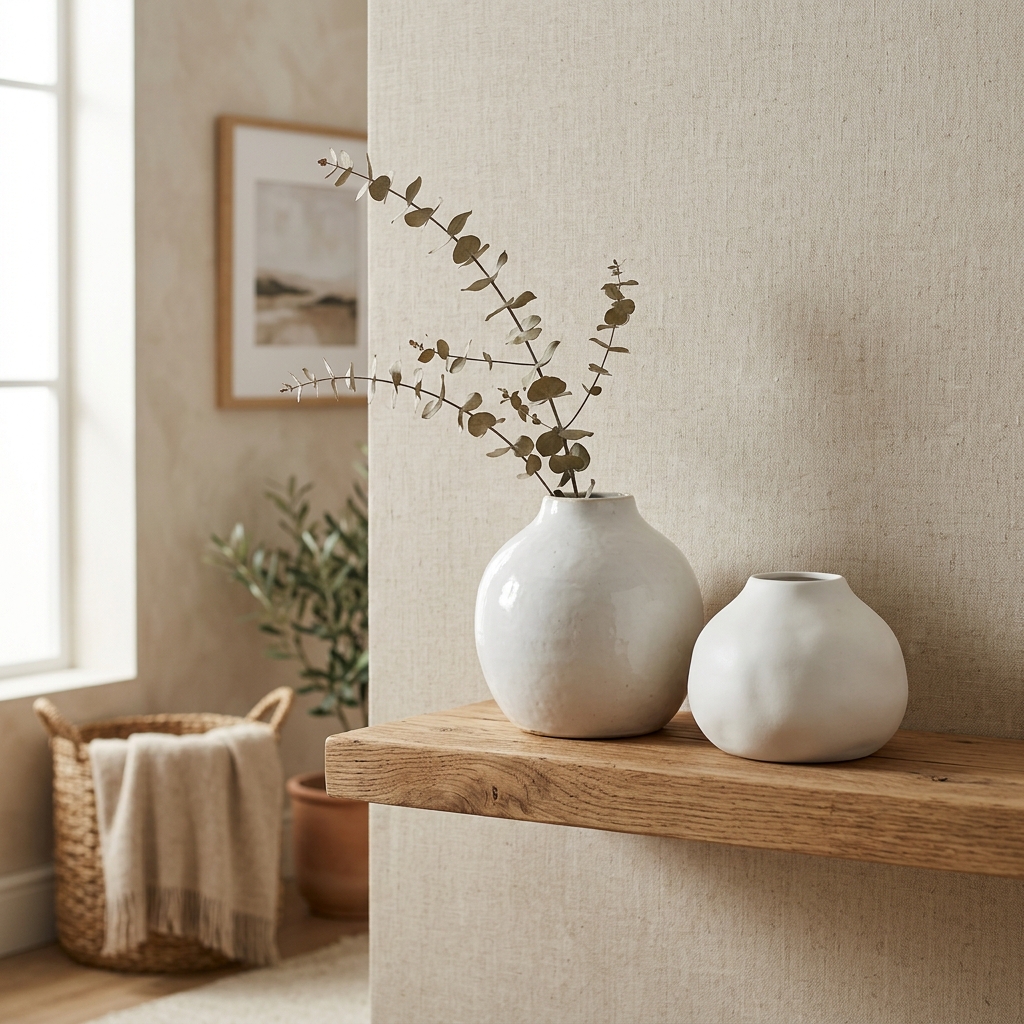
A companion styling piece that bridges seasons just as quietly is a milky white ceramic vase on the side table or shelf nearest the sofa. The matte white surface provides a tonal lift against the warm beige throw, and a single dried stem or branch adjusts the seasonal note without changing the room's core palette.
Snuggle Hollow Ceramic Vase Set of 2, Nordic Boho Style (Milky White)
Set of two milky white ceramic vases in a Nordic modern boho style, 6.3×8.4 inches, for shelf styling, side tables, and minimalist home decor.
Washing frequency depends on use. A throw that is used nightly as a blanket needs washing every two to three weeks. A throw that is purely decorative can go four to six weeks. Between washes, shake it outdoors to remove dust and pet hair, or tumble it in the dryer on no-heat for ten minutes.
Cotton herringbone: Machine wash at 30°C, gentle cycle. Tumble dry on low. Iron on medium if the weave looks flat after drying. Avoid bleach; it weakens the warp threads in a herringbone weave faster than in a plain weave because the thread direction changes create stress points.
Wool or wool-blend herringbone: Cold hand wash or wool cycle. Lay flat on a towel to dry. Do not wring — herringbone weave distorts when twisted. Dry cleaning is safe for wool but adds cost.
Pilling: Herringbone weaves pill less than jersey or bouclé because the tight V-pattern holds fibers in place. If pills appear, use a fabric shaver on the flat side. A lint roller handles surface fuzz between deeper cleaning.
Store the throw loosely folded or rolled. Tight folding creases herringbone permanently along the fold lines, especially in cotton. A rolled throw on a shelf or in a basket keeps its drape and avoids hard creases.
How to Use a Beige Herringbone Throw at Home
Start with the sofa as the testing ground. Drape the throw in one of the three positions described above and live with it for three days. Check it in morning and evening light. If it disappears into the sofa color, refold it to show more surface area or shift the position to catch more light. If it stands out too sharply, the shade contrast may be too strong — try folding it smaller.
Check the material interaction. Herringbone on smooth leather creates a strong contrast. Herringbone on bouclé can feel redundant. Herringbone on plain linen or cotton is usually the easiest pairing because the two textures complement without competing.
Limit the throw count. One herringbone throw per sofa. A second throw works only on a large sectional and only if it is a clearly different material — a chunky knit, a waffle weave, or a thin linen. Two herringbone throws side by side read as a display, not a room.
After the throw settles, remove one cushion from the sofa. The throw should earn its visual space by replacing some of the work that cushions were doing. If the sofa looks better with fewer cushions and one throw, the throw has done its job. This is the same subtraction-first logic that makes most neutral rooms feel more finished.
FAQ
Will a beige throw disappear on a beige sofa?
Not if the weave has visible texture. Herringbone creates shadow lines that read even in a tone-on-tone pairing. The throw needs to contrast in texture or slight shade — cream on oatmeal, sand on stone — rather than matching the sofa exactly.
How do I keep a throw from sliding off the sofa?
Drape it over the arm or the back rather than the seat cushion. On leather or smooth fabric, tuck 15–20 cm behind the cushion to anchor it. Heavier throws with fringed ends grip better than lightweight ones.
Can I machine wash a herringbone throw?
Most cotton and cotton-blend herringbone throws tolerate a 30°C gentle cycle. Wool blends typically need cold water and a wool cycle or hand washing. Always check the care label. Tumble dry on low or lay flat to preserve the weave structure.
How many throws should one sofa have?
One is usually enough. A second throw works only if it is a clearly different texture — a chunky knit beside a flat herringbone, for example. Two similar throws on the same sofa look like you could not choose, not like you styled deliberately.