Style a faux olive tree to add soft greenery to your cozy neutral living room. Discover seven elegant ideas to elevate your space with low-maintenance plants.
7 Faux Olive Tree Decor Ideas for Cozy Neutral Living Rooms
Style a faux olive tree to add soft greenery to your living room, entryway, or office corner. Perfect for neutral decor, basket decor, and low-maintenance indoor plant styling. Click to shop the look on Amazon.
If you have scrolled through any interior styling feed recently, you have likely noticed that the faux olive tree has become a ubiquitous design staple. There is a compelling reason for this enduring trend. Unlike the heavy, visually dense fiddle leaf figs of the past decade, an olive tree offers a delicate, airy silhouette. The slender, silvery-green leaves bring an unmistakable softness to a space, providing crucial organic texture without demanding the commitment of a live plant. For those of us styling cozy neutral living rooms, adding greenery is often the missing layer that prevents a monochromatic palette from feeling cold or flat.
I have placed countless artificial trees in residential projects over the years. The challenge is rarely finding a beautiful tree; the challenge is styling it so it feels deliberate, integrated, and, above all, convincing. A faux olive tree fresh out of its shipping box often looks stiff and unremarkable. The magic lies entirely in how you pot, shape, and position it within your living room. When executed correctly, this single decorative element can completely alter the atmosphere of your home, introducing height and life to neglected corners.
7 Faux Olive Tree Decor Ideas for Cozy Neutral Living Rooms
Style a faux olive tree to add soft greenery to your living room, entryway, or office corner. Perfect for neutral decor, basket decor, and low-maintenance indoor plant styling. Click to shop the look on Amazon.
Why an artificial olive tree elevates neutral decor
Neutral living rooms—spaces defined by soft creams, warm beige, crisp whites, and gentle taupes—rely heavily on texture and subtle contrast to feel inviting rather than clinical. When you remove bold colors from your design equation, you must overcompensate with layered materials. Wood grains, woven textiles, bouclé fabrics, and matte ceramics become your primary design tools.
A faux olive tree perfectly complements this aesthetic. Its muted sage-green leaves introduce a sophisticated wash of color that harmonizes beautifully with warm wood tones and linen upholstery. Unlike vibrant tropical plants, which can sometimes look jarring in a subdued, earthy room, the olive tree's muted palette feels completely natural and understated. It acts as a visual bridge, connecting the cozy textiles of your sofa to the architectural lines of your windows or floating shelves. Furthermore, its sparse branching structure allows natural light to filter through, maintaining an open, breathable feel in smaller living rooms.
Idea 1: Anchor an empty living room corner
The most common—and arguably the most effective—placement for a tall faux olive tree is tucked into an empty corner. Corners are notoriously difficult to decorate. They are often too small for functional furniture but too prominent to leave bare. A tall, slender plant is the ideal solution, drawing the eye upward and emphasizing the height of the ceiling.
When positioning your tree in a corner, avoid pushing it completely flush against the walls. Pull it forward by at least six to eight inches. This slight distance creates a subtle shadow play on the walls behind it, adding depth and making the tree feel more integrated into the room's footprint. If the corner feels too dark, consider placing a small, upward-facing floor can light behind the base of the planter. This simple lighting trick casts dramatic, beautiful shadows of the olive branches across the ceiling during the evening, instantly enhancing the cozy ambiance of the space.
Idea 2: Flank a media console or fireplace
If your living room features a strong central focal point, such as a wide media console, a built-in entertainment unit, or a prominent fireplace, you can use a faux olive tree to soften the hard edges of the architecture. Placing a tree on one side of a console breaks up the rigid, boxy lines of the furniture and the television.
To achieve a balanced look, do not feel obligated to place a matching tree on the opposite side. Perfect symmetry can sometimes feel overly formal or stiff in a cozy, relaxed living room. Instead, aim for asymmetrical balance. If you place a 6-foot faux olive tree on the left side of your media console, balance the visual weight on the right side with a lower, wider element. This could be a chunky woven blanket basket, a low ceramic vase filled with dried pampas grass, or a stack of oversized coffee table books. This staggered approach feels collected, intentional, and effortlessly chic.
Idea 3: Elevate the tree in a woven basket
The single most important step in styling a faux olive tree is hiding its original base. Artificial trees invariably arrive in tiny, disproportionate, concrete-weighted nursery pots. If you leave the tree in this stark black plastic pot, the illusion of realism is instantly broken.
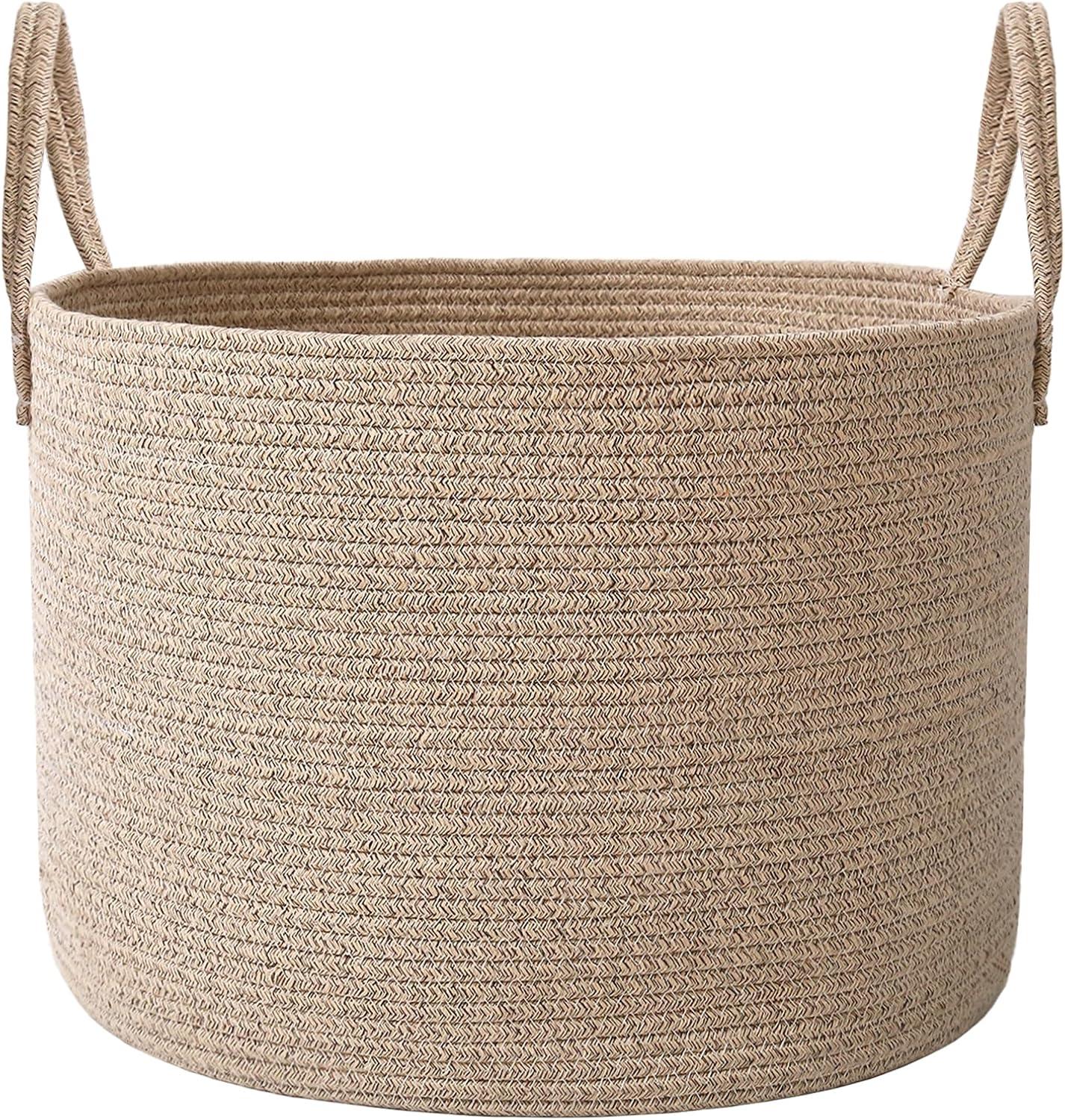
For a cozy, textural aesthetic, place the nursery pot inside a large woven basket. Baskets made of natural materials like seagrass, water hyacinth, or jute introduce incredible warmth to a neutral room. Because you are dealing with a faux plant, you have no risk of water damage, making baskets an ideal, stress-free planter option.
To secure the tree, place it in the center of the basket and pack the surrounding void tightly with crumpled newspaper, old towels, or recycled shipping materials. Once the trunk is completely stable, top the arrangement with real Spanish moss, preserved reindeer moss, or smooth river stones. This crucial final layer hides the filler materials and provides an authentic, organic finish that tricks the eye perfectly.
Idea 4: Use a pedestal to increase height
Sometimes, despite your best measurements, a faux olive tree arrives looking slightly too short for your intended space. If you have tall ceilings—perhaps 10 feet or higher—a standard 6-foot tree might feel dwarfed and insignificant. Rather than returning it for a larger, significantly more expensive model, you can artificially boost its height.
Find a sturdy plastic bucket, an overturned sturdy box, or a block of dense foam. Place this riser inside your decorative outer planter or basket, and then rest the tree's nursery pot on top of it. This simple trick can easily add 6 to 12 inches of height to your arrangement. Ensure the riser is completely hidden by the edges of your decorative pot, and generously cover the top with your chosen moss or stones. The result is a dramatically taller, more imposing focal point achieved for a fraction of the cost.
Idea 5: Shape the branches for realistic drooping
Out of the box, faux olive branches tend to point straight up, looking stiff, manufactured, and defensive. Real olive trees are characterized by their relaxed, slightly drooping, irregular canopies. To achieve a high-end, realistic look, you must spend at least 15 to 20 minutes aggressively shaping the branches.
Start from the bottom and work your way up the trunk. Gently but firmly bend each main branch downward and slightly outward. Do not be afraid to create distinct bends; the internal wire is designed to hold these shapes. Next, fan out the smaller twigs and leaves, ensuring they are not clumped together. Rotate the tree as you work to ensure it looks balanced from every angle in the room. A beautifully shaped canopy makes the difference between a cheap-looking plastic plant and a convincing, high-quality decorative feature.
Idea 6: Pair with an oversized ceramic or terracotta pot
While woven baskets are excellent for casual, boho-leaning spaces, an oversized ceramic or terracotta pot offers a more structured, elevated, and slightly Mediterranean aesthetic. A weathered terracotta pot or a distressed, chalky-white ceramic planter provides a substantial, grounding base for the delicate, airy olive leaves.
When selecting a ceramic pot, scale is crucial. Choose a planter that is at least 12 to 14 inches in diameter for a 6-foot tree. Even though the roots do not need the space, a larger pot visually anchors the tall, slender trunk. If the ceramic pot is extremely deep, use the riser trick mentioned earlier to ensure the trunk does not sit too low within the vessel. The combination of muted green leaves, a slender trunk, and a heavy, textured ceramic base is exceptionally elegant in a neutral living room.
Idea 7: Style a smaller faux olive tree on a console table
Not every living room has the floor space to accommodate a towering 7-foot tree. If you live in a smaller apartment or your floor plan is already maximized, you can achieve the same sophisticated look by styling a smaller, tabletop version of a faux olive tree.
A 24-inch or 36-inch olive tree is perfectly scaled for an entryway console table, a wide window ledge, or even a large living room sideboard. Place the smaller tree in a beautiful, rustic ceramic vase or a small, textured pot. Pair it with a stack of design books, a ribbed pillar candle, and a decorative wooden bowl to create a curated, intentional vignette. This smaller dose of greenery still provides the necessary organic texture and soft color, proving that you do not need a massive footprint to enjoy the aesthetic benefits of this versatile decor staple.
The long-term benefits of artificial greenery
Investing in high-quality artificial greenery is often a point of contention for plant purists, but the practical benefits are undeniable, particularly in spaces with challenging light conditions. A faux olive tree requires zero sunlight, zero watering schedules, and zero anxiety about dropped leaves or sudden wilting.
For busy households, frequent travelers, or those of us whose living rooms simply do not receive adequate natural light, a faux tree provides the aesthetic uplift of nature without the associated maintenance burden. By choosing a high-quality model, styling it thoughtfully with a beautiful planter and real moss, and taking the time to shape its branches, you can create a permanent, stunning feature that elevates your cozy neutral living room for years to come.
Frequently Asked Questions
What is the best height for a faux olive tree in a living room?
For most standard 8-foot to 9-foot ceilings, a faux olive tree between 6 feet and 7 feet tall is the ideal scale. This height provides a substantial vertical presence without making the room feel crowded or causing the uppermost branches to scrape the ceiling.
How do you make a faux olive tree look more realistic?
To enhance the realism of your tree, start by aggressively bending and shaping the branches downward to mimic natural growth patterns. Then, place the original small nursery pot into a larger, decorative planter or woven basket, and fill the top with real dried moss or river stones to cover the artificial base.
Can I use a woven basket as a planter for a faux tree?
Yes, woven baskets are excellent for faux trees, adding instant warmth and texture to neutral decor. Because you do not need to worry about water leakage, you can simply drop the tree's weighted base into the basket and use crumpled paper or blankets to stabilize it before topping it with decorative moss.
How do you clean the leaves of a faux olive tree?
Dust your faux olive tree every two weeks using a soft microfiber cloth or a feather duster. For a deeper clean every few months, wipe each leaf individually with a damp cloth. Avoid using harsh chemical sprays, which can degrade the silk or plastic and cause the color to fade.